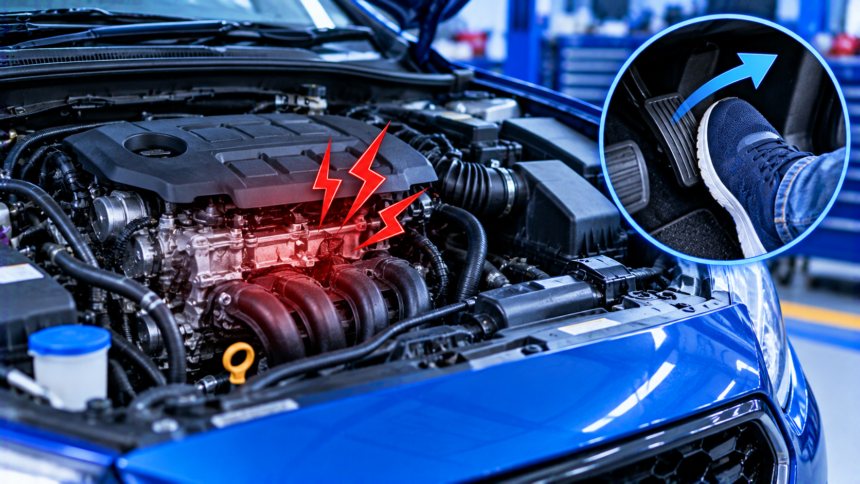
Motor knocking when accelerating is most often detonation, a sharp metallic ping caused by fuel that burns the wrong way inside the cylinders. The usual triggers are low-octane fuel, carbon buildup, worn spark plugs, or an engine that runs too hot. A deep, heavy thud is different. It points to worn bearings or low oil, and it means you should stop driving.
- What does motor knocking when accelerating mean?
- What other signs come with engine knock?
- Is it a light ping or a deep thud?
- What causes engine knocking when accelerating?
- Fuel with too low an octane rating
- Carbon buildup in the cylinders
- Worn or wrong spark plugs
- An engine that runs too hot
- Ignition timing and a bad knock sensor
- A lean fuel mixture
- Low-speed pre-ignition in turbo engines
- Low oil and worn bearings (rod knock)
- How do you find the cause step by step?
- How much does it cost to fix engine knock?
- Can you keep driving with engine knock?
- How can you prevent engine knock?
- Conclusion
- Frequently asked questions
- Why does my engine knock only when I accelerate?
- Is engine knocking dangerous?
- Will higher octane fuel stop engine knock?
- How much does it cost to fix engine knock?
- What does rod knock sound like?
- Related Articles
Start with two quick checks. Park on level ground and check the oil level. Then listen closely to the sound, because a light ping and a deep thud have very different causes. This guide helps you tell them apart, find the real cause, and decide what to do next.
What does motor knocking when accelerating mean?
Knocking is an abnormal noise from inside the engine. It comes in two types, and they share little besides the name.
Combustion knock, also called pinging or detonation, is a light, fast, metallic rattle, like marbles shaking in a tin can. In a healthy engine, a flame starts at the spark plug and spreads smoothly through the cylinder. In detonation, rising heat and pressure make the leftover fuel ignite on its own. The two flames collide, pressure spikes, and the piston takes the hit.
Mechanical knock is a deep, heavy thud from worn or loose parts. Rod knock, caused by worn connecting rod bearings, is the best-known example.
Why does it show up when you accelerate? Pressing the pedal sends more air and fuel into the cylinders and raises both pressure and heat. Those are the exact conditions that set off detonation. The extra load also makes a worn bearing louder.
What other signs come with engine knock?
Knocking rarely travels alone. The other symptoms help you narrow down the cause.
- Weak acceleration. The computer may be delaying the spark to protect the engine, which costs power.
- Worse fuel economy, for the same reason.
- A check engine light, which can come from a knock sensor fault or a lean fuel mixture.
- Rough running or hesitation, which points toward fuel delivery or ignition trouble.
- An oil pressure warning light, which points toward bearing trouble and means you should stop.
Is it a light ping or a deep thud?
The sound tells you most of what you need to know. Use this table as a starting point.
| What you hear | When it happens | Likely cause | What to do |
| Light, fast metallic ping | Under hard throttle or on hills | Detonation from low octane, carbon, or heat | Use the right fuel, then check plugs and cooling |
| Deep, heavy, rhythmic thud from low in the engine | Gets louder as you press the throttle | Worn rod bearings or low oil | Stop driving and call a tow |
| One loud bang at low rpm | Pulling away in a high gear, mostly turbo engines | Low-speed pre-ignition | Book a shop visit and use the oil your manual lists |
| Light ticking from the top of the engine | Louder when cold, fades as it warms | Valve or lifter noise | Check oil level and grade |
Stop driving if the knock is deep, grows louder as you press the throttle, or comes with an oil warning light. Driving on can destroy the engine.
What causes engine knocking when accelerating?
Work through these causes in order. The first few are the cheapest to fix.
Fuel with too low an octane rating
Octane measures how well fuel resists igniting under pressure. In the U.S., regular gasoline is generally 87, midgrade is 89 to 90, and premium is 91 to 94. The EIA octane guide covers how these numbers are tested. An engine built for a higher grade can ping on a lower one, and the sound is loudest when you accelerate hard.
Check the owner’s manual or the inside of the fuel door for the grade your engine needs. If it needs 91 and you have been filling up with 87, switch back. A tank of the right fuel is the cheapest fix on this list. Premium will not help an engine designed for regular, and it costs more. If your manual says premium is recommended but not required, this fueleconomy.gov octane page helps you weigh the choice.
Modern engines have knock sensors that detect pinging and delay the spark. That protects the engine, but it also cuts power and fuel economy. A sluggish feel when you accelerate can be knock in disguise.
Carbon buildup in the cylinders
Carbon deposits form on pistons and valves over time. They raise compression, and they can glow hot enough to ignite fuel before the spark plug fires. That is called pre-ignition, and it sounds like a sharp knock. Direct-injection engines are prone to deposits on the intake valves, because the fuel is sprayed into the cylinder instead of washing over them.
Fuel system cleaners can help with light deposits. Heavy buildup usually needs a professional carbon-cleaning service, so ask a mechanic to inspect before you spend money on products.
Worn or wrong spark plugs
Spark plugs that are worn, fouled, or the wrong type can cause knocking. A plug with the wrong heat range can run hot and act like a hot spot inside the cylinder. A worn plug can also misfire and upset the burn. Look up the plug type and replacement interval in your manual. If the plugs are overdue, replace the full set. On most engines it is a low-cost job.
An engine that runs too hot
Heat makes knock more likely. Low coolant, a stuck thermostat, a weak cooling fan, or a clogged radiator can push temperatures up. Hot spots then form in the cylinders and fuel ignites too early. Watch the temperature gauge. If the needle climbs when you accelerate or drive uphill, fix the cooling system before anything else. An overheated engine can warp parts, which turns a small repair into a large one.
Ignition timing and a bad knock sensor
The engine computer controls spark timing. If the spark fires too early, cylinder pressure climbs and knock follows. The knock sensor, a small vibration sensor bolted to the engine, normally tells the computer to delay the spark. When the sensor or its wiring fails, the computer cannot hear the knock. This often sets code P0325 and lights the check engine light. The computer then switches to cautious timing, so you may notice less power and worse mileage along with the pinging. A scan tool reads the code quickly.
A lean fuel mixture
A lean mixture has too much air and too little fuel. It burns hotter and knocks more easily. Common causes are a vacuum leak, dirty fuel injectors, a clogged fuel filter, and a weak fuel pump. You may also feel hesitation or rough running, and the check engine light may come on. A mechanic can test fuel pressure and read the fuel trim data to find the cause.
Low-speed pre-ignition in turbo engines
Small turbocharged direct-injection engines can suffer from low-speed pre-ignition, or LSPI. It happens at low rpm under heavy load, such as pulling away in a high gear with your foot down. Droplets of fuel and oil ignite before the spark, which can cause a loud bang. Knock sensors often cannot catch it, and it can badly damage the engine.
Oil that meets the API SP standard is formulated to protect against LSPI. Use the oil grade and specification your manual lists, and change it on time, because the protection fades as oil ages.
Low oil and worn bearings (rod knock)
This is the serious one. Connecting rod bearings sit between the crankshaft and the rods, separated by a thin film of oil. When oil runs low or pressure drops, that film fails and metal touches metal. The result is a deep, rhythmic knock from low in the engine that grows louder as you press the throttle. The oil pressure light may come on, and shiny metal specks can show up in the oil.
The repair means replacing the bearings, and the bill often reaches $2,500 or more. Driving on only adds damage. If you suspect rod knock, shut the engine off and have the car towed.
How do you find the cause step by step?
Follow these steps in order. They move from the cheapest checks to the ones that need a shop.
- Check the oil. With the engine off and the car level, read the dipstick. Top up with the grade your manual lists, and look for shiny metal specks.
- Note when the knock happens. Write down whether the engine is cold or warm, which gear you are in, and how hard you press the pedal. A mechanic can use these details.
- Review your fuel. If your last fill-up was a lower grade than the manual calls for, run the tank down and refill with the right one.
- Scan for codes. An OBD-II scanner is cheap and reads codes such as P0325 for the knock sensor and P0171 for a lean mixture.
- Check the cooling system. Watch the temperature gauge while driving, and check the coolant level only when the engine is cold.
- Inspect the spark plugs. Compare their type, gap, and wear against your manual.
- Ask a shop to test oil pressure and listen with a mechanic’s stethoscope, which pinpoints where a mechanical knock comes from.
How much does it cost to fix engine knock?
The cost depends on the cause, and the cheap fixes come first. Switching to the right fuel adds nothing beyond a normal fill-up. A set of spark plugs is a small shop bill on most cars. A new knock sensor often runs about $250 to $450 with labor. Carbon cleaning and cooling system work cost more, and the price depends on your engine. Rod bearing repair sits at the top end, often $2,500 or more. Ask for a written quote and a clear explanation of the cause before you agree to any big repair.
Can you keep driving with engine knock?
It depends on the sound. An occasional light ping that disappears after you switch to the right fuel is not an emergency. Drive gently, avoid hard acceleration, and fix the cause soon. Heavy or constant pinging can damage the engine over time, so do not ignore it. If you must drive a short way with a light ping, keep the revs low and skip steep hills and towing.
A deep knock, an oil warning light, or a sudden loss of power is different. Pull over when it is safe, switch off the engine, and call for a tow. Do not drive on to see if it clears up.
How can you prevent engine knock?
Most knock is preventable with routine care.
- Use the fuel grade your manual lists.
- Change the oil and filter on schedule, using the specification the manufacturer calls for.
- Replace spark plugs at the listed interval.
- Keep the cooling system healthy by checking the coolant level, hoses, and thermostat.
- Avoid lugging the engine. Shift down instead of pressing hard in a high gear at low rpm.
- Deal with a check engine light early, before a small fault grows.
Conclusion
Motor knocking when accelerating is usually detonation from low-octane fuel, carbon buildup, worn spark plugs, or heat, and those fixes are often cheap. A deep, rhythmic thud is different. It means worn bearings or low oil. Check your oil, listen to the sound, and use the right fuel first. If the knock stays, scan for codes and book an inspection. A good result is a quiet engine that pulls smoothly with no check engine light.
Frequently asked questions
Why does my engine knock only when I accelerate?
Acceleration raises cylinder pressure and heat, which is when detonation starts. Low-octane fuel, carbon deposits, and worn spark plugs are the usual causes. Worn bearings also knock harder under load, so check your oil first.
Is engine knocking dangerous?
A light ping now and then is not an emergency, but hard or constant knocking can damage the engine over time. A deep thud with an oil warning light is serious. Stop driving and get a tow.
Will higher octane fuel stop engine knock?
It can, if your engine needs a higher grade than the one you have been using. Check the manual. An engine designed for regular gets no benefit from premium, and the extra cost is wasted.
How much does it cost to fix engine knock?
It depends on the cause. A tank of the right fuel or a new set of spark plugs is a small expense. A knock sensor often costs a few hundred dollars. Rod bearing work often runs $2,500 or more.
What does rod knock sound like?
It is a deep, heavy, rhythmic thud from low in the engine that grows louder as you press the throttle. A light ticking from the top of the engine that fades as it warms up is usually valve noise, not rod knock.
Related Articles
Steering Wheel Wrap: Types, Cost, and How to Fit One Yourself
How Long Does a Car Wrap Last?