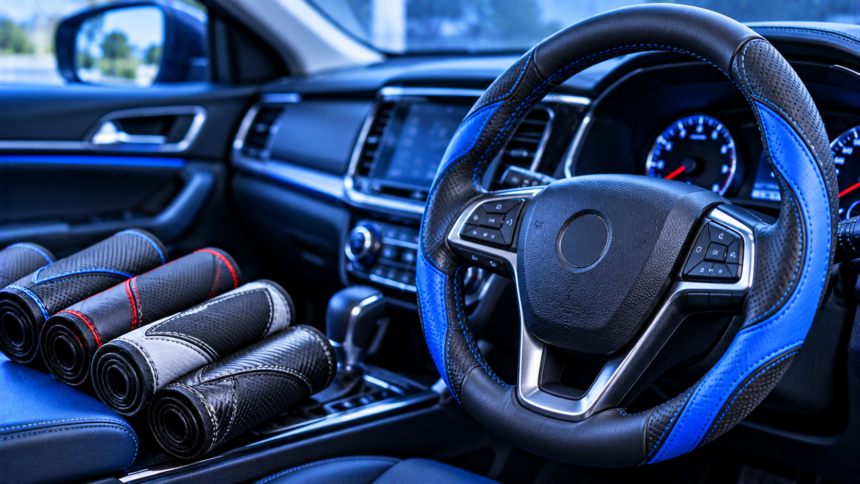
A steering wheel wrap is a cover, usually leather or suede, that you stitch or stretch over your existing wheel to refresh a worn surface and add grip. A good one hides cracks and shine, feels better in your hands, and costs far less than a new wheel. Here is what the different types cost, how long fitting takes, and how to do a clean job yourself.
- What is a steering wheel wrap?
- Types of steering wheel wraps
- Buying the right wrap for your car
- What you’ll need for a DIY wrap
- How much does a steering wheel wrap cost?
- How long does it take?
- How to wrap a steering wheel yourself
- DIY or professional fitting: which is better?
- Common mistakes to avoid
- How to care for your wrap
- Conclusion
- Frequently asked questions
- Related Articles
What is a steering wheel wrap?
A steering wheel wrap is a thin material cover that wraps the rim of your wheel. Most are leather or synthetic leather, cut to the exact shape of your wheel and fixed in place, so the finished result looks and feels close to a factory wheel.
There are two main kinds. A stitch-on wrap has pre-punched holes along both edges, and you sew the two sides together over the rim with a long needle and waxed thread. A slip-on cover stretches over the wheel like a glove and needs no sewing, though it moves around more and wears out faster.
People fit one for two reasons. The first is looks and feel: an old wheel gets shiny, sticky, or cracked where your hands sit, and a wrap covers all of that. The second is grip. A fresh leather or suede surface gives you a firmer hold, which matters most in hot weather when a bare plastic rim turns slick. A wrap also lets you choose your own material and thread color, so you can make a plain wheel look sportier or more upscale.
Types of steering wheel wraps
The right material depends on how your car is used and how much care you want to give it. Here are the common choices and what each one does best.
| Material | Best for | Care needed |
| Genuine leather | A premium, factory-style look that lasts | Regular cleaning and conditioning |
| Synthetic leather | A low-cost, easy-care everyday option | Simple wipe-down |
| Alcantara / suede | Sporty grip and a soft feel | Gentle, frequent brushing |
| Perforated leather | Hot climates and sweaty hands | Regular cleaning and conditioning |
| Slip-on cover | A quick, no-sew temporary fix | Minimal, replace sooner |
Genuine leather is the top pick for a reason: it lasts the longest, ages well, and feels closest to a factory wheel. Synthetic leather, often sold as PU leather, costs less and shrugs off spills, which makes it a sensible daily choice. Alcantara and suede give a grippy, sporty feel that drivers love, but the soft surface marks easily and needs the most care. Perforated leather has tiny holes that let sweat escape, so it earns its place in hot climates.
Slip-on covers sit apart from all of these. They are the cheapest and quickest option, but they slide, loosen, and fray sooner, so they suit a short-term fix more than a lasting upgrade.
Buying the right wrap for your car
The cleanest results come from a wrap cut for your exact make and model. These custom-cut kits match the thickness of your rim and the gaps around the spokes, so the pre-punched holes line up and the material sits flat with no guesswork.
A universal stitch-on kit is the fallback when no model-specific wrap exists for your car. It works on a standard round rim, but you may need to stretch, trim, and adjust it more to get a tidy fit. Measure your wheel’s outer diameter and rim thickness before you buy, since a wrap that is too tight will not close and one that is too loose will sag.
Match the thread to the look you want too. A color that matches the leather keeps things subtle, while a contrast stitch, red on black is a common one, gives the wheel a sportier edge.
What you’ll need for a DIY wrap
A stitch-on kit comes with the wrap cut to shape, a curved or long needle, and waxed thread. A few extra items make the job go smoothly, and most are things you may already own.
- 70% isopropyl alcohol and two microfiber towels, to degrease and wipe the rim
- Thin 3M double-sided automotive tape, to hold the wrap square while you sew
- A blunt plastic tucking tool, to press the edges in around the spokes
- Sharp scissors or a craft knife, to trim thread cleanly
- A socket wrench set, only if you plan to take the wheel off the column
Taking the wheel off makes the stitching easier, but it is optional. Many people wrap the wheel while it stays on the car, turning it as they go.
How much does a steering wheel wrap cost?
A do-it-yourself leather wrap kit usually costs under $100, and that is the whole job if you fit it at home. A slip-on cover can be as little as $15 to $30. The price climbs with the material and the stitching: perforated leather and suede cost more than plain synthetic leather, and custom thread colors add a little on top.
If you would rather not sew, you can send your wheel to a professional. A fitting service runs about $189 for a standard wrap, and closer to $239 once you add extras like thumb grips or extra padding. You ship the wheel in, they stitch the wrap, and they ship it back, often inside 48 to 72 hours.
Either route is a bargain next to a new wheel. A replacement from the dealer often runs $500 to more than $1,500 once you add the part and the labor, so a wrap saves you most of that.
How long does it take?
Fitting a stitch-on leather wrap at home takes about three to four hours of steady, uninterrupted work the first time you do it. Most of that is the stitching, which you cannot rush without leaving loose or uneven thread. The second time around tends to be faster, once the baseball stitch feels natural.
A slip-on cover is far quicker, often ten to fifteen minutes, since there is no sewing at all. If you send the wheel to a fitting service, plan for a few days each way in shipping plus the shop’s own turnaround.
How to wrap a steering wheel yourself
Fitting a stitch-on leather wrap is a patient job, not a hard one. Work in good light, keep the surface clean, and go slowly on the stitching. Here is the process step by step.
- Disconnect the battery. Loosen the negative terminal first and leave the car to sit for a few minutes. This is the safety step if your wheel holds an airbag, so do not skip it.
- Clean the rim. Wipe the whole wheel with 70% isopropyl alcohol on a microfiber cloth to strip off hand oils and polish. The wrap only grips a surface that is truly clean, so take your time here.
- Do a dry fit. Lay the wrap over the wheel without any adhesive and check that the pre-punched holes line up on both sides. Find the 12 o’clock mark on the wrap and match it to the top of the wheel.
- Tape it in place. Run thin double-sided automotive tape along the rim and press the wrap down at the 12, 3, 6, and 9 o’clock points first. This holds everything square while you sew.
- Start the baseball stitch. Thread the long needle with the waxed thread from the kit and begin in a hidden spot behind a spoke. Cross the thread from one side to the other in a repeating X pattern, pulling it snug every three or four stitches so the two edges cinch together.
- Work all the way around. Keep the tension even and the spacing the same. Even pressure is what makes the finished seam look neat instead of lumpy, so settle into a rhythm and keep it.
- Tie off and tuck. Finish with two firm knots in a hidden area, trim the extra thread close to the knot, and tuck the wrap edges in around the spokes with a blunt plastic tool. Give the wheel a final wipe and reconnect the battery.
DIY or professional fitting: which is better?
Fit it yourself if you want to save the most money and you do not mind a few hours of careful sewing. The kit is cheap, the tools are simple, and the result can look factory-fresh when you keep the stitches even.
Send it to a professional if your wheel has an airbag you are not comfortable removing, if you want a tricky stitch pattern like a diamond grid, or if you just want it done right the first time. A fitting service costs more, but the work is covered by a guarantee, which a home job is not. For a look at the pattern options and pro pricing, RedlineGoods’ professional installation lays them out clearly.
Common mistakes to avoid
Most wraps that turn out badly fail for the same few reasons, and all of them are easy to head off before you pick up the needle.
- Skipping the clean. Oil and old polish stop the tape and material from sitting flat, which causes bubbles and wrinkles. Degrease the rim fully before anything else.
- Stitching too loose. Slack thread leaves gaps and a saggy seam. Pull it snug every few stitches so the edges draw tightly together.
- Rushing the dry fit. If you sew before checking the fit, the material can bunch around the spokes with no easy fix. Do a full dry run first.
- Uneven tension. Changing how hard you pull from one stitch to the next shows up as a wavy line. Keep the pressure the same the whole way around.
How to care for your wrap
A wrap lasts years with a little upkeep. For leather and synthetic leather, wipe it weekly with a slightly damp microfiber cloth to clear the oils your hands leave behind. Every month or two, use a pH-neutral leather cleaner, then a light conditioner to keep the surface soft and stop it cracking.
Suede and alcantara need a gentler touch. Lift the fibers with a soft-bristle brush and clean with a product made for alcantara, wiping in one direction so the nap stays even. Keep all of it out of long, direct sun where you can, since heat is what ages a wheel surface fastest. A simple sunshade on hot days does more for the life of a wrap than any cleaner.
Conclusion
A steering wheel wrap is the cheapest way to make a tired wheel look and feel new again. A stitch-on leather kit costs under $100 and about three to four hours of patient sewing; a pro fitting runs near $190 if you would rather ship it out. Clean the rim well, keep your stitches snug and even, and condition the material now and then. Do that, and you get a factory-fresh wheel for a small fraction of a replacement.
Frequently asked questions
Can you wrap a steering wheel with an airbag?
Yes, but disconnect the battery first and let it sit before you start, so the airbag cannot trigger. If you are not sure how to work around the airbag safely, a professional fitting service is the safer choice.
Is a steering wheel wrap hard to install?
It is not hard, just slow. The stitching takes patience and even tension, but the steps are simple. Most people get a clean result on the first try if they clean the rim and do a proper dry fit.
How long does a leather steering wheel wrap last?
A well-fitted leather wrap lasts several years with light care. Wiping it weekly and conditioning it every month or two keeps the surface from cracking and extends its life well beyond a cheap slip-on cover.
Will a wrap fit any steering wheel?
Wraps are cut for specific wheel shapes and sizes, so buy one made for your make and model when you can. A universal stitch-on kit can work on standard round rims, but a custom-cut kit gives the cleanest fit.
Do slip-on covers work as well as stitch-on wraps?
No. Slip-on covers are cheaper and faster, but they shift, loosen, and fray sooner. A stitched leather wrap stays put and looks far closer to a factory wheel, which is why most people choose it.
Related Articles
Does Driving a Car Charge the Battery? What to Know
How Long Can a Car Sit Before the Battery Dies?