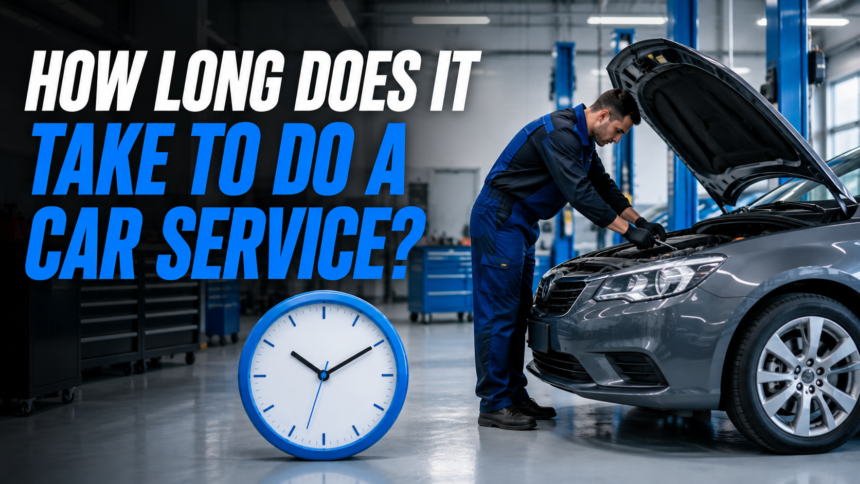
If you’ve ever dropped your car off at a garage and found yourself checking the clock every few minutes, you’ve probably asked the same question thousands of drivers ask every day: how long does it take to do a car service? The honest answer is that it depends on several factors, including the type of service, your vehicle’s condition, and the garage’s workload. However, as a general rule, most routine services are completed within one to three hours, while more comprehensive services can take anywhere from three hours to a full day.
- What Is a Car Service?
- Average Time for a Basic Car Service
- Average Time for a Full or Major Service
- Factors That Affect Service Time
- Interim Service vs Full Service: Time Comparison
- Service Time by Vehicle Type
- What Happens During Each Stage of a Car Service?
- Can You Wait at the Garage?
- How to Reduce Service Time?
- Signs Your Car Needs More Than a Routine Service
- Cost vs Time: What to Expect
- DIY vs Professional Servicing Time Comparison
- Tips for a Faster Car Service Experience
- Frequently Asked Questions (FAQs)
- Conclusion
- Related Articles
This guide breaks down everything you need to know about service durations, what happens behind the scenes, and how you can make the entire process faster and smoother.
What Is a Car Service?
A car service is a scheduled maintenance check that keeps your vehicle running safely and efficiently. It’s different from a repair, which addresses a specific problem, and different from an MOT or roadworthiness inspection, which is a legal safety check rather than a maintenance routine. During a service, mechanics inspect, clean, replace, or top up various components to prevent future breakdowns and extend the life of your car.
Understanding this distinction matters because people often mix up these terms, and that confusion is part of why service time estimates vary so widely online.
Average Time for a Basic Car Service
A basic or interim service is the quickest option and usually the one most drivers schedule every six months or 6,000–8,000 miles. It generally includes an oil change, oil filter replacement, fluid top-ups (brake fluid, coolant, screen wash), and a visual inspection of tires, lights, and brakes.
On average, a basic service takes around 45 minutes to 1.5 hours, assuming there are no unexpected issues. This makes it one of the most convenient options for drivers who want to wait at the garage rather than leave their car overnight.
Average Time for a Full or Major Service
A full service is far more thorough. Technicians will check the brake system in detail, inspect and possibly replace spark plugs, examine the timing belt or chain, test the suspension, and go through a longer checklist that mirrors manufacturer recommendations.
Because of this depth, a full service typically takes 3 to 5 hours, and in some cases, particularly if parts need ordering or additional repairs are discovered, it can stretch into a full working day. Major services, such as those scheduled every 24,000–30,000 miles, often fall into this longer category.
Factors That Affect Service Time
Not every car, garage, or service is the same, so the time required can shift based on several variables:
- Vehicle age and mileage – Older cars or those with higher mileage often need more attention.
- Type of service booked – Basic, interim, and full services all have different scopes of work.
- Garage workload – Busy periods, such as weekends or school holidays, can extend waiting times.
- Part availability – If a replacement part isn’t in stock, the service may pause until it arrives.
- Diagnostic needs – If a warning light or unusual noise is reported, diagnostic testing adds extra time.
These factors explain why one driver’s “quick service” might take an hour while another’s takes half a day, even for what seems like the same type of service.
Interim Service vs Full Service: Time Comparison
The table below offers a side-by-side comparison to help you understand what to expect from each option.
| Service Type | Average Duration | Tasks Included | Recommended Frequency |
|---|---|---|---|
| Interim/Basic Service | 45 minutes – 1.5 hours | Oil change, filter replacement, fluid top-up, visual check | Every 6 months or 6,000–8,000 miles |
| Full Service | 3 – 5 hours | Brake inspection, spark plug check, suspension test, deeper mechanical review | Every 12 months or 12,000 miles |
| Major Service | 5 hours – full day | Everything in a full service plus timing belt, major fluid replacements, extensive diagnostics | Every 2 years or 24,000–30,000 miles |
Service Time by Vehicle Type
The kind of car you drive also plays a role in how long does it take to do a car service. Smaller, simpler vehicles are usually quicker to work on, while larger or more advanced vehicles require extra time.
Small hatchbacks and city cars tend to have straightforward engine layouts, which often means faster service times. SUVs and larger family cars typically take slightly longer due to their bigger engines and additional components.
Luxury or performance vehicles often require specialized tools and more detailed checks, extending the process further. Electric vehicles, on the other hand, skip traditional tasks like oil changes but still need battery health checks, software updates, and brake system inspections, which can take a comparable amount of time despite the different checklist.
What Happens During Each Stage of a Car Service?
Understanding the actual workflow helps explain where the time goes. A typical service moves through several stages:
- Check-in – The vehicle is logged, and the customer discusses any concerns with the service advisor.
- Initial inspection – A quick walk-around and diagnostic scan identify obvious issues.
- Maintenance tasks – This is the core of the service, including fluid changes, part replacements, and adjustments.
- Test drive – Many garages take the car for a short drive to confirm everything works properly.
- Quality check – A final review ensures nothing was missed before the car is handed back.
- Hand-back – The customer receives a summary of what was done, along with any recommendations.
Each of these stages adds a small amount of time, which is why even a “quick” service rarely takes less than 30–45 minutes from start to finish.
Can You Wait at the Garage?
Many people prefer to wait rather than leave their car and arrange separate transport. For basic services, waiting is usually a realistic option since the whole process often wraps up in under 90 minutes. Most garages offer a waiting area with seating, and some even provide refreshments or Wi-Fi.
For full or major services, waiting becomes less practical. Since these can take several hours, most garages recommend dropping the car off in the morning and collecting it later in the day, or leaving it overnight if additional repairs are needed.
How to Reduce Service Time?
While you can’t control everything, there are a few practical ways to speed things up:
- Book in advance – Early booking often means better availability and less waiting around.
- Pre-list any issues – Mentioning specific noises, warning lights, or concerns beforehand helps technicians prepare.
- Choose off-peak hours – Early mornings or midweek slots are usually less busy.
- Use authorized or well-organized service centers – Efficient garages with good part stock tend to finish faster.
Taking these small steps can shave real time off your visit, especially during busy seasons.
Signs Your Car Needs More Than a Routine Service
Sometimes what starts as a routine visit turns into something longer. Certain signs suggest your car may need extra work beyond the standard checklist, including worn brake pads, a weakening battery, unusual belt noises, or dashboard warning lights that weren’t previously reported. When technicians discover these issues mid-service, they’ll usually contact you before proceeding, which can add time as you decide how to move forward.
Cost vs Time: What to Expect
There’s a common assumption that longer services always cost more, but that’s not strictly true. Time is influenced by labor and complexity, while cost depends on both labor and parts. A full service might take three hours and cost a moderate amount, while an unexpected repair discovered during a shorter service could add significant cost even without dramatically increasing the time. It’s more accurate to think of time and cost as related but separate factors, each shaped by what your car actually needs.
DIY vs Professional Servicing Time Comparison
Some drivers consider handling basic maintenance themselves, such as oil changes or fluid top-ups. Doing this at home can take a similar amount of time as a professional basic service, roughly 45 minutes to an hour, though it depends heavily on experience and available tools.
However, more complex tasks like brake inspections or timing belt work are best left to professionals, both for safety reasons and because specialized equipment significantly speeds up the process compared to a home garage setup.
Tips for a Faster Car Service Experience
A smoother, quicker service experience often comes down to preparation and communication. Booking early, being clear about any issues, and maintaining a consistent service history with the same garage all contribute to faster turnaround times. Garages that already know your car’s history can often work more efficiently since they’re not starting from scratch with diagnostics.
Frequently Asked Questions (FAQs)
Can I get my car serviced the same day? Yes, many garages offer same-day servicing for basic or interim services, especially if booked in advance. Full services may also be completed same-day but often require dropping the car off early.
How long does an oil change alone take? An oil change on its own typically takes 20–30 minutes, making it one of the fastest maintenance tasks available.
What happens if additional repairs are found during the service? The garage will usually contact you to explain the issue and get approval before proceeding, which can extend the overall time depending on parts availability.
Is it faster to book at a dealership or an independent garage? This varies by location and workload, but independent garages are sometimes quicker due to smaller queues, while dealerships may have better access to manufacturer-specific parts.
Conclusion
So, how long does it take to do a car service? In short, a basic service usually takes about an hour to ninety minutes, while a full or major service can take anywhere from three hours to a full day, depending on your vehicle and what’s involved. Factors like vehicle type, garage workload, and part availability all play a role in the final timing.
Regular servicing, even though it requires setting aside some time, is one of the most effective ways to keep your car safe, reliable, and running smoothly for years to come. Booking ahead, communicating clearly with your mechanic, and staying on top of your maintenance schedule are simple steps that make the entire process faster and far less stressful.
Related Articles
Is 150k Miles on a Used Car Bad? What You Really Need to Know
Why Does My Car Shake When I Drive? A Complete Guide to Causes, Fixes, and Costs