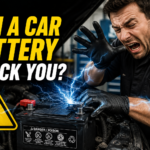
Yes, a car battery can die while driving, but the battery alone is rarely what causes the car to shut down. As long as the alternator is charging, your car will keep running even with a weak battery. A car actually stalling on the road is almost always a sign of a charging system failure, usually the alternator, not just a tired battery.
- How the battery and alternator split the job?
- Why the alternator is usually the real cause?
- Warning signs before it happens
- What happens when the car loses power?
- What to do if it dies while driving?
- Why jump-starting may not help?
- Common causes
- How to prevent it?
- Conclusion
- Frequently asked questions
- Related Articles
This surprises a lot of people, because we tend to think the battery powers the car. It does not, at least not while you are driving. Understanding the difference explains what is really happening, what warning signs to watch for, and exactly what to do if the power fails on the road.
How the battery and alternator split the job?
Your car has two parts that handle electricity, and they do different jobs. Getting this straight is the key to the whole question.
The battery’s main job is to start the engine, providing the jolt of power that cranks it over. Once the engine is running, the alternator takes over as the main source of electrical power, running everything and recharging the battery at the same time. As AutoZone puts it, the battery alone usually is not what causes the car to shut down; the real issue is the charging system.
| The battery | The alternator |
| Starts the engine when you turn the key | Powers the car’s electrics once it is running |
| Supplies extra power when demand is high | Recharges the battery as you drive |
| Not the main power source while driving | The main power source while driving |
| If weak, the car may still run on the alternator | If it fails, the car runs down the battery and can stall |
So the answer to “can the battery die while driving” depends heavily on the alternator. If the alternator is healthy, a weak or even dead battery will not stall you, though you will likely find the car will not restart once you switch it off. It is only when the alternator fails too that the car loses power on the move.
Why the alternator is usually the real cause?
Because the alternator is the primary power source while driving, its failure is the usual reason a car dies on the road. When the alternator stops charging, the car is forced to run entirely on the battery’s stored power.
A battery is not built to power a moving car for long on its own. Once the alternator quits, the battery drains its reserve in a matter of minutes, and then the engine stalls. This is why a stall while driving is typically a symptom of a bigger charging-system problem rather than the battery simply being old. It also explains a common confusion: drivers assume the battery is the issue and try to jump-start it, when the alternator was the real culprit all along.
The key idea: a healthy alternator keeps the car running even with a bad battery. A stall on the road means the charging system, most often the alternator, has failed, not just the battery.
Warning signs before it happens
The good news is that it rarely happens without warning. Most cars give you a few minutes of clues before everything quits, so knowing the signs lets you pull over safely rather than being caught by surprise:
- The battery warning light. An illuminated battery or charging symbol on the dash is the clearest early warning that the charging system is struggling.
- Dim or flickering lights. Headlights and dashboard lights that dim or flicker suggest the electrical supply is failing.
- Weak or failing accessories. Power windows slowing down, a fading radio, or other electronics acting up point to dropping voltage.
- A squealing noise. A squeal from the engine can mean a loose or failing alternator belt.
- Sluggish performance. The engine hesitating or the car feeling underpowered can come just before a stall.
What happens when the car loses power?
If the alternator and battery both give out while driving, the car will gradually lose electrical power and the engine will stall. It helps to know what to expect, because some of it affects your control of the car.
As the power fades, the lights dim or shut off, the dashboard warnings come on, and electrical accessories stop. Critically, the engine shutting off makes the power steering much heavier and the brakes harder to press, because both rely on the engine running for their assist.
The brakes and steering still work, but they take far more effort. Safety systems like airbags and stability control can also be affected. This is why it is important to pull over at the first sign of electrical trouble rather than pressing on.
What to do if it dies while driving?
If the car loses power on the road, stay calm and focus on getting safely off the road. Here is what to do:
- Signal and steer to the side. Put on your hazard lights and steer toward the shoulder or the nearest safe spot while you still have momentum. Do this early, before you lose speed.
- Expect heavy steering and brakes. Both will take much more effort with the engine off, so push firmly and steer with purpose. They still work, just harder.
- Get fully off the road. Coast as far onto the shoulder as you can. On a highway, getting clear of traffic is the priority.
- Shift to Park or Neutral and try to restart. Once stopped, try restarting. If nothing happens when you turn the key, that confirms an electrical failure.
- Call for help. Use your phone to call roadside assistance or a tow. Do not try to fix it on a busy roadway.
Do not try to repair the car on a live road. Get yourself and the vehicle to safety first, then call for assistance. Standing beside a car in traffic is far more dangerous than the breakdown itself.
Why jump-starting may not help?
A natural instinct is to jump-start the car, but if the alternator is the problem, that will only buy you a few minutes. You can jump-start a car with a dead battery, and it may start, but without a working alternator to recharge it, the battery drains again quickly and the car stalls once more.
So if a jump gets the car going but it dies again shortly after, or dies the moment you disconnect the cables, the alternator is almost certainly at fault. In that case the fix is a repair, not a jump, and the safest move is a tow to a shop rather than trying to nurse the car along.
Common causes
A battery dying while driving usually traces back to one of these, and most are not the battery itself:
- Alternator failure. The most common cause. It stops charging, and the car runs down the battery and stalls.
- A blown fuse or belt. A blown alternator fuse or a broken drive belt can stop the alternator from working.
- Corroded or loose terminals. Poor connections can block the flow of power even if the parts are fine.
- Wiring problems or a shorted cell. A wiring fault or an internally failed battery cell can cause a sudden loss of power.
- An old, worn-out battery. A battery past its life produces less voltage and can fail, especially if the alternator is also weak.
How to prevent it?
You cannot rule out every breakdown, but you can make one far less likely. Have the battery and charging system tested periodically, especially before a long trip and as the battery ages past about three to five years. Many shops and parts stores do this for free.
Beyond that, act on the warning signs rather than ignoring them. A battery light, dimming lights, or a squealing belt are the car telling you the charging system needs attention, and catching it in the shop is far better than discovering it on the highway. Keeping the battery terminals clean and the connections tight also helps the whole system work reliably.
Conclusion
A car battery can die while driving, but the battery alone rarely causes a stall, because the alternator is what powers the car once it is running. If the car loses power on the road, it almost always means the charging system has failed.
Watch for the battery warning light, dimming lights, and a squealing belt, and if the power does fail, signal, steer to safety with what will be heavy steering and brakes, then call for help. Get the charging system tested regularly and you can avoid the whole scenario.
Frequently asked questions
Will my car keep running if the battery dies while driving? If the alternator is still charging, yes, the car will keep running, though it may not restart once you switch it off. The car only stalls if the alternator has failed too.
Is it the battery or the alternator that makes a car stall while driving? Almost always the alternator. The battery is not the main power source while driving, so a stall on the road usually means the alternator, or the wider charging system, has failed.
What should I do if my car loses power while driving? Turn on your hazards, steer to the side of the road while you have momentum, and expect heavy steering and brakes with the engine off. Once stopped, try to restart, and call for help.
Can I jump-start a car whose alternator failed? You can, and it may start, but it will not last. Without a working alternator to recharge the battery, the car will drain the battery and stall again within minutes.
How can I prevent my battery dying on the road? Have the battery and charging system tested regularly, especially before long trips and once the battery is a few years old, and act on warning signs like a battery light or dimming lights.
Related Articles
Can Spark Plugs Cause a Car to Not Start?
Does a Dirty Air Filter Cause Your Car to Jerk?