



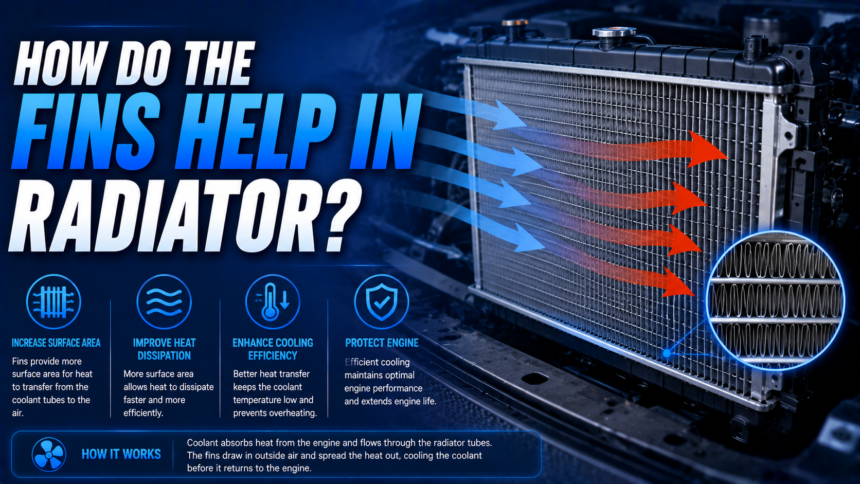
If you’ve ever wondered how do the fins help in radiator cooling, the short answer is that they’re the unsung workhorses of your entire engine cooling system. Those thin metal ridges packed between the radiator tubes aren’t just filler material — they’re precision-engineered to pull heat out of your coolant and dump it into the passing air before your engine has a chance to overheat. Understanding how they work (and how to tell when they’re failing) can save you from a roadside breakdown, a blown head gasket, or an expensive tow.
- What Are Radiator Fins, Exactly?
- How Do the Fins Help in Radiator Heat Transfer? The Science, Simplified
- The Surface Area Multiplier
- Step One: Conduction (Coolant to Metal)
- Step Two: Convection (Metal to Air)
- Types of Radiator Fins and How Each One Performs
- What Happens When Radiator Fins Are Damaged or Clogged?
- What Causes Radiator Fins to Fail
- DIY Radiator Fin Inspection and Cleaning Guide
- Repair vs. Replace: What US Drivers Should Know
- Frequently Asked Questions
- Conclusion
- Related Articles
In this guide, we’ll break down exactly what radiator fins do, walk through the different fin designs used in modern vehicles, show you the warning signs of fin damage, and give you a practical, step-by-step approach to inspecting and maintaining them — all in plain English, with no engineering degree required.
What Are Radiator Fins, Exactly?
Radiator fins are the thin, closely spaced strips of metal — usually aluminum — sandwiched between the small tubes that make up your radiator’s core. If you’ve ever popped the hood and looked at the radiator, the fins are that dense, honeycomb-like grid you see facing the front of the car.
Coolant heated by the engine flows through the radiator tubes. On its own, that hot liquid would release heat far too slowly to keep a modern engine cool, because the tubes alone don’t offer much surface area for heat to escape into the air. That’s the entire reason fins exist.
How Do the Fins Help in Radiator Heat Transfer? The Science, Simplified
Here’s the core concept: heat transfer speed depends heavily on surface area. The more metal surface exposed to moving air, the faster heat can escape. Radiator fins solve this problem elegantly.
The Surface Area Multiplier
Picture two glasses of hot coffee — one with a narrow opening, one poured into a wide, shallow bowl. The bowl cools faster because more of the coffee’s surface is exposed to the air. Radiator fins apply the same logic to your engine’s coolant. By attaching dozens of thin metal fins to each tube, engineers multiply the total surface area many times over compared to bare tubes alone, without making the radiator itself any bigger. That’s how a radiator small enough to fit behind your grille can shed the heat output of a several-hundred-horsepower engine.
Step One: Conduction (Coolant to Metal)
As hot coolant moves through the tubes, heat conducts through the thin tube walls and directly into the base of each attached fin. Aluminum is used almost universally here because it conducts heat efficiently while staying lightweight — a win for both cooling performance and fuel economy.
Step Two: Convection (Metal to Air)
Once heat has moved into the fin, it needs somewhere to go. That’s where airflow comes in. As air passes over and through the fins — pushed by your vehicle’s forward motion, the electric cooling fan, or both — it carries heat away from the metal surface and out through the grille. This is called convective heat transfer, and it’s the final, critical step in the process. Without adequate airflow, even a radiator with perfect fins will struggle to cool the engine, which is why a broken cooling fan or a blocked grille can cause overheating even when the fins themselves are in great shape.
Put simply: fins don’t cool the coolant directly — they act as a bridge, using surface area and airflow to move heat out of the liquid and into the atmosphere.
Types of Radiator Fins and How Each One Performs
Not all radiator fins are built the same way. Manufacturers choose different fin geometries depending on the vehicle’s cooling demands, available airflow, and how much dirt or debris the radiator is likely to encounter.
Flat (Plain) Fins
Flat fins are simple, straight strips of metal running perpendicular to the tubes. They’re inexpensive to manufacture, offer low resistance to airflow, and are relatively easy to clean because there are no small openings for debris to lodge into. The trade-off is slightly lower heat-transfer efficiency compared to more complex designs, so they’re most common in vehicles that rely on strong forced airflow from a fan rather than pure ram air.
Louvered Fins
Louvered fins have small angled slits cut into the metal. These slits disrupt the thin, slow-moving layer of air that clings to a flat surface (called the boundary layer), forcing fresh air into more direct contact with the fin. The result is noticeably better heat transfer in a compact space, which is why louvered fins are the standard choice in most modern passenger vehicles. The downside: the added surface detail makes them slightly more prone to trapping bugs, leaves, and road grime.
Corrugated (Serpentine) Fins
Instead of individual flat strips, corrugated fins are a single continuous piece of metal folded into a zigzag pattern between the tubes. This design increases surface area while keeping manufacturing costs down, and it holds up well under vibration. You’ll typically find this style in heavy-duty trucks, industrial equipment, and some older domestic vehicles.
No single fin design is universally “best.” The right choice always depends on balancing three factors: how much heat needs to be removed, how much airflow is available, and how dirty or debris-prone the driving environment is.
What Happens When Radiator Fins Are Damaged or Clogged?
Even the best fin design can’t do its job if it’s bent, blocked, or corroded. Because fins are thin by necessity — that’s what makes them effective — they’re also somewhat fragile.
Signs Your Radiator Fins Need Attention
Watch for these warning signs, especially during hot weather or stop-and-go traffic when your cooling system works hardest:
- Temperature gauge creeping up at idle or in slow traffic, even if it drops back to normal at highway speed
- Visible bent, crushed, or discolored fins when you look through the grille
- Reduced air conditioning performance, since the AC condenser sits directly in front of the radiator and relies on the same airflow path
- Sweet, syrupy smell near the front of the vehicle, which can indicate a coolant leak caused by fin corrosion eating through nearby tubing
- Visible debris — leaves, bugs, cottonwood fluff, or road grime — packed between the fins
- Steam or unusual heat coming from under the hood after only moderate driving
If you notice more than one of these signs at once, it’s worth inspecting the radiator before a short-term nuisance becomes a long-term repair.
What Causes Radiator Fins to Fail
- Road debris impact: Rocks, gravel, and hail can bend or crush fins, especially on vehicles with a low front grille opening.
- Corrosion: Road salt, moisture, and old or contaminated coolant can eat away at aluminum fins over time, especially in colder states that salt their roads in winter.
- Debris buildup: Leaves, insects, and dust reduce the open space between fins, choking off airflow even when the metal itself is undamaged.
- Improper pressure washing: Aiming a high-pressure car wash wand directly at the radiator can bend fins just as easily as a rock can.
DIY Radiator Fin Inspection and Cleaning Guide
You don’t need a mechanic’s toolkit to check your radiator fins. Here’s a safe, practical approach you can do in your own driveway.
- Wait for the engine to cool completely. Never touch a radiator, fan, or coolant on a hot or recently running engine — pressurized coolant can cause severe burns.
- Remove any front grille cover or bug screen, if your vehicle has one, so you have a clear line of sight to the radiator core.
- Visually inspect the fins for bent sections, discoloration, white corrosion buildup, or visible gaps where fins have broken away from the tubes.
- Clear loose debris by hand first — leaves, twigs, and larger bugs can usually be picked out gently without tools.
- Rinse from the engine side outward using a garden hose on a low-pressure setting, or compressed air at a low PSI. Spraying from the back pushes debris out the way it came in, rather than deeper into the core.
- Straighten minor bends carefully using a plastic fin comb (available at most auto parts stores for under $15). Work slowly — fins can snap off entirely if forced.
- Check for oil residue on the fins, which often signals a transmission cooler or power steering line leak nearby and should be addressed separately.
Do this check twice a year — ideally before summer and before winter — when cooling demands are at their highest.
Repair vs. Replace: What US Drivers Should Know
Minor debris buildup and light fin bending can usually be resolved with the cleaning steps above, at little to no cost beyond your own time. More significant damage typically falls into one of two categories:
- Professional radiator cleaning or fin straightening at a shop generally runs in the low hundreds of dollars, depending on your region and vehicle.
- Full radiator replacement becomes the more practical option once fins have separated from the tubes, corrosion has spread significantly, or a leak has developed — trying to repair fins at that stage rarely restores full cooling performance and can leave you vulnerable to a repeat failure.
If your vehicle is overheating and you’re not confident diagnosing the cause yourself, it’s worth having a mechanic pressure-test the cooling system rather than guessing, since fin damage is only one of several possible culprits (a failing thermostat, water pump, or cooling fan can produce similar symptoms).
Frequently Asked Questions
How do the fins help in a radiator? Radiator fins increase the surface area available for heat transfer. They conduct heat away from the coolant-carrying tubes and release it into passing air, allowing a compact radiator to cool a large volume of hot coolant efficiently.
What happens if radiator fins are bent? Bent fins reduce the open space air needs to pass through, which lowers airflow and cooling efficiency. A few bent fins usually won’t cause a major issue, but widespread damage can lead to overheating.
Can I drive with damaged radiator fins? Light fin damage often has minimal impact, but you should monitor your temperature gauge closely. If the engine is running hot or the AC is blowing warm air, it’s safer to have the cooling system inspected before continuing to drive.
How often should I clean radiator fins? Most drivers benefit from a visual check and light cleaning twice a year, though vehicles driven in dusty, buggy, or high-pollen environments may need more frequent attention.
Are more radiator fins always better? No. Packing in more fins increases surface area, but past a certain density, it also restricts airflow and makes the radiator more prone to clogging. Manufacturers balance fin count against available airflow for each specific vehicle.
What are radiator fins made of? The vast majority of modern radiator fins are made from aluminum because it offers a strong balance of thermal conductivity, light weight, and manufacturing cost. Copper and brass fins appear in some older or premium designs and conduct heat even better, but at a higher weight and cost.
Conclusion
So, how do the fins help in radiator performance? They take the heat your engine’s coolant absorbs and give it somewhere to go — using surface area to speed up heat transfer and airflow to carry that heat away for good. Whether your vehicle uses flat, louvered, or corrugated fins, the underlying job is the same: keep your engine running at a safe operating temperature, mile after mile.
The best way to protect that system is simple: check your fins twice a year, keep debris cleared away, and address bent or corroded sections before they turn into a bigger repair. If you’ve noticed any of the warning signs covered above — a creeping temperature gauge, weak AC performance, or visible fin damage — don’t wait for a breakdown. Pop the hood, run through the inspection steps in this guide, or have a trusted mechanic take a look today.
Related Articles
Can You Lease a Car With Bad Credit? What It Costs
Is Nissan an American Car? The Real Answer Explained
What Is the Fastest BMW? Complete Speed & Acceleration Guide