Finding ants crawling across your dashboard or streaming out of a cup holder is unsettling, but it’s a more common problem than most drivers realize. If you’re searching for how to get rid of ants in your car, the good news is that it’s almost always solvable without professional help — as long as you tackle both the ants you can see and the reasons they showed up in the first place. This guide walks through exactly why ants end up in vehicles, how to remove them safely and completely, and how to keep them from coming back.
- Why Are Ants Getting Into Your Car?
- Food and Drink Residue
- Pheromone Trails
- Parking Near Nests, Mulch, or Trees
- Shelter From Weather
- Ants With No Food Present
- Which Ant Species Commonly Get Into Vehicles?
- Signs You Have a Real Problem — Not Just a One-Time Visit
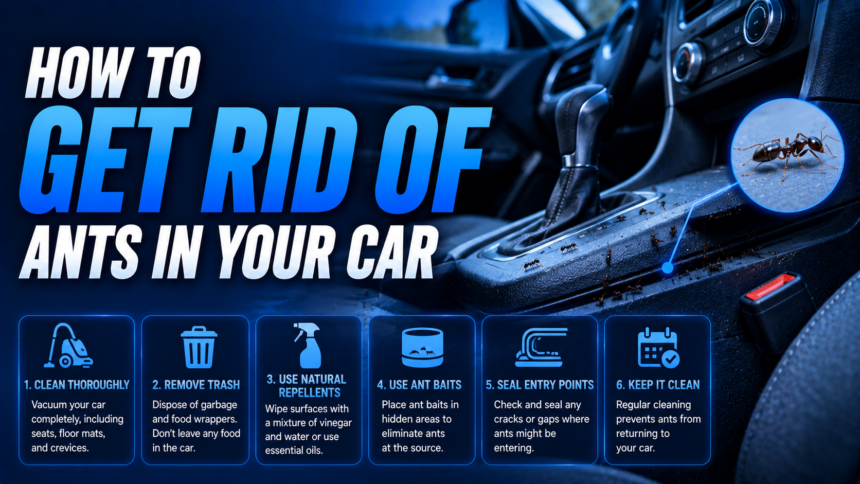
- How to Get Rid of Ants in Your Car: Step-by-Step
- Step 1: Relocate Your Vehicle if Possible
- Step 2: Remove Everything and Vacuum the Hidden Spots
- Step 3: Wipe Down Surfaces to Break the Scent Trail
- Step 4: Wash the Exterior, Including Wheel Wells
- Step 5: Use Ant Bait Strategically
- Step 6: Try Natural Repellents for Ongoing Deterrence
- Step 7: Check for and Seal Entry Points
- Step 8: Address the Parking Area Itself
- Safety Tips When Treating Ants in an Enclosed Vehicle
- How Long Does It Take to Get Rid of Ants in a Car?
- How to Prevent Ants From Coming Back
- When to Call a Pest Control Professional
- FAQ: Common Questions About Ants in Cars
- Final Thoughts
- Related Articles
Why Are Ants Getting Into Your Car?
Ants don’t invade cars at random. They’re following a scent, a food source, or simply the terrain around where you park. Understanding the cause makes it much easier to fix the problem for good.
Food and Drink Residue
Dropped fries, spilled soda, cereal crumbs from a kid’s car seat, or a fast-food bag left overnight are often all it takes. Ants can detect food residue in seams, cup holders, and carpet fibers that look perfectly clean to the human eye.
Pheromone Trails
Once a single scout ant finds something worth eating, it lays down a chemical trail on its way back to the colony. Other worker ants follow that exact path, which is why a “few ants” one day can turn into a steady stream within 24 to 48 hours.
Parking Near Nests, Mulch, or Trees
Cars parked over cracked pavement, near mulch beds, under trees, or close to an anthill give ants an easy, short route into the vehicle. In many cases, the car itself isn’t the attraction — its parking spot is.
Shelter From Weather
During extreme heat, heavy rain, or the first cold snap of fall, ants sometimes move into a parked car simply looking for shelter, independent of any food source.
Ants With No Food Present
If you’ve cleaned thoroughly and ants are still showing up, they may be scouts exploring new territory, or they may be following a pheromone trail left over from a spill that’s already been cleaned up. The scent trail can persist even after the food itself is long gone.
Which Ant Species Commonly Get Into Vehicles?
Most competitor guides skip this, but the species matters because it affects how urgently you should act.
- Odorous house ants and pavement ants — the most common car invaders, drawn to sugar and food debris. A nuisance, not a structural risk.
- Argentine ants — travel in large trailing numbers and are persistent once a scent trail is established.
- Carpenter ants — less common in cars but worth knowing about, since they can chew into foam padding, insulation, and even nibble at wire coatings if they linger for an extended period. If you see larger, dark ants (roughly ¼ to ½ inch) consistently near the wiring harness or under the dashboard, treat it as a higher priority.
- Fire ants — in southern states, fire ants can occasionally enter through wheel wells; use extra caution since they bite and sting.
If you’re unsure which type you’re dealing with, a quick photo comparison online or a call to a local pest control company can confirm it before you decide how aggressively to treat the problem.
Signs You Have a Real Problem — Not Just a One-Time Visit
A single ant on the windshield doesn’t mean an infestation. Watch for these signs instead:
- Ants appearing in the same spot every day, not just once
- Visible trails near door seals, tires, or floor mats
- Clusters in cup holders, the center console, or storage bins
- Activity in the trunk, spare tire well, or under seats
If you’re seeing a consistent pattern rather than a one-off, it’s time to work through the full removal process below.
How to Get Rid of Ants in Your Car: Step-by-Step
Step 1: Relocate Your Vehicle if Possible
If you can identify that you’re parked near a nest, mulch bed, or tree line, moving your car — even to a different spot in the same lot or driveway — breaks the physical path ants are using and stops new ants from joining in while you clean.
Step 2: Remove Everything and Vacuum the Hidden Spots
Take out trash, reusable bags, food containers, and loose items first. Then vacuum thoroughly, focusing on the areas people typically skip:
- Under the seats and along seat rails
- Cup holders and the center console
- Floor mat edges and carpet seams
- Door pockets and the glove box
- Trunk corners and the spare tire well
- Child car seat crevices and snack zones
A shop vac or detailing vacuum with a narrow attachment reaches these gaps far better than a standard household vacuum.
Step 3: Wipe Down Surfaces to Break the Scent Trail
Vacuuming removes crumbs, but it won’t erase the pheromone trail on hard surfaces. Wipe down the dashboard, cup holders, console, and door panels with a mix of warm water and a small amount of dish soap. Soap breaks down the chemical trail ants rely on to navigate, which is often the difference between ants disappearing for good versus returning within a day.
Step 4: Wash the Exterior, Including Wheel Wells
Ants frequently enter through tires and wheel wells rather than the cabin directly. A thorough exterior wash — especially around the undercarriage, tires, and door edges — removes outdoor debris and disrupts any trail ants have built up on the body of the car.
Step 5: Use Ant Bait Strategically
Bait outperforms spray for anything beyond a one-time visitor because worker ants carry the bait back to the colony, affecting ants you never even see. Place small gel bait stations in low-traffic areas — under seats, in the trunk corners, or near the base of the door — rather than out in the open where they could be disturbed by passengers or pets. Give bait several days to work; killing the colony takes longer than killing the ants on the surface.
Step 6: Try Natural Repellents for Ongoing Deterrence
If you prefer to avoid chemical products in an enclosed space, several natural options help deter ants between cleanings:
- Peppermint or cinnamon essential oil — a few drops on a cotton ball tucked under a seat or in the console disrupts scent trails ants rely on.
- White vinegar solution — a 1:1 mix of vinegar and water in a spray bottle, wiped onto hard surfaces, works similarly to soapy water for breaking trails and has a scent ants avoid.
- Diatomaceous earth — a thin food-grade diatomaceous earth application in the trunk or under floor mats can help with recurring activity, though it should be used sparingly and vacuumed up periodically to avoid dust buildup.
Step 7: Check for and Seal Entry Points
This step is frequently missed. Inspect door seals, weatherstripping, and any gaps around the trunk or hood for wear. Ants are small enough to exploit even minor gaps. Replacing worn weatherstripping or applying a thin bead of silicone sealant to obvious gaps can meaningfully cut down on repeat entries.
Step 8: Address the Parking Area Itself
If ants keep returning despite a clean, treated car, the source is likely outside the vehicle. Look for an anthill, mulch bed, or crack in the pavement near your regular parking spot. Treating that area — or simply parking somewhere else — often resolves cases that cleaning alone can’t fix.
Safety Tips When Treating Ants in an Enclosed Vehicle
A car cabin is a small, enclosed space, so a few precautions matter more here than they would in a house:
- Ventilate the car (windows or doors open) for at least 15–20 minutes after using any spray product, and avoid running the HVAC system immediately afterward.
- Keep bait stations and sprays out of reach of children and pets, and avoid placing anything loose on seats or floor areas they can access.
- Choose products labeled safe for enclosed spaces or vehicle use rather than general outdoor pesticides, which can be more concentrated than necessary.
- Avoid spraying directly onto electronics, vents, or exposed wiring.
How Long Does It Take to Get Rid of Ants in a Car?
For a simple case caused by a recent spill or crumbs, thorough cleaning alone often resolves the problem within a day. If bait is needed to address a trail connected to an outdoor colony, expect three to seven days for activity to fully stop, since the bait needs time to reach the nest. Recurring infestations tied to a nearby colony can take longer and may require treating the parking area directly.
How to Prevent Ants From Coming Back
- Avoid eating in the car, or at minimum clean up spills immediately rather than the next day
- Vacuum on a regular schedule, not just when ants appear
- Keep floor mats dry and check for hidden moisture after rain
- Inspect bags, backpacks, and grocery items before placing them in the car — ants often hitch a ride this way
- Be mindful of where you routinely park, especially near mulch, grass, or trees
- Do a periodic wipe-down of cup holders and the console with soapy water or a vinegar solution
When to Call a Pest Control Professional
Most car ant problems resolve with the steps above. Consider calling a licensed pest control company if:
- Ants return repeatedly despite multiple thorough cleanings and bait applications
- You suspect a large nest very close to your home or regular parking spot
- You notice larger carpenter ants near wiring or upholstery padding
- The infestation involves fire ants or another species that poses a bite/sting risk
A professional treatment typically costs less than the price of damaged wiring or upholstery, so it’s worth the call if home methods aren’t holding.
FAQ: Common Questions About Ants in Cars
Why do I have ants in my car if there’s no food in it? Ants may be scouts exploring new territory, or they could be following a pheromone trail left behind from a spill that’s already been cleaned. The scent trail can linger even after the food itself is gone, so cleaning surfaces (not just vacuuming) is important.
Can ants actually damage my car? In most cases, no — they’re a nuisance rather than a structural threat. The exception is carpenter ants, which can occasionally chew into foam padding, insulation, or wire coatings if they’re left undisturbed for a long period.
Is it safe to use ant spray inside a closed car? It can be, but ventilation matters. Spray, let the car air out for 15–20 minutes with the doors or windows open, and avoid spraying near vents, electronics, or exposed wiring.
Will ants build a permanent nest inside a car? It’s rare. Cars don’t offer the humidity and stability most ant colonies need, so ants are usually visiting rather than nesting. The exception is a car that sits parked and undisturbed for very long stretches.
What kills ants fastest in a car? Contact sprays kill visible ants quickly, but bait is more effective long-term because it eliminates the colony rather than just the ants you see. Using both — spray for the immediate problem, bait for the source — tends to work best.
Do dryer sheets or cotton balls with essential oil keep ants out of cars? Scented deterrents like peppermint oil or dryer sheets can help disrupt scent trails and discourage new activity, but they work best as a supplement to cleaning, not a replacement for it.
Final Thoughts
Getting rid of ants in your car comes down to two things: removing what’s attracting them and breaking the trail that keeps bringing them back. A thorough vacuum and wipe-down handles most one-off cases, while bait, natural repellents, and attention to your parking spot resolve the more persistent ones.
Keep an eye on where and how ants are entering, stay consistent with prevention habits like clearing spills right away, and you’ll rarely deal with more than a stray ant or two going forward. If ants keep returning despite your best efforts, don’t hesitate to bring in a pest control professional — it’s a quick, affordable way to make sure the problem is gone for good rather than just out of sight.
Related Articles
How Many Miles Can a Honda Odyssey Last? Full Lifespan Guide
Are BMW Reliable Cars? What the Data Shows