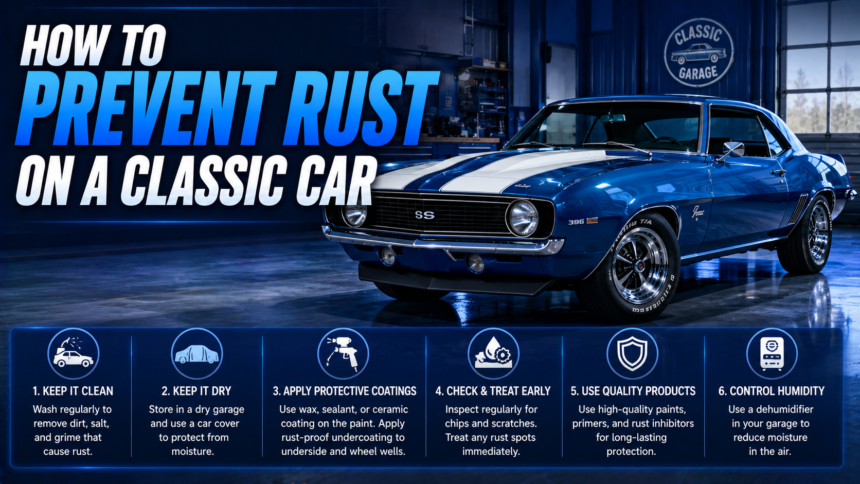
If you’ve ever pulled a cover off a classic car after a few months and found orange freckles creeping across the rocker panels, you already know that rust doesn’t wait for permission. Learning how to prevent rust on a classic car isn’t about one product or one trick — it’s about understanding why vintage sheet metal is so vulnerable in the first place, and then building a routine that removes the conditions rust needs to take hold. This guide walks through the full picture: pre-storage prep, the areas that fail first, climate-specific adjustments, ongoing maintenance, and what to do if rust has already started.
- Why Older Cars Rust So Much Faster Than New Ones
- Where Rust Starts First on a Classic Car
- Pre-Storage Prep: The Steps That Matter Most
- Wash, Decontaminate, and Fully Dry Every Surface
- Apply Wax or Paint Sealant to Painted Surfaces
- Treat Bare Metal and the Undercarriage
- Change the Oil Before Storage, Not After
- Fog the Cylinders for Extended Storage
- Protect the Interior, Trunk, and Battery
- Inflate Tires and Use Cradles or Pads
- Humidity Control: The Real Battle Against Rust
- Climate Matters: Adjust Your Approach by Region
- Ongoing Maintenance: Don’t Set It and Forget It
- What to Do If Rust Has Already Started
- Frequently Asked Questions
- Final Thoughts
- Related Articles
Why Older Cars Rust So Much Faster Than New Ones
Rust isn’t random. It’s a chemical reaction — iron, oxygen, and water combining to form iron oxide — and classic cars are simply built with far fewer defenses against it than anything made in the last three decades.
Most vehicles built before the mid-1980s used thin-gauge steel with a single coat of primer, if that. There was no galvanizing, no zinc-rich e-coat dipping the entire body shell, and no multi-stage electrostatic paint process sealing every seam. Modern manufacturing all but eliminated this vulnerability; classic cars predate it entirely.
Three structural realities make older cars especially prone to corrosion:
- Thin, uncoated steel panels that offer almost no protection once the paint layer is compromised.
- Lap-welded body seams on rocker panels, floor pans, and trunk drop-offs that trap and hold water by design rather than letting it drain.
- Long periods of inactivity, which allow condensation to sit undisturbed instead of evaporating the way it would on a car driven regularly.
The trigger behind most of this damage isn’t rain — it’s humidity cycling. As temperatures rise and fall in a garage, the air inside absorbs and releases moisture, and that moisture condenses directly onto cold metal surfaces. This is why a car sealed under a tight-fitting cover in an unheated garage can rust just as fast, or faster, than one left partly exposed: trapped, still air with nowhere to evaporate is often worse than open airflow.
Where Rust Starts First on a Classic Car
Before jumping into prevention steps, it helps to know exactly where to focus. Rust doesn’t spread evenly — it concentrates in a handful of predictable zones on nearly every classic:
- Rocker panels and floor pans — lap seams collect road salt, mud, and moisture that never fully drains.
- Wheel wells and inner fenders — constant exposure to road spray, especially on cars without inner fender liners.
- Trunk floor and spare tire well — a common leak point around the trunk seal and taillight housings.
- Frame rails and subframe connectors — thin factory coating combined with constant ground moisture exposure.
- Battery tray area — acid off-gassing accelerates corrosion on top of standard moisture exposure.
- Windshield and rear window channels — deteriorated seals let water track down into the cowl and lower door frames.
If you’re doing a pre-storage inspection or a spring pull-out check, these six areas deserve a flashlight and a close look every single time.
Pre-Storage Prep: The Steps That Matter Most
The condition your car goes into storage in is, with rare exceptions, the condition it comes out in — minus whatever damage forms while it sits. This is the single highest-leverage stage for preventing rust.
Wash, Decontaminate, and Fully Dry Every Surface
Road grime, brake dust, and old wax residue all hold moisture against paint and metal. Wash the entire car, use a clay bar to lift embedded contaminants out of the clear coat, and dry every panel completely — door jambs, trunk gutters, and the undercarriage included. A leaf blower or compressed air aimed into seams pulls out water that a towel physically can’t reach.
Apply Wax or Paint Sealant to Painted Surfaces
A quality carnauba wax or synthetic sealant builds a hydrophobic layer that slows moisture penetration into paint and clear coat. Two coats on the hood, trunk, and body panels is a reasonable standard for anything sitting longer than a few months. This step protects painted metal only — it does nothing for bare steel, which needs separate treatment below.
Treat Bare Metal and the Undercarriage
Any exposed or thinly coated metal — frame rails, spring perches, exhaust hangers, and any area where factory undercoating has worn away — needs a dedicated rust inhibitor. Lanolin-based penetrants (such as Fluid Film) or a wax-based product like Cosmoline displace moisture and leave a protective film that holds up for months. This is worth doing even if you’re only storing the car for a single season.
Change the Oil Before Storage, Not After
Used motor oil carries acidic combustion byproducts that sit in contact with cylinder walls and bearings the entire time the car is parked. Changing the oil and filter before storage — not when you pull the car out in spring — means clean oil is coating internal surfaces the whole time it sits idle. It’s one of the most consistently skipped steps in pre-storage prep.
Fog the Cylinders for Extended Storage
For storage longer than a couple of months, pull each spark plug and spray a fogging oil into the cylinder before reinstalling. This leaves a protective film on cylinder walls that prevents surface corrosion, which can otherwise score piston rings and cause a rough, low-compression start when the car comes out of storage.
Protect the Interior, Trunk, and Battery
Vacuum thoroughly — food debris and trapped moisture in carpet accelerate mold growth and floor pan corrosion from the inside out. Place a container of silica gel desiccant under the seats and in the trunk, and swap it every 60 to 90 days in humid climates. Disconnect the battery or connect a trickle charger/battery tender rated for long-term maintenance, since a fully discharged battery can leak and corrode the tray and surrounding sheet metal.
Inflate Tires and Use Cradles or Pads
Underinflated tires sink slightly and hold moisture against a concrete floor, which can wick upward toward brake backing plates and wheel wells. Inflate to the recommended pressure and park on rubber cradles, foam blocks, or even a plastic vapor barrier if you’re on bare concrete.
Humidity Control: The Real Battle Against Rust
Almost every long-term storage failure traces back to one variable: uncontrolled humidity. Corrosion research on steel generally points to somewhere in the 45–60% relative humidity range as the point where rust formation starts accelerating meaningfully, which is why most classic car storage guidance lands on a target range of roughly 40–50% relative humidity — tight enough to slow corrosion, but not so dry that it damages rubber seals, gaskets, and leather interiors, which can crack and dry out below about 35%.
The problem is that most unheated garages don’t sit anywhere near that range. Depending on region, they can swing from the 20s in a dry winter cold snap to the 80s during a humid summer week — and that swing is what drives condensation onto cold metal, not the average humidity level.
You have three realistic tools for managing this, and they aren’t mutually exclusive:
- A dehumidifier. Effective in a fully enclosed, reasonably insulated garage. In a leaky space with gaps under the door or unsealed vents, it’s fighting a losing battle against outside air constantly diluting its work.
- Desiccant packs or containers. Products like DampRid handle interior cabin moisture well but can’t meaningfully affect the air volume around the entire vehicle in an open garage.
- A sealed, ventilated car storage enclosure (a “car bubble”). This isolates the vehicle from the ambient garage environment entirely while still circulating filtered air, which prevents the still, humid microclimate that a basic fabric cover creates.
A standard cover is often the weakest option of the three for rust prevention specifically. It blocks dust, but it also traps the exact humid, stagnant air against paint and metal that drives corrosion — in some cases making things worse than no cover at all, particularly in humid climates where the trapped air never gets a chance to dry out.
Climate Matters: Adjust Your Approach by Region
Generic advice breaks down once you account for where you actually live. A one-size-fits-all storage routine ignores real regional risk differences.
- Coastal and salt-air regions: Airborne salt dramatically accelerates corrosion even without direct road exposure. Rinse the car (including the undercarriage) more frequently, prioritize a sealed enclosure or dehumidified space over a simple cover, and inspect monthly rather than seasonally.
- Humid Southeast and Gulf Coast: High ambient humidity year-round makes active dehumidification close to mandatory for long-term storage rather than optional. Desiccants alone won’t keep pace.
- Snowbelt regions (Midwest/Northeast): Road salt is the dominant threat during driving season, but winter storage humidity swings are the bigger issue for cars parked all season. A full undercarriage rinse before storage and rust inhibitor application are essential.
- Dry Southwest: Rust risk is lower overall, but don’t skip protection entirely — occasional monsoon humidity spikes and early-morning condensation can still cause localized surface rust, especially on cars stored outdoors.
Ongoing Maintenance: Don’t Set It and Forget It
Rust prevention is not a one-time task at the start of storage season. A consistent check-in routine catches small problems before they become bodywork.
- Monthly visual inspection. Look for water pooling, discoloration on paint, or reddish staining in seams and trunk edges. This takes ten minutes and should never be skipped, even in a sealed enclosure.
- Replace desiccants every 60–90 days, more frequently in humid climates. Silica gel packs can typically be recharged in a low-heat oven rather than repurchased.
- Run the engine briefly once a month if possible. A short idle to operating temperature burns off condensation in the exhaust and redistributes oil across internal components. It’s not a substitute for driving, but it meaningfully reduces static corrosion risk inside the engine.
- Do a full spring pull-out inspection before driving. Check brake rotors for surface rust (usually normal and resolves after light braking), inspect the undercarriage for anything new, and address bare metal spots immediately rather than letting them sit through another season.
What to Do If Rust Has Already Started
Prevention is the goal, but plenty of classic car owners are reading this because they’ve already found something. The response depends on how deep it goes.
- Light surface rust on hard paint or chrome: Often removable with fine steel wool or a rust eraser wheel, followed immediately by wax or sealant to prevent recurrence.
- Surface rust on bare or exposed metal: Treat with a rust converter (such as Rust-Oleum Rust Reformer or a similar phosphoric-acid-based product), which chemically converts rust into a stable, paintable surface rather than just masking it.
- Bubbling paint or rust visible under the clear coat: This usually means moisture has already penetrated below the surface. It needs to be sanded back to bare metal, treated, primed, and repainted — patching over it with wax or touch-up paint will only trap moisture underneath and accelerate the problem.
- Structural rust (frame rails, floor pans, rocker panels with pinholes or flaking): This is beyond cosmetic treatment and typically requires cutting out the affected section and welding in new metal. If you’re seeing this, it’s worth having a qualified restoration shop assess the full extent before you drive the car regularly.
Catching rust at the surface stage is dramatically cheaper and easier than catching it at the structural stage, which is exactly why the monthly inspection habit above matters more than any single product you buy.
Frequently Asked Questions
What humidity level causes rust on a classic car? Corrosion on bare or lightly protected steel tends to accelerate once relative humidity climbs into the 50–60% range and above. For classic car storage specifically, most experts recommend keeping the environment in the 40–50% relative humidity range — low enough to slow corrosion, but not so dry that rubber, leather, and gaskets start cracking.
Is a car cover enough to prevent rust during storage? Not on its own. A basic cover blocks dust and light scratches but traps humid air directly against paint and metal, which can actually make the condensation problem worse in humid climates. A cover works best when paired with humidity control — either a dehumidified space or a sealed, ventilated storage enclosure — rather than used as a standalone solution.
How often should I check a stored classic car for rust? A monthly visual inspection is the realistic minimum, focused on rocker panels, wheel wells, the trunk floor, and any exposed undercarriage metal. In humid or coastal climates, check more frequently and inspect the undercarriage directly rather than relying on a quick walk-around.
Does waxing a car before storage actually help prevent rust? Yes, but only on painted surfaces. Wax and sealant create a water-resistant barrier that slows moisture penetration into paint and clear coat. It provides no protection for bare metal, seams, or the undercarriage, which is why waxing should be one part of a broader routine that also includes a dedicated rust inhibitor on exposed metal.
Can a classic car rust inside a heated or insulated garage? Yes, though the risk is lower than in an unheated space. Even insulated garages experience some humidity fluctuation, and a car parked directly on bare concrete can still pick up ground moisture through the tires and undercarriage. Using a moisture barrier under the tires and monitoring humidity with a simple hygrometer is worthwhile even in a “good” garage.
Do electric or trickle-charged batteries have anything to do with rust? Indirectly, yes. A battery that’s left to fully discharge is more likely to leak, and battery acid corrodes the tray, nearby sheet metal, and wiring quickly. Keeping the battery on a maintainer or disconnecting it entirely during storage removes this risk alongside your other rust prevention steps.
Final Thoughts
Preventing rust on a classic car comes down to controlling moisture, not just keeping the car clean or covered. The most effective approach combines thorough pre-storage prep — washing, waxing, treating bare metal, changing the oil, and protecting the interior — with active humidity management suited to your climate and garage setup, plus a genuine monthly habit of checking the areas that fail first: rocker panels, wheel wells, floor pans, and the undercarriage. No single product does all of this alone, and skipping any one layer leaves an opening rust will eventually find.
Start with your next storage cycle: run through the pre-storage checklist above before you park the car, get a hygrometer in your garage so you actually know your humidity range instead of guessing, and put a recurring reminder on your calendar for that ten-minute monthly inspection. That combination — prep, monitoring, and consistency — is what actually keeps a classic car rust-free for the long haul, not any single trick.
Related Articles
How to Turn Off Tesla Location Sharing: Complete Step-by-Step Guide
What Type of Gas Does a Honda Accord Take? Complete Fuel Guide
What Is the Fastest BMW? Complete Speed & Acceleration Guide
How Many Miles Can a Honda Odyssey Last? Full Lifespan Guide