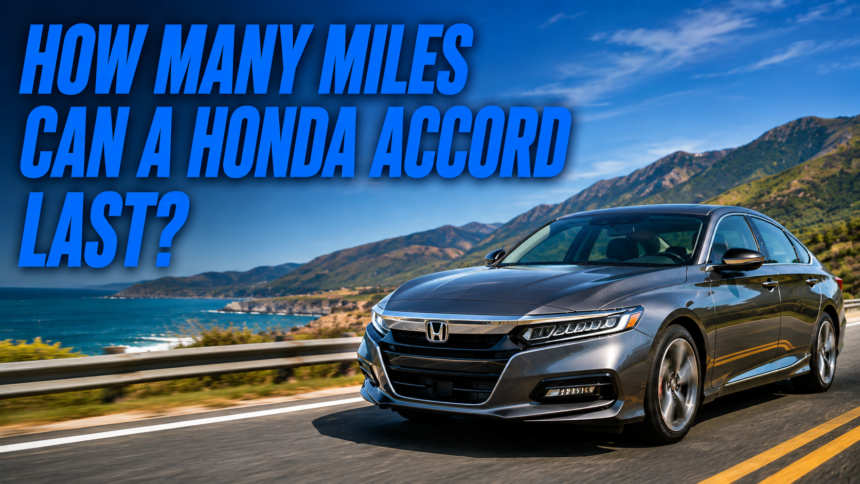
A Honda Accord can typically last between 200,000 and 300,000 miles when it is maintained properly and driven with reasonable care. In terms of years, this usually translates to around 15 to 20 years of regular use for most owners.
- The Short Answer: Average Lifespan
- Factors That Affect a Honda Accord’s Lifespan
- Maintenance History
- Driving Habits
- Climate and Environment
- Build Quality by Generation
- Engine Type
- Transmission Type
- Honda Accord Longevity by Generation
- Older Generations (1990s–2000s)
- 2008–2012 Models
- 2013–2017 Models
- 2018–Present Models
- Hybrid Accord Longevity
- Common Problems That Can Shorten Lifespan
- Transmission Issues
- Engine Oil Dilution Issues
- AC Compressor and Electrical Issues
- Rust and Body Corrosion
- How to Maximize Your Accord’s Lifespan
- Recommended Maintenance Schedule
- Best Practices for Oil Changes
- Timing Belt or Chain Replacement Intervals
- Tire Rotation and Alignment
- Driving Habits That Extend Engine Life
- Rust Prevention Tips
- Signs Your Accord Is Nearing the End of Its Life
- Warning Signs and Symptoms
- Cost of Repairs vs. Value of the Car
- When to Consider Replacing vs. Repairing
- Honda Accord vs. Competitors
- Real Owner Experiences and High-Mileage Examples
- Is Buying a High-Mileage Used Accord Worth It?
- Frequently Asked Questions
- What year Accord is most reliable?
- Do hybrid Accords last as long as gas models?
- Is 200,000 miles a lot for an Accord?
- How often should you change the oil?
- Conclusion
- Related Articles
Some Accords have even crossed the 400,000-mile mark with consistent servicing and a stable driving environment. The exact number depends heavily on the generation, the engine type, and how disciplined the owner is about maintenance.
This guide breaks down every factor that influences longevity so you can understand exactly what to expect from this popular sedan. By the end, you will know how to protect your investment and get the maximum lifespan out of your Accord..
The Short Answer: Average Lifespan
Most Honda Accords comfortably reach 200,000 to 300,000 miles before major mechanical issues become frequent. That range holds true across most model years when the car receives routine care rather than neglect.
Typical Mileage Range
Under normal conditions, an Accord driven around 12,000 to 15,000 miles per year will reach the 200,000-mile mark in roughly 15 years. Owners who stay on top of fluid changes and minor repairs often push well past that figure without major engine or transmission failure.
Typical Lifespan in Years
Because most people do not drive the same amount every year, lifespan is easier to picture in years rather than pure mileage. A well-kept Accord commonly serves its owner for 15 to 20 years before repair costs start to outweigh its remaining value.
Comparison to the Average Car
The average vehicle in the United States is generally expected to last around 150,000 to 200,000 miles. The Accord routinely exceeds this benchmark, which is a major reason it has such a loyal following among long-term owners and used-car buyers alike.
Factors That Affect a Honda Accord’s Lifespan
No two Accords age the same way, because lifespan is shaped by a combination of mechanical care, driving style, and environment. Understanding these variables helps explain why some owners get 150,000 miles while others reach 350,000.
Maintenance History
A car is only as good as the care it receives, and this is especially true for the Accord’s engine and transmission.
Regular oil changes, coolant flushes, and timely replacement of belts or chains prevent the kind of internal wear that leads to expensive failures. Owners who follow Honda’s recommended service intervals almost always report significantly longer vehicle life.
Driving Habits
Highway driving is generally gentler on an engine than constant stop-and-go city traffic, since it involves fewer heat cycles and less strain on the transmission.
Aggressive acceleration, hard braking, and frequent short trips accelerate wear on internal components. Smooth, moderate driving habits noticeably extend the life of both the engine and drivetrain.
Climate and Environment
Vehicles driven in regions with heavy road salt, humidity, or extreme temperature swings tend to suffer more from rust and corrosion.
Rust can compromise the frame, exhaust system, and brake lines long before the engine itself gives out. Garage storage and regular undercarriage washing help slow this kind of environmental damage considerably.
Build Quality by Generation
Not every Accord generation was engineered identically, and some model years are known for stronger long-term durability than others.
Later generations improved on things like rust resistance and engine refinement, while a few specific years introduced components that proved less reliable. This variation is why checking generation-specific reliability data matters before buying.
Engine Type
The Accord has been offered with four-cylinder, V6, and hybrid powertrains, each with its own durability profile. Four-cylinder engines are generally simpler and cheaper to maintain over time, while V6 engines offer more power at the cost of slightly higher upkeep.
Hybrid models add battery longevity into the equation, though Honda’s hybrid systems have generally proven dependable.
Transmission Type
Traditional automatic and manual transmissions in the Accord have a strong reliability track record when serviced correctly. Newer CVT (continuously variable transmission) units require more careful fluid maintenance, since neglect can lead to premature wear.
Choosing a well-documented service history matters more with CVT-equipped models than with older conventional transmissions.
Honda Accord Longevity by Generation
Reliability is not identical across every Accord ever built, and generation plays a real role in how long a specific car will last. Knowing which years earned strong reputations helps narrow down a smarter purchase.
Older Generations (1990s–2000s)
Accords from this era are frequently cited by mechanics and long-term owners as some of the most mechanically simple and durable ever produced.
Many examples from this period are still running well past 250,000 miles today. Their straightforward engineering makes them easier and cheaper to repair as they age.
2008–2012 Models
This generation is generally solid, though a small number of owners have reported issues with excessive oil consumption in certain four-cylinder engines.
Staying on top of oil level checks between changes helps prevent this from becoming a larger problem. Overall structural and transmission reliability during this period remained strong.
2013–2017 Models
These model years brought improved fuel efficiency and refined engineering while maintaining the Accord’s dependable reputation.
Most reported issues are minor and electronic in nature rather than major mechanical failures. With normal maintenance, these Accords routinely reach the 200,000-mile range without significant trouble.
2018–Present Models
Newer Accords introduced turbocharged engines and, in some trims, a CVT transmission, both of which require more attentive fluid maintenance.
When properly serviced, these models perform just as reliably as their predecessors. Owners who skip transmission fluid changes, however, tend to see problems appear earlier than expected.
Hybrid Accord Longevity
Honda’s hybrid Accord models have shown strong long-term reliability, with hybrid batteries often lasting well over 150,000 miles before needing attention.
The gasoline engine paired with the hybrid system tends to experience less wear due to the electric motor sharing the workload. This combination often results in impressively low long-term maintenance costs.
Common Problems That Can Shorten Lifespan
Even a generally reliable car has weak points, and being aware of them helps owners catch issues early before they escalate.
Transmission Issues
Certain CVT-equipped Accords have shown a tendency toward rough shifting or premature wear when fluid changes are neglected.
Catching early symptoms like hesitation or jerking during acceleration can prevent a full transmission replacement. Routine fluid service is the single best defense against this problem.
Engine Oil Dilution Issues
A specific range of turbocharged four-cylinder Accords experienced a known issue where fuel would mix into the engine oil, thinning it out.
Honda addressed this through software updates and revised maintenance schedules for affected years. Owners of these specific models should monitor oil condition more closely than usual.
AC Compressor and Electrical Issues
Some Accord owners report AC compressor failures or minor electrical glitches, particularly in vehicles that have passed the 100,000-mile mark.
These issues are typically inconvenient rather than dangerous and are usually inexpensive relative to major engine repairs. Addressing them promptly prevents secondary damage to related components.
Rust and Body Corrosion
Older Accords, especially those driven in snowy or coastal regions, are more prone to rust along the frame and wheel wells.
While this does not always affect drivability immediately, severe corrosion can eventually compromise structural integrity. Regular washing and rust-proofing treatments significantly slow this process.
How to Maximize Your Accord’s Lifespan
With the right habits, it is realistic to push an Accord well beyond the typical 200,000-mile benchmark and closer to 300,000 or more.
Recommended Maintenance Schedule
Following Honda’s official service intervals for oil, filters, and inspections is the foundation of long-term reliability. Skipping or delaying these services is one of the most common reasons vehicles fail earlier than expected. A documented maintenance history also adds resale value later on.
Best Practices for Oil Changes
Using the manufacturer-recommended oil type and changing it at the correct interval keeps internal engine components lubricated and free of harmful buildup.
Waiting too long between changes allows contaminants to accumulate and accelerate wear. Checking oil levels between scheduled changes is a simple habit that prevents costly damage.
Timing Belt or Chain Replacement Intervals
Depending on the engine, the Accord uses either a timing belt or a timing chain, each with different maintenance needs.
Belts typically require replacement around 60,000 to 100,000 miles, while chains generally last much longer. Ignoring a worn timing component can lead to catastrophic engine failure.
Tire Rotation and Alignment
Regular tire rotation and proper wheel alignment reduce strain on the suspension and drivetrain over time. Uneven wear not only shortens tire life but can also affect handling and fuel efficiency. This is a low-cost habit with a meaningful long-term payoff.
Driving Habits That Extend Engine Life
Allowing the engine to warm up briefly in cold weather and avoiding hard acceleration from a stop both reduce unnecessary mechanical stress.
Consistent, moderate driving patterns keep internal components wearing evenly. Over years of use, this habit alone can add tens of thousands of miles to a vehicle’s usable life.
Rust Prevention Tips
Washing the underside of the car after winter road-salt exposure and applying rust-proofing treatments annually can meaningfully slow corrosion.
Parking in a garage or covered area also reduces exposure to moisture and temperature extremes. These small efforts protect both the frame and resale value.
Signs Your Accord Is Nearing the End of Its Life
Recognizing the warning signs early allows owners to make informed decisions rather than facing sudden breakdowns.
Warning Signs and Symptoms
Frequent warning lights, declining fuel efficiency, unusual noises during acceleration, and rising oil consumption are common indicators that a vehicle is aging out.
Transmission hesitation or slipping is another strong signal that major repairs may be approaching. Paying attention to these early symptoms can prevent being stranded unexpectedly.
Cost of Repairs vs. Value of the Car
Once repair costs start approaching or exceeding the car’s current market value, it becomes a genuine financial question rather than a simple maintenance decision.
Tracking repair expenses over a rolling twelve-month period gives a clearer picture than reacting to a single large bill. This comparison helps determine whether continued investment still makes sense.
When to Consider Replacing vs. Repairing
If a vehicle requires multiple major repairs within a short span, such as transmission and engine work occurring close together, replacement often becomes the more practical choice.
On the other hand, a single well-contained repair on an otherwise healthy car is usually worth completing. This decision should weigh both the vehicle’s condition and the owner’s long-term plans.
Honda Accord vs. Competitors
Comparing the Accord’s longevity against its closest rivals helps put its reputation into proper context.
| Model | Typical Lifespan (Miles) | Known Strengths |
| Honda Accord | 200,000–300,000+ | Strong engine durability, low long-term repair costs |
| Toyota Camry | 200,000–300,000+ | Excellent reliability reputation, strong resale value |
| Nissan Altima | 150,000–200,000 | Comfortable ride, though CVT concerns are more common |
| Mazda6 | 150,000–200,000 | Engaging driving feel, solid but slightly shorter average lifespan |
| Hyundai Sonata | 150,000–200,000 | Strong warranty coverage, improving long-term reliability |
The Accord and Camry are widely regarded as the two strongest competitors in this segment when it comes to long-term durability, often finishing neck and neck in owner satisfaction surveys.
The Altima, Mazda6, and Sonata remain solid choices but have historically shown slightly shorter average lifespans and a few more reported transmission concerns.
Real Owner Experiences and High-Mileage Examples
Many long-term Accord owners online report crossing 250,000 to 300,000 miles with nothing more than routine maintenance and occasional minor repairs.
A smaller number of dedicated owners have documented Accords surpassing 400,000 or even 500,000 miles, usually attributing this to strict adherence to service schedules and gentle driving habits. A common thread among these high-mileage examples is consistency: regular oil changes, prompt attention to small issues, and avoidance of prolonged neglect.
Is Buying a High-Mileage Used Accord Worth It?
A used Accord with 100,000 to 150,000 miles can still offer many years of reliable service if it has a documented maintenance history and passes a thorough pre-purchase inspection. Checking for signs of rust, transmission behavior during a test drive, and recent service records helps avoid inheriting someone else’s neglect.
Red flags include inconsistent maintenance records, visible fluid leaks, and warning lights that reset just before a sale. Fair pricing should reflect both the mileage and the completeness of the car’s service history, since a well-documented higher-mileage car can be a better buy than a poorly maintained lower-mileage one.
Frequently Asked Questions
What year Accord is most reliable?
Many mechanics point to the 1990s through mid-2000s generations as especially durable, alongside the 2013–2017 models, due to their simpler and well-tested engineering.
Do hybrid Accords last as long as gas models?
Yes, hybrid Accords have shown strong reliability, with batteries and engines both holding up well past 150,000 miles under normal use.
Is 200,000 miles a lot for an Accord?
Not particularly, since the Accord is designed to comfortably reach this figure and often continues well beyond it with proper care.
How often should you change the oil?
Following Honda’s recommended interval, typically every 5,000 to 7,500 miles depending on oil type and driving conditions, is the safest approach.
Conclusion
So, how many miles can a Honda Accord last? Under normal driving conditions and consistent maintenance, most owners can expect 200,000 to 300,000 miles, with some vehicles reaching well beyond that with disciplined care. The Accord’s reputation for durability holds up strongly against its closest rivals, making it a dependable choice whether bought new or used. Ultimately, the number on the odometer matters less than the quality of care behind it.
Related Articles
How Long Does It Take to Do a Car Service? A Complete Guide
How Fast Do Race Cars Go in NASCAR? Complete Speed Guide
Do LMP2 Cars Have Traction Control? The Complete Guide
Why Does My Car Sound Like a Lawn Mower? Causes, Diagnosis & Fixes