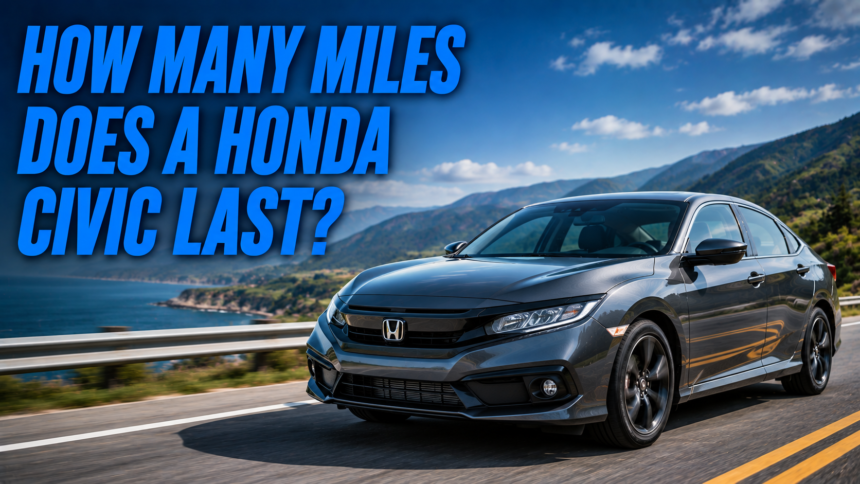
A Honda Civic typically lasts between 200,000 and 300,000 miles when it receives proper maintenance and reasonable care from its owner. In terms of years, this translates to roughly 13 to 20 years of dependable service for an average driver.
- Average Lifespan of a Honda Civic
- Typical Mileage Range Explained
- Years of Service You Can Expect
- How the Civic Compares to Industry Averages
- Factors That Affect How Long a Civic Lasts
- Maintenance History Matters Most
- Driving Habits Shape Long-Term Wear
- Climate and Road Conditions Play a Role
- Generation and Model Year Differences
- Manual vs Automatic Transmission Durability
- Honda Civic Generations: Reliability by Year
- Older Generations Known for Longevity
- Newer Generations and Their Technology
- Common Strengths and Weaknesses by Era
- Common Issues That Can Shorten Lifespan
- Known Problem Areas to Watch
- Transmission Concerns in Specific Years
- Rust Concerns in Certain Climates
- Maintenance Tips to Maximize Mileage
- Recommended Service Intervals
- DIY vs Professional Maintenance
- Parts That Need Regular Replacement
- Importance of Using OEM or Quality Parts
- Signs Your Civic Is Nearing End of Life
- Frequent Repairs Becoming the Norm
- Declining Fuel Efficiency Over Time
- Transmission or Engine Warning Signs
- Cost of Repairs Versus Car Value
- Is Buying a High-Mileage Civic Worth It?
- How Civic Compares to Other Compact Cars
- Conclusion
- FAQs
- How many miles does a Honda Civic last on average?
- Is a Honda Civic reliable after 150,000 miles?
- Does the Honda Civic last longer than the Toyota Corolla?
- What shortens a Honda Civic’s lifespan the most?
- Related Articles
The exact number naturally depends on how the car is driven, how often it is serviced, and the specific generation of the vehicle. Because the Civic has earned a strong reputation for mechanical durability over several decades, many owners report reaching these numbers without major engine or transmission replacements.
The sections below break down every factor that influences this lifespan so you can understand what to expect from your own Civic.
Average Lifespan of a Honda Civic
Most Honda Civic owners can realistically expect their vehicle to run smoothly for 200,000 to 300,000 miles before major mechanical concerns become frequent.
This makes the Civic one of the more dependable choices in the compact car segment, especially when compared to vehicles from less reliability-focused brands.
Typical Mileage Range Explained
The 200,000 to 300,000 mile range is not a marketing claim but a pattern observed across owner reports and long-term reviews.
Civics built with Honda’s proven four-cylinder engines are known to handle high mileage without needing internal engine work, provided oil changes and basic upkeep are never skipped. This range applies broadly across sedan and hatchback trims alike.
Years of Service You Can Expect
For a driver covering around 12,000 to 15,000 miles annually, a Civic can comfortably serve for 13 to 20 years.
Owners who drive less per year may keep their Civic even longer in terms of age, though certain rubber and plastic components will still age regardless of mileage. This calendar-based wear is worth factoring in alongside odometer numbers.
How the Civic Compares to Industry Averages
The average compact car in the United States lasts somewhere between 150,000 and 200,000 miles, which places the Civic comfortably above the typical benchmark.
This above-average durability is a major reason the Civic continues to hold strong resale value in the used car market year after year.
Factors That Affect How Long a Civic Lasts
No two Civics age the same way, and the difference usually comes down to a handful of controllable factors. Understanding these variables helps explain why some Civics reach 300,000 miles while others start showing problems much earlier.
Maintenance History Matters Most
A Civic that has received consistent oil changes, fluid top-ups, and scheduled inspections will almost always outlast one that has been neglected.
Skipping oil changes or ignoring warning lights accelerates internal wear far faster than mileage alone ever would. This single factor arguably has the biggest impact on how many miles does a Honda Civic last for any individual owner.
Driving Habits Shape Long-Term Wear
Highway driving at steady speeds puts far less strain on an engine and transmission compared to constant stop-and-go city traffic or aggressive acceleration. Drivers who avoid harsh braking, excessive idling, and frequent short trips tend to see less wear on belts, brakes, and the transmission over time. Gentle, consistent driving habits directly translate into a longer functional life for the vehicle.
Climate and Road Conditions Play a Role
Vehicles driven in regions with heavy road salt or extreme humidity are more prone to rust developing on the undercarriage and exhaust components.
Extreme heat can also degrade rubber hoses, belts, and battery life faster than in more moderate climates. Owners in harsher climates should factor in more frequent undercarriage inspections to counter these effects.
Generation and Model Year Differences
Older Civic generations from the 1990s and early 2000s are often praised for mechanical simplicity, which can make them easier and cheaper to maintain long-term.
Newer generations include more advanced technology and turbocharged engines, which generally perform well but may require more specialized servicing. Both eras can achieve high mileage, but the maintenance approach differs slightly between them.
Manual vs Automatic Transmission Durability
Manual transmissions in the Civic are widely regarded as extremely durable, often outlasting the rest of the vehicle when properly maintained.
Automatic transmissions have also improved significantly in reliability over the years, though they typically require more attention to fluid changes at recommended intervals. Choosing the right transmission fluid type and service schedule matters more for automatic models.
Honda Civic Generations: Reliability by Year
Not every Civic generation performs identically over the long run, and knowing the strengths of each era can guide both current owners and used car buyers. Reliability trends have shifted slightly as technology has advanced.
Older Generations Known for Longevity
Civics from the mid-1990s through the mid-2000s, particularly the seventh and eighth generations, are frequently cited by mechanics as some of the easiest cars to keep running past 250,000 miles.
Their naturally aspirated engines and simpler electronics contribute to fewer costly failure points. These generations remain popular among budget-focused buyers specifically for this reason.
Newer Generations and Their Technology
Civics from the 2016 model year onward introduced turbocharged engines and more advanced infotainment systems, offering improved performance and fuel economy.
While these models are generally reliable, turbocharged engines can be less forgiving of delayed maintenance compared to older naturally aspirated units. Staying current with oil quality and change intervals is especially important for these newer models.
Common Strengths and Weaknesses by Era
Older Civics tend to face rust as their primary long-term concern, while newer Civics are more likely to experience minor electronic or infotainment glitches. Neither issue typically threatens the core mechanical lifespan of the vehicle when addressed early. Buyers should weigh these era-specific tendencies against their own priorities for technology versus simplicity.
Common Issues That Can Shorten Lifespan
While Civics are dependable overall, certain recurring issues can reduce their effective lifespan if left unaddressed. Being aware of these problem areas allows owners to catch them before they escalate into costly repairs.
Known Problem Areas to Watch
Some Civic model years have reported issues with air conditioning condensers failing prematurely, along with occasional infotainment screen freezing or unresponsiveness. Neither of these issues typically affects the drivetrain, but they can be costly and inconvenient if ignored for too long. Regular inspections during routine servicing usually catch these problems early.
Transmission Concerns in Specific Years
A small number of Civic model years, particularly certain early CVT-equipped versions, have faced more transmission-related complaints than others.
Owners of these specific years should pay closer attention to CVT fluid changes at the manufacturer-recommended intervals rather than assuming lifetime fluid claims. Catching early symptoms like hesitation or shuddering can prevent a full transmission replacement.
Rust Concerns in Certain Climates
Civics driven in snowy regions with heavy road salt exposure are more susceptible to underbody rust, particularly around the wheel wells and exhaust system. Routine washing of the undercarriage during winter months significantly slows this deterioration. This is one of the few lifespan-limiting factors that has little to do with mileage and everything to do with environment.
Maintenance Tips to Maximize Mileage
Reaching the higher end of the Civic’s mileage potential comes down to consistent, informed maintenance rather than any single trick or product. The following practices are the most effective for extending a Civic’s usable life.
Recommended Service Intervals
Oil changes every 5,000 to 7,500 miles, along with timely brake, tire, and fluid inspections, form the foundation of a well-maintained Civic.
Sticking to the schedule outlined in the owner’s manual rather than stretching intervals is one of the simplest ways to protect the engine long-term. Consistency matters more than any single premium product or additive.
DIY vs Professional Maintenance
Basic tasks like oil changes, air filter replacements, and wiper blade swaps are straightforward enough for owners comfortable working on their own vehicle.
More complex work, such as timing chain inspections or transmission servicing, is better left to a qualified technician familiar with Honda-specific procedures. Balancing both approaches keeps costs manageable without sacrificing quality.
Parts That Need Regular Replacement
Timing components, brake pads, spark plugs, and drive belts all have specific mileage-based replacement intervals that should never be ignored.
Falling behind on these replacements is one of the fastest ways to shorten a Civic’s functional lifespan. A simple maintenance log helps owners track when each component was last serviced.
Importance of Using OEM or Quality Parts
Genuine Honda parts or trusted OEM-equivalent components tend to fit better and last longer than the cheapest aftermarket alternatives available.
While quality parts cost more upfront, they typically reduce the frequency of repeat repairs over the vehicle’s lifetime. This is especially important for components tied to engine timing and braking systems.
Signs Your Civic Is Nearing End of Life
Even the most reliable Civic will eventually show signs that its usable life is coming to a close. Recognizing these signs early helps owners make informed decisions rather than facing sudden breakdowns.
Frequent Repairs Becoming the Norm
When a Civic starts requiring repairs every few months rather than during scheduled maintenance visits, this is often an early indicator that multiple components are aging simultaneously. Isolated repairs are normal, but a clear pattern of recurring issues signals a vehicle nearing the end of its practical lifespan.
Declining Fuel Efficiency Over Time
A noticeable and sustained drop in fuel economy, even after routine maintenance, can point to worn engine components or failing sensors that are becoming less cost-effective to keep replacing. This is often one of the earlier warning signs owners notice before more serious mechanical symptoms appear.
Transmission or Engine Warning Signs
Persistent warning lights, unusual noises during shifting, or noticeable power loss are signs that should never be dismissed as minor. These symptoms often indicate that major components are approaching failure, which significantly changes the cost-benefit calculation of continued ownership.
Cost of Repairs Versus Car Value
Once repair costs begin approaching or exceeding the Civic’s current resale value, it becomes financially sensible to consider whether continued investment still makes sense. This comparison is one of the most practical ways to determine if a vehicle has truly reached the end of its useful life.
Is Buying a High-Mileage Civic Worth It?
High-mileage Civics can still represent excellent value, but only when buyers know exactly what to check before committing to a purchase.
What to Check Before Buying
A complete service history, a pre-purchase inspection by an independent mechanic, and a check for any signs of rust or fluid leaks are essential steps before buying a high-mileage Civic. These checks reveal far more about the car’s true condition than the odometer reading alone ever could.
Red Flags to Avoid
Inconsistent maintenance records, visible rust on structural components, or a transmission that shifts roughly are all warning signs that should make a buyer pause. Walking away from a listing missing these basic assurances is almost always the safer choice.
Expected Remaining Lifespan Based on Mileage
A well-maintained Civic with 150,000 miles on the odometer can realistically still offer another 100,000 miles or more of service, provided the maintenance history supports that expectation. This makes higher-mileage examples with clean records genuinely worth considering for budget-conscious buyers.
How Civic Compares to Other Compact Cars
The Civic’s reliability is strong, but it is worth understanding where it stands among its closest competitors before making a final decision.
| Model | Typical Lifespan (Miles) | Known Strength |
| Honda Civic | 200,000 – 300,000 | Engine and transmission durability |
| Toyota Corolla | 200,000 – 300,000 | Consistent long-term reliability |
| Mazda3 | 150,000 – 200,000 | Driving dynamics, solid build quality |
| Hyundai Elantra | 150,000 – 200,000 | Value and warranty coverage |
The Civic and Corolla are frequently considered the top two contenders for long-term durability in this class, with both routinely surpassing 200,000 miles under proper care. The Mazda3 and Elantra remain solid choices but statistically trend toward the lower end of the high-mileage range compared to these two rivals.
Conclusion
A Honda Civic that receives consistent maintenance, careful driving, and timely repairs can realistically last 200,000 to 300,000 miles, placing it among the most dependable choices in its class.
While specific generations and individual driving habits will always cause some variation, the overall pattern remains clear and well-documented across owner experiences. Compared to competitors like the Corolla, Mazda3, and Elantra, the Civic holds its own as a genuinely long-lasting vehicle worth considering for both new and used car buyers.
FAQs
How many miles does a Honda Civic last on average?
Most Civics last between 200,000 and 300,000 miles with proper maintenance and reasonably careful driving habits.
Is a Honda Civic reliable after 150,000 miles?
Yes, a well-maintained Civic with 150,000 miles typically still has significant life left, often another 100,000 miles or more.
Does the Honda Civic last longer than the Toyota Corolla?
Both models perform similarly in long-term reliability studies, with each capable of exceeding 200,000 to 300,000 miles under proper care.
What shortens a Honda Civic’s lifespan the most?
Skipping scheduled maintenance, particularly oil changes and transmission fluid services, has the biggest negative impact on long-term durability.
Related Articles
How Many Miles Can a Honda Accord Last? Real Lifespan Guide
What to Put Under Tires When Storing a Car?