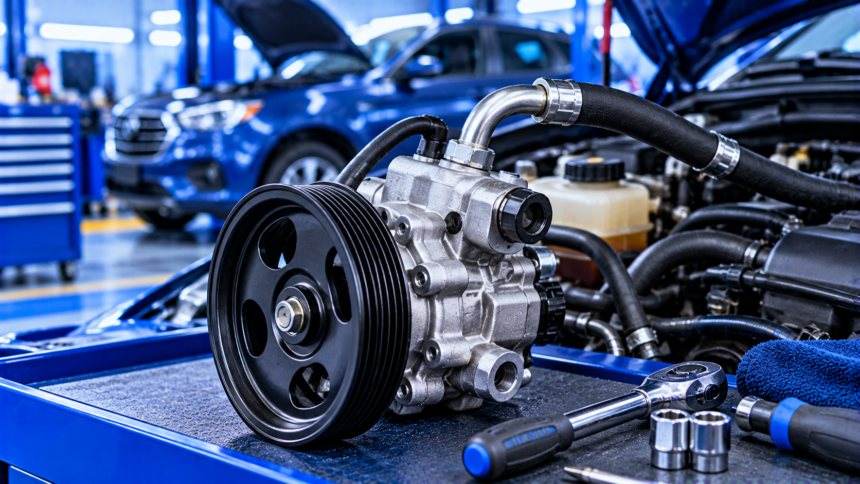
Most power steering pumps last 100,000 to 150,000 miles, which is about 10 to 15 years of normal driving. Some last as long as the car does. Others fail at 50,000 miles or less. The gap usually comes down to one thing: the condition of the fluid inside the system.
- What is the average lifespan of a power steering pump?
- How does a power steering pump work, and why does it wear out?
- What shortens the life of a power steering pump?
- What are the signs of a failing power steering pump?
- Does a power steering pump fail suddenly or slowly?
- Can you drive with a bad power steering pump?
- How much does it cost to replace a power steering pump?
- Do electric power steering systems have a pump?
- How can you make a power steering pump last longer?
- Conclusion
- Frequently asked questions
- Related Articles
This guide covers what a normal lifespan looks like, what cuts it short, and how to spot a pump that is on its way out. You will also find the real cost of replacing one and a short list of habits that add years to the pump you already have.
What is the average lifespan of a power steering pump?
The average is 100,000 to 150,000 miles, or 10 to 15 years. A pump with clean fluid and a healthy belt can go well past that. A pump that runs low on fluid can die in a fraction of that time.
There is no set replacement interval. A power steering pump is not a scheduled part like a timing belt. You replace it when it wears out or starts to leak, not at a certain mileage.
Failures get more common once a car passes 100,000 miles. Seals harden, internal parts wear, and small leaks start to show. That does not mean a pump at 100,000 miles is about to quit. It means that is the point to start paying closer attention.
Age matters as well as mileage. Fluid and rubber seals wear out with time, even in a car that sits a lot. A ten-year-old car with low miles can still have a tired pump if the fluid has never been changed.
| Pump situation | What to expect |
| Correct fluid, changed on time, healthy belt | 100,000 to 150,000 miles or more, sometimes the life of the car |
| Old or dirty fluid | Wear speeds up, and failures can come as early as 50,000 miles |
| Slow leak that keeps getting topped off | Shorter life, because the pump keeps running low on fluid |
| Towing, hot weather, constant tight parking | Shorter than average, because the fluid runs hotter and breaks down faster |
How does a power steering pump work, and why does it wear out?
The pump is the heart of a hydraulic steering system. A belt from the engine spins it. It pulls fluid from the reservoir, builds pressure, and sends that fluid through a hose to the steering gear. The pressure does the heavy lifting when you turn the wheel, which is why parking feels easy.
Inside most pumps, metal vanes spin at high speed against a ring. The pump runs any time the engine is on, so those parts never rest. Vanes, bushings, and seals slowly wear, and that wear is what eventually ends a pump’s life.
The fluid does two jobs. It carries pressure, and it oils the moving parts inside the pump. When the fluid is low, old, or the wrong type, the pump loses its protection. That is why fluid care matters more than any other factor.
What shortens the life of a power steering pump?
Five things do most of the damage:
- Low fluid. A leak lets the pump run short of fluid. It starts pulling in air, which makes it noisy and hot, and the internal parts wear fast.
- Old, dirty fluid. The additives that protect metal parts wear out over time. Dirt and tiny metal bits then circulate through the pump and act like sandpaper.
- The wrong fluid. Systems are built around a specific fluid. Some use dedicated power steering fluid, and others call for automatic transmission fluid. The wrong one can harm seals and cause leaks.
- A worn belt or weak tensioner. A slipping belt cannot spin the pump properly, which hurts assist and adds strain.
- Hard use and heat. Towing, hot climates, and lots of tight parking maneuvers push fluid temperatures up. Holding the wheel against the stops does the same.
Heat is a quiet killer here. Fluid that runs hot thins out and loses its ability to protect metal. Once that happens, the pump works harder, runs hotter still, and the cycle feeds itself.
Notice that most of these are things you can control. Pumps often fail early because the fluid around them was neglected for years, not because they are simply old.
What are the signs of a failing power steering pump?
Noise is the most common sign, followed by heavy steering and leaks. The table below shows what each symptom usually points to.
| What you notice | What it usually means |
| Steady whine, moan, or growl | A worn pump, or air in the fluid |
| Loud squeal when turning at low speed | A slipping belt more often than a bad pump |
| Heavy steering, especially at low speeds | Low fluid or a weak pump |
| Weak assist only on a cold start | Wear in the steering gear valves, not the pump |
| Amber or reddish puddle, or a wet pump | A leak from a seal, hose, or the pump itself |
| Foamy or bubbly fluid in the reservoir | Air in the system |
Check the cheap things first. Low fluid, old fluid, and a loose belt cause the same symptoms as a dying pump, and each one costs far less to fix.
A shop will start the same way. They top off the fluid, check the belt and its tension, and look for leaks. Sometimes the system needs to be bled of air before they can tell what is wrong. If noise or heavy steering continues after that, the pump is the likely cause.
You can do the first check yourself. With the engine off, find the reservoir, read the level marks, and look at the fluid. Fresh fluid is usually clear and amber or reddish, though some makes use other colors, so check the manual. Dark, gritty, or foamy fluid is a warning.
Does a power steering pump fail suddenly or slowly?
Slowly, in most cases. Wear in the vanes, bushings, and seals builds up over months, and the car gives you warning along the way. First comes a faint whine on turns. Later the steering feels a little heavier, or a small leak leaves spots on the driveway.
A sudden failure is possible, though. A seal can let go, or a belt can break, and the pump stops working in one drive. That is why a new noise deserves a quick look at the fluid and belt, even when the steering still feels normal.
Can you drive with a bad power steering pump?
You can for a short time, but it is not a good idea. The car will still steer, but the wheel gets very heavy, especially at low speeds and in parking lots. That makes tight turns hard and slows your reaction in an emergency.
A leak adds another risk. If fluid is escaping fast, the pump will run dry and damage itself. In that case, have the car towed rather than driven.
Some older vehicles with Hydroboost brakes use the pump’s fluid pressure to help the brakes as well. On those, a failing pump can affect braking effort too. Check your owner’s manual if you are not sure which brake system you have.
How much does it cost to replace a power steering pump?
For most cars, the whole job costs about $270 to $490, including the pump, new fluid, and labor. Trucks, luxury cars, and engines with hard-to-reach pumps cost more. A Ford F-150 estimate on RepairPal runs $498 to $615, and a rare older car like the Dodge Stealth reaches $1,487 to $1,584 because the part alone is pricey. Your own vehicle’s number is easy to check with the RepairPal estimator.
Watch for add-ons that raise the bill:
- Hoses: $50 to $300 in parts plus up to 1.5 hours of labor if they are leaking or swollen.
- Belt or tensioner: $25 to $200 in parts, plus labor.
- Electro-hydraulic pumps: these units cost more and may need electrical testing too.
The old fluid should always be drained and replaced during a pump swap. Used fluid can carry dirt and has lost its protective additives, and most new or remanufactured pump warranties require the fluid change. On a high-mileage car, replace the hoses and drive belt at the same time, and check that the belt tensioner holds proper tension.
Rebuild kits exist for many pumps, but a new or remanufactured pump is the usual fix.
Labor takes a few hours on most cars. The pump sits on the front of the engine and is fairly simple to replace on many models. Access is tighter on some transverse-mounted V6 engines, which pushes labor up. A handy home mechanic can do the work, but the fluid must be drained, the system refilled, and the air bled out afterward.
Do electric power steering systems have a pump?
No. Electric power steering uses a motor instead of a hydraulic pump. It has no pump, no hoses, and no fluid, so there is nothing to leak or top off. Power comes from the battery and charging system rather than a belt, which also gives a small gain in fuel economy.
Most new cars use this design, but hydraulic steering has not disappeared. The Subaru Impreza WRX, for example, kept a hydraulic system as late as 2021. Some systems are a hybrid, where an electric motor spins a hydraulic pump. Those still have fluid and a pump to look after.
A simple test: pop the hood and look for a power steering reservoir. If you find one, your car has a hydraulic pump. The full breakdown of electric versus hydraulic steering in an auto parts trade magazine covers the differences in more detail.
How can you make a power steering pump last longer?
A few small habits protect the pump better than any repair can:
- Check the fluid at every oil change. Look at both the level and the color. Top off with the exact fluid your owner’s manual lists.
- Fix leaks early. Constant top-offs hide a problem that will eventually starve the pump.
- Change the fluid on a schedule. If your manual gives no interval, a change every three to four years is a good rule of thumb, or sooner if the fluid looks dark.
- Replace worn belts. Cracks, glazing, or squealing mean it is time, and a weak tensioner needs replacing too.
- Do not hold the wheel against the stops. Holding full lock for long periods heats the fluid and strains the pump.
- Never mix fluid types. Use only what the manual calls for.
Make a habit of glancing under the front of the car too. Fresh spots on the driveway, or a damp, dirty film on the pump and hoses, show a leak long before the steering feels different. Catching it at that stage usually means a cheap hose or seal instead of a new pump.
These steps cost very little. A bottle of fluid and a few minutes under the hood is cheap next to a pump replacement, and a contaminated system can even harm the steering rack, which costs $1,000 to $2,000 to replace.
Conclusion
Most power steering pumps last 100,000 to 150,000 miles, and a well-kept one can last as long as the car. Fluid is the deciding factor, so keep it full, clean, and the right type. If you hear a steady whine, feel heavy steering, or see a leak, check the fluid and belt before blaming the pump. When replacement is needed, expect about $270 to $490 for most cars.
Frequently asked questions
How many miles does a power steering pump last?
Most last 100,000 to 150,000 miles. Pumps in cars with clean fluid and no leaks often last longer, while pumps that run low on fluid can fail as early as 50,000 miles.
Can a power steering pump last 200,000 miles?
Yes. With the right fluid, regular changes, and no leaks, a pump can last the life of the car. It is not common, but it happens often enough that a high-mileage pump is not automatically a problem.
How long can you drive with a failing power steering pump?
There is no safe time limit. The car still steers, but the wheel gets heavy, and a leak can run the pump dry and ruin it. Have it checked soon, and tow the car if fluid is leaking fast.
Do I need to flush the fluid when I replace the pump?
Yes. Old fluid has lost its protective additives and can hold dirt that damages a new pump. Most new and remanufactured pump warranties also require the fluid change, so do it every time.
How do I tell a bad pump from a bad belt?
A loud squeal when you turn at low speed usually points to a slipping belt. A steady whine, moan, or growl that follows engine speed points to the pump. Check belt tension and fluid level first.
Related Articles
Cerakote Headlight Restoration Kit: How It Works and How Long It Lasts
How Long Can a Car Sit Before the Battery Dies?
How Many Engine Mounts Does a Car Have?
Steering Wheel Wrap: Types, Cost, and How to Fit One Yourself