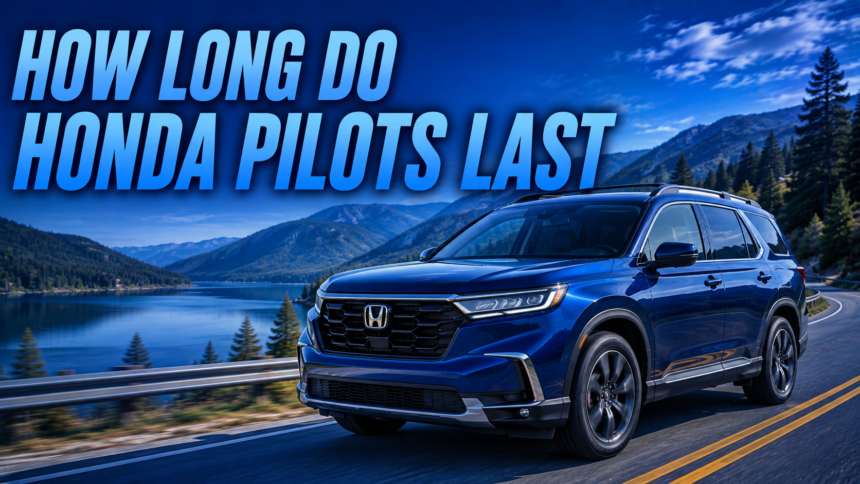
If you’re shopping for a family SUV or already own one, you’ve probably asked yourself: how long do Honda Pilots last? It’s a fair question, especially when you’re about to spend tens of thousands of dollars on a vehicle that needs to haul kids, groceries, camping gear, and everything in between for years to come.
- 2. How Many Miles Can a Honda Pilot Last?
- 3. How Many Years Does a Honda Pilot Last?
- 4. Factors That Affect a Honda Pilot’s Lifespan
- 5. Most Reliable Honda Pilot Model Years
- 6. Common Problems That Can Shorten Lifespan
- 7. Maintenance Tips to Maximize Your Pilot’s Lifespan
- 8. Signs Your Honda Pilot May Be Reaching End of Life
- 9. Honda Pilot vs. Competitors: Lifespan Comparison
- 10. Tips for Buying a Used Honda Pilot
- 11. Frequently Asked Questions (FAQ)
- 12. Conclusion
- Related Articles
The short answer is that Honda Pilots are built to go the distance. With consistent care, these midsize SUVs regularly outlive their loan payments and then some. But the full answer depends on a mix of factors — how the vehicle is driven, how well it’s maintained, and which model year you’re looking at.
In this guide, we’ll break down exactly how long a Honda Pilot can last in both miles and years, which model years hold up best, what problems tend to pop up as the vehicle ages, and how you can stretch your Pilot’s lifespan even further. Whether you’re a current owner or considering a used purchase, this article will give you a clear, honest picture.
2. How Many Miles Can a Honda Pilot Last?
On average, a Honda Pilot can last between 200,000 and 250,000 miles when it receives regular maintenance and isn’t driven under excessively harsh conditions. Some owners have reported pushing their Pilots well past the 300,000-mile mark, though that typically requires a disciplined maintenance routine and a bit of good luck with parts and components.
To put that into perspective, the average SUV in its class tends to last somewhere between 150,000 and 200,000 miles before major mechanical issues become too costly to justify continued ownership. The Pilot generally sits at or above that benchmark, which is part of why it enjoys a reputation as one of the more dependable three-row family SUVs on the market.
Here’s a simple breakdown of what that mileage range looks like in practical terms:
| Mileage Range | What It Typically Means |
|---|---|
| 0 – 100,000 miles | Routine maintenance phase; few major issues expected |
| 100,000 – 150,000 miles | Wear items (brakes, suspension, belts) need attention |
| 150,000 – 200,000 miles | Transmission and engine components may need servicing |
| 200,000 – 250,000+ miles | High-mileage territory; success depends heavily on maintenance history |
Of course, mileage alone doesn’t tell the whole story. A Pilot with 120,000 highway miles and full service records is often in better shape than one with 80,000 miles of neglected stop-and-go city driving.
3. How Many Years Does a Honda Pilot Last?
Since the average American driver puts roughly 12,000 to 15,000 miles on their vehicle each year, a Honda Pilot’s mileage lifespan translates to approximately 13 to 17 years of ownership under typical driving habits. That means a Pilot purchased new today could realistically still be on the road well into the 2040s if it’s cared for properly.
Naturally, this timeline can shift. Someone with a long commute might rack up 250,000 miles in just 12 years, while a low-mileage driver who mostly runs errands around town might stretch that same mileage out over 20 years or more. Age itself also plays a role — rubber seals, hoses, and plastic components degrade over time regardless of how many miles are on the odometer, so a 15-year-old Pilot with low mileage can still develop age-related issues.
4. Factors That Affect a Honda Pilot’s Lifespan
Several variables influence whether a Honda Pilot reaches the higher end of its expected lifespan or falls short of it. Understanding these factors can help you make smarter decisions as an owner or buyer.
Maintenance history is arguably the single biggest factor. A Pilot that has had its oil changed on schedule, its transmission fluid serviced, and its timing components replaced on time will almost always outlast one that’s been neglected. Skipping routine maintenance to save money in the short term tends to backfire with expensive repairs down the road.
Driving habits matter more than most people realize. Highway miles are generally easier on a vehicle than stop-and-go city driving, since constant braking and idling put extra strain on the engine, transmission, and brake components. Aggressive driving, frequent short trips that never let the engine fully warm up, and towing beyond the rated capacity can all accelerate wear.
Climate and terrain also play a role. Vehicles driven in regions with harsh winters face additional stress from road salt, which can accelerate rust and corrosion on the undercarriage. Similarly, Pilots driven frequently on unpaved or rough roads may experience faster wear on suspension components.
Towing and heavy loads put extra strain on the engine and transmission. While the Pilot is rated to tow up to 5,000 pounds in most trims, consistently towing near that limit will naturally shorten the lifespan of drivetrain components compared to a Pilot that’s rarely used for towing.
Model year and generation differences are worth considering too, since Honda has made changes to the Pilot’s engine, transmission, and overall reliability across its three generations. We’ll cover this in more detail in the next section.
5. Most Reliable Honda Pilot Model Years
Not all Honda Pilot model years are created equal. Some years have earned a strong reputation for reliability, while others are better approached with caution, particularly on the used market.
Generally speaking, the earlier years of the second generation (roughly 2009–2012) and the later years of the third generation (2019 and newer) tend to be viewed favorably by owners and mechanics alike. These years benefited from either a mature, well-tested platform or updated engineering that addressed earlier issues.
On the other hand, some of the years right after a major redesign — particularly a few early third-generation models — have drawn more complaints related to transmission behavior and infotainment glitches. This is a fairly common pattern with any vehicle: the first year or two after a full redesign often works out early kinks that get resolved in subsequent model years.
Here’s a general overview by generation:
| Generation | Years | General Reputation |
|---|---|---|
| 1st Generation | 2003–2008 | Solid and simple; fewer electronic complications |
| 2nd Generation | 2009–2015 | Widely regarded as very reliable, especially 2009–2012 |
| 3rd Generation | 2016–2022 | Mixed early on; improved significantly by 2019+ |
| 4th Generation | 2023–present | Too new for long-term data, but promising early reviews |
If you’re buying used, it’s always worth checking model-specific reliability ratings and owner forums for the exact year you’re considering, since even within a generation, individual years can vary.
6. Common Problems That Can Shorten Lifespan
Like any vehicle, the Honda Pilot isn’t immune to mechanical issues as it ages. Being aware of these common problems can help you catch them early before they turn into major, lifespan-shortening repairs.
Transmission issues are among the most frequently reported concerns, particularly in certain third-generation models equipped with the 9-speed automatic transmission. Owners have described symptoms like rough or delayed shifting, hesitation, and occasional harsh engagement. Staying on top of transmission fluid changes can go a long way toward preventing these issues from worsening.
Variable Cylinder Management, or VCM, is a fuel-saving technology that allows the engine to run on fewer cylinders under light load. While it helps with fuel economy, some owners have reported excessive oil consumption or rough transitions between cylinder modes. Regular oil monitoring is especially important on Pilots equipped with this system.
Timing belt and timing chain maintenance is another area to watch closely. Depending on the model year and engine, the Pilot may use either a timing belt or timing chain, and each has its own service interval. Neglecting a scheduled timing belt replacement is one of the fastest ways to end a vehicle’s life prematurely, since a snapped belt can cause severe engine damage.
Suspension wear, including worn struts, bushings, and ball joints, tends to show up more in Pilots that regularly encounter rough roads or carry heavy loads. While not usually a lifespan-ending issue, ignoring these symptoms can lead to uneven tire wear and reduced handling over time.
Electrical and infotainment glitches, such as unresponsive touchscreens or minor sensor malfunctions, have been reported more frequently in certain third-generation model years. These issues are typically more of an annoyance than a serious threat to the vehicle’s overall lifespan, but they’re worth factoring in when budgeting for repairs.
7. Maintenance Tips to Maximize Your Pilot’s Lifespan
If you want your Honda Pilot to reach the upper end of its potential lifespan, a proactive maintenance approach makes a significant difference. Here’s a general schedule to keep in mind:
| Maintenance Task | Recommended Interval |
|---|---|
| Oil and filter change | Every 5,000–7,500 miles |
| Tire rotation | Every 5,000–7,500 miles |
| Transmission fluid service | Every 30,000–60,000 miles |
| Timing belt/chain inspection | Per manufacturer schedule (often around 60,000–100,000 miles) |
| Brake fluid flush | Every 3 years or per manual |
| Coolant flush | Every 30,000–60,000 miles |
| Battery check | Annually, especially in extreme climates |
Beyond following this schedule, it helps to address small issues before they escalate. A minor coolant leak or a slightly delayed transmission shift might seem easy to ignore, but catching these problems early is almost always cheaper and less disruptive than waiting for a full breakdown. Keeping detailed service records also pays off, both for your own peace of mind and for resale value if you ever decide to sell.
8. Signs Your Honda Pilot May Be Reaching End of Life
Even a well-maintained Pilot will eventually show signs that it’s nearing the end of its practical service life. Frequent, unpredictable breakdowns are one of the clearest indicators, especially when they involve multiple unrelated systems rather than a single recurring issue.
Rising repair costs relative to the vehicle’s value is another major signal. If you find yourself facing a repair bill that approaches or exceeds what the Pilot is currently worth, it may be time to weigh whether continued investment makes financial sense. Rust that has progressed to structural components, rather than just surface-level cosmetic spots, is also a serious concern that often signals the vehicle is past its prime.
Declining fuel economy, unusual noises during acceleration or braking, and a transmission that no longer shifts smoothly despite servicing can all point to a vehicle that’s reaching the limits of its lifespan.
9. Honda Pilot vs. Competitors: Lifespan Comparison
When comparing how long Honda Pilots last against other midsize three-row SUVs, the Pilot generally holds its own quite well. Here’s a quick comparison:
| SUV Model | Average Lifespan (Miles) |
|---|---|
| Honda Pilot | 200,000–250,000 |
| Toyota Highlander | 200,000–250,000 |
| Ford Explorer | 150,000–200,000 |
| Chevrolet Traverse | 150,000–200,000 |
The Pilot and the Toyota Highlander are frequently mentioned in the same breath when it comes to long-term reliability, and both tend to outlast domestic competitors like the Explorer and Traverse in terms of average expected mileage. This reputation for longevity also tends to support stronger resale values for both the Pilot and Highlander compared to some of their competitors.
10. Tips for Buying a Used Honda Pilot
If you’re shopping for a used Pilot rather than a new one, a bit of due diligence goes a long way. Start by requesting a full maintenance history from the seller, since a documented service record is one of the strongest indicators of how well the vehicle has been cared for.
Pay close attention to mileage relative to age. A Pilot with significantly higher mileage than average for its age isn’t necessarily a bad choice if it’s been well maintained, but it’s worth understanding why the mileage is high before committing. Conversely, unusually low mileage on an older vehicle can sometimes mean long periods of inactivity, which can bring its own set of issues like dried-out seals or a weakened battery.
Before finalizing a purchase, it’s worth asking the seller a few key questions: Has the transmission fluid been changed on schedule? Has the timing belt or chain been serviced according to the manufacturer’s recommendation? Are there any pending recalls or unresolved issues? Getting a pre-purchase inspection from an independent mechanic is also strongly recommended, since it can catch problems that aren’t obvious during a test drive.
11. Frequently Asked Questions (FAQ)
Is the Honda Pilot a reliable SUV? Yes, the Honda Pilot has a solid overall reputation for reliability, particularly in its earlier second-generation and later third-generation model years, making it a popular choice among families looking for a dependable long-term vehicle.
What year Honda Pilot is best to avoid? Some early third-generation model years have drawn more complaints related to transmission performance and infotainment glitches. It’s worth researching the specific year you’re considering and checking owner reviews before buying.
How much does it cost to maintain a Honda Pilot? Routine maintenance costs are generally in line with other midsize SUVs in its class, though costs can vary depending on driving conditions, local labor rates, and how consistently the vehicle has been serviced.
Can a Honda Pilot last 300,000 miles? It’s possible, though not guaranteed. Reaching that mileage typically requires diligent maintenance, predominantly highway driving, and a bit of favorable luck with major components like the transmission and engine.
12. Conclusion
So, how long do Honda Pilots last? Under typical conditions with consistent maintenance, most owners can reasonably expect their Pilot to reach 200,000 to 250,000 miles, translating to roughly 13 to 17 years of service. Some lucky and diligent owners push well beyond that range.
Ultimately, the Pilot’s longevity comes down to a combination of factors within your control — regular maintenance, mindful driving habits, and prompt attention to small issues before they grow into bigger ones. Whether you’re holding onto your current Pilot for the long haul or shopping for a used one, understanding these factors puts you in a much stronger position to get the most miles and years out of this dependable family SUV.
Related Articles
Which Honda Accord Has Blind Spot Detection? Full Year & Trim Guide
Is Honda American Made? The Complete Truth Behind Honda’s Manufacturing