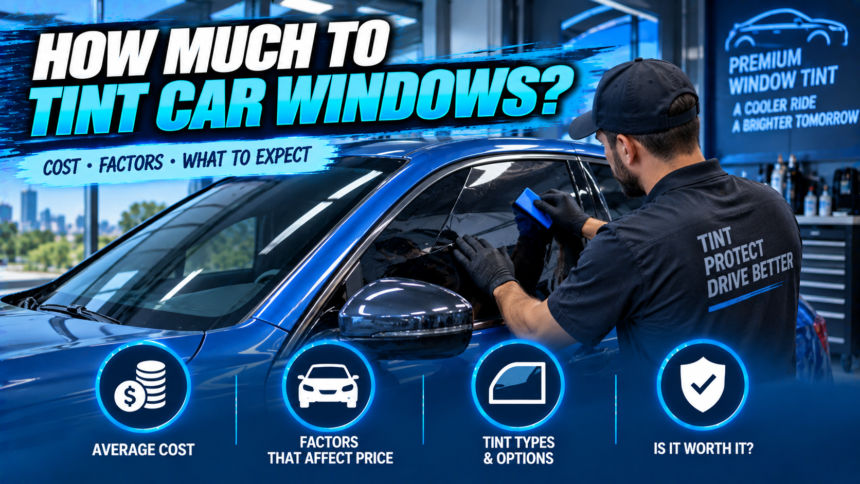
Tinting a car’s windows costs $150 to $800 for most vehicles in 2026. A basic dyed film on a sedan starts near $150, mid-grade carbon film runs about $250 to $450, and premium ceramic lands between $400 and $800. The single thing that moves the price most is the film you pick, not the labor. That is why two shops can look at the same car and quote you $200 and $600 without either one being wrong.
This guide breaks down what you actually pay, why the ranges are so wide, and how to read a quote so you know what you are getting. Once you understand the film types, the rest is easy.
Why the same car gets a $200 and a $600 quote?
The price gap almost always comes down to the film, which decides 60 to 70 percent of the total. A $150 job and a $600 job are not the same product at a different markup. They block heat at different rates, last for different numbers of years, and carry very different warranties.
Think of it this way: cleaning the glass, cutting the film, and squeegeeing it on takes about the same time whether the roll cost the shop $30 or $200. So when you collect quotes, the first question is not “how much,” it is “which film series are you using?” Without that, you have no real way to compare two numbers.
Ask every shop what film brand and series they use before you compare prices. A $200 quote and a $600 quote are usually two different products, not two different labor rates.
Price by film type
Here is what each film type costs for a full car in 2026, and what you get for the money. These are professional install prices for a standard sedan.
| Film type | Full-car price | Heat rejection | How long it lasts |
| Dyed | $150 – $300 | Low (blocks 15–30% of heat) | 2 to 5 years |
| Carbon | $250 – $450 | Medium (matte look, no fade) | 5 to 8 years |
| Ceramic | $400 – $800 | High (blocks 60–85% of heat) | 10+ years |
| Premium ceramic | $600 – $1,600 | Highest (top clarity + IR) | 10+ years, best warranty |
Dyed film is the budget choice. It darkens the glass and cuts glare, but it blocks little heat and tends to fade toward purple over a few years, especially in hot climates. When it gives out, you pay again to remove and replace it.
Carbon film is the mid-range sweet spot. It has a deep matte finish that does not fade, blocks a fair amount of heat, and often lasts eight years or more. For a lot of drivers it is the best balance of price and performance.
Ceramic film is the premium tier. It uses tiny ceramic particles to reject most of the infrared heat, the kind that makes a parked car feel like an oven, while blocking over 99 percent of UV rays. It stays clear for a decade or more and does not mess with cell, GPS, or toll-tag signals the way older metalized film did.
Price by vehicle type
Your car’s size and shape change the number too. More windows and bigger, more curved glass mean more film and more labor. A coupe is the cheapest thing to tint; a three-row SUV or a truck with a wide, curved back window is the most.
| Vehicle | Dyed | Carbon | Ceramic |
| 2-door coupe | $120 – $200 | $200 – $350 | $300 – $550 |
| 4-door sedan | $150 – $300 | $250 – $450 | $400 – $700 |
| SUV / minivan | $200 – $350 | $300 – $550 | $450 – $1,100 |
| Pickup truck | $180 – $320 | $280 – $500 | $450 – $900 |
As a rule, SUVs and trucks run 25 to 40 percent more than a sedan for the same film. Luxury cars with laminated acoustic glass or complex windshields can add another $100 or so. One money-saver worth knowing: most SUVs, trucks, and many sedans already come with dark “privacy glass” in the rear from the factory, which is dyed into the glass itself and needs no film. If yours does, you may only need the front two windows done, which often costs just $50 to $150.
What else adds to the bill?
The film and the vehicle set the base price. A few common add-ons stack on top, and they are worth budgeting for so the final number is not a surprise.
- Removing old tint: $50 to $200, more if the film is baked on and the adhesive fights back.
- Windshield tint or a sun strip: a full windshield film runs $150 to $350; a thin strip across the top is $50 to $100.
- Lifetime warranty: some shops charge about 15 percent more, which usually pays off since it covers redos.
- Location: big metro areas like Los Angeles, New York, and Miami charge 15 to 25 percent above the national average.
Dealerships and general detail shops also tend to charge 15 to 30 percent more than a dedicated tint shop for the same work, so a specialist is often both cheaper and better at it.
The windshield is worth a closer look, because a full windshield film is often the single most expensive line on a quote. The glass is large, curved, and shaped around the mirror mount and the driver-assist sensors, so it takes the most skill and time to fit. It is also where ceramic pays off the most, since the windshield is the biggest single source of heat coming into the cabin. Many drivers skip a dark windshield film (most states heavily restrict it anyway) and add a clear ceramic film that blocks heat and UV without changing how the glass looks.
How dark can you go, and what the law allows?
Tint darkness is measured as Visible Light Transmission (VLT), the percent of light the film lets through. A lower number means darker glass. So 5% VLT (often called “limo”) is very dark, and 70% is nearly clear.
Every state sets its own legal limits, and they are strictest on the front side windows. California and New York, for example, require the front windows to let in more than 70 percent of light, and a first fine can run around $250. Going darker than your state allows can also cost you at inspection and even complicate an insurance claim. Before you pick a shade, check your own state’s rule; a good installer will know it cold and can steer you to a legal setup. You can confirm the current limits on the IIHS window tint law page.
The most popular setup in 2026 is 35% VLT on the front two windows paired with 20% on the rear windows and back glass. It looks clean, stays legal in more states, and keeps the driver’s view clear at night. Good news for your wallet: darkness barely changes the film price. A roll of 20% ceramic costs about the same as 50% from the same brand, so you are not paying extra to go darker within legal limits.
Is ceramic worth the extra money?
For a daily driver in a hot climate, usually yes. Ceramic film blocks 60 to 85 percent of infrared heat, versus 15 to 40 percent for dyed film. In a Texas or Arizona summer, that is the difference between a car that cools down in three minutes and one that takes ten.
The math tends to work out too. Ceramic keeps the cabin cooler, so the AC works less and fuel use can drop by roughly $100 to $150 a year. It also lasts 10 years or more instead of the 3 to 5 you get from dyed film, so you avoid paying twice for a redo. If you plan to keep the car more than about three years, ceramic is closer to a smart economic choice than a luxury. If it is a short-term car or you mostly park in shade, carbon gives you most of the comfort for less.
It helps to think about the cost over the life of the car, not just the day you pay. Say you buy dyed film at $200 and it fades in four years. You pay to strip it off ($100 or so) and tint again, and now you are past $500 for two rounds of a film that never blocked much heat. A single $500 ceramic job that lasts a decade can end up cheaper and far more comfortable across the same period. That is the real reason installers push ceramic for anyone keeping the car a while: it is often the lower total cost, not just the nicer option.
One more thing the price buys you is protection for the interior. UV rays fade the dashboard, seats, and trim over the years, and sun damage inside a car is expensive to fix. Any decent film blocks most UV, and ceramic blocks over 99 percent, so part of what you pay for is the interior staying newer for longer, which also protects resale value.
Whatever tier you choose, look for a shop that installs films from a recognized maker like 3M automotive window films, LLumar, or XPEL, and uses computer-cut patterns. Machine-cut film means fewer errors, no razor blades near your glass, and cleaner edges that resist peeling.
How to get an honest quote?
A little prep gets you a fair price and saves you from redo costs later. Work through these steps before you book.
- Decide your goal first: heat and comfort point you to ceramic, looks and budget point to carbon or dyed.
- Get three quotes, and ask each shop for the exact film brand and series, not just “ceramic.”
- Confirm the VLT they plan to use is legal for your state, on both front and rear glass.
- Ask what the warranty covers, bubbling, peeling, fading, and color change, and whether it is lifetime.
- Check reviews and whether the shop is a certified dealer for the film brand.
Plan to leave the car for two to four hours; a full job takes that long, and the film needs a few days to fully cure before you roll the windows down.
Conclusion
Budget $150 to $800 for a full car tint in 2026, and let the film type set your target: dyed for a cheap cosmetic upgrade, carbon for solid mid-range value, ceramic for real heat rejection that lasts a decade. Get three quotes, always ask which film series each shop uses, and confirm the darkness is legal where you live. A good result is clean, bubble-free glass, a cooler cabin, and a warranty you won’t need to use.
Frequently asked questions
How much does it cost to tint just the front two windows?
Usually $50 to $150, since it is only two windows and little film. It is the most common upgrade for cars that already have factory privacy glass in the rear.
Does darker tint cost more than lighter tint?
No. The film costs about the same whether you choose 5% or 50% VLT. You only pay a little extra if you want different shades on different windows, since that adds cutting time.
How long does window tint last?
It depends on the film. Dyed lasts 2 to 5 years, carbon 5 to 8 years, and ceramic 10 years or more with proper care. Cheaper films fade and bubble sooner, especially in heat.
Can I tint my own windows to save money?
You can, and DIY kits are cheap, but getting a bubble-free, edge-clean result is hard on curved glass. Most drivers who try it end up paying a shop to redo it, which costs more overall.
Will tint interfere with my phone or GPS signal?
Not with modern carbon or ceramic film. Older metalized films could block signals, but today’s ceramic tints are non-metallic and let cell, GPS, and toll-tag signals through fine.
Related Articles
How to Reset the Oil Light on a Honda Civic?
How Long Can a Car Sit Before the Battery Dies?
How Many Engine Mounts Does a Car Have?
Does Driving a Car Charge the Battery? What to Know