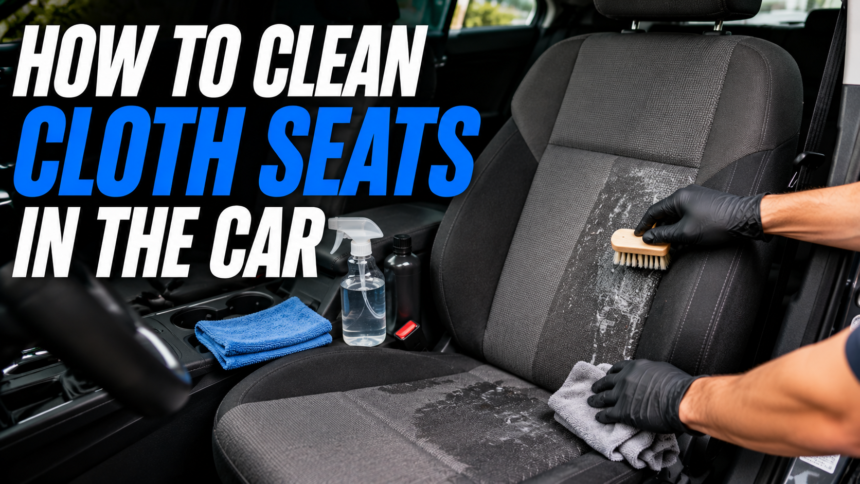
Cloth seats are common in most cars because they are comfortable and affordable, but they also collect dust, stains, and odors much faster than leather seats. Many drivers search for how to clean cloth seats in the car because everyday use, spilled drinks, food crumbs, and pet hair make the fabric look dull over time.
- Why Do Cloth Seats Need Regular Cleaning?
- Tools and Materials You Will Need
- Step-by-Step Process to Clean Cloth Seats in the Car
- Vacuuming the Seats
- Spot Treating Stubborn Stains
- Applying the Cleaning Solution
- Rinsing and Drying the Seats
- Removing Odors from Cloth Seats
- Maintenance Tips to Keep Cloth Seats Clean Longer
- Do’s and Don’ts While Cleaning Cloth Seats
- Frequently Asked Questions
- Conclusion
- Related Articles
The good news is that cleaning cloth seats does not require expensive equipment or professional help in most cases. With a few household tools and the right technique, anyone can restore their car seats to a fresh and clean condition. This guide breaks down the entire process into simple, easy-to-follow steps so you can get the job done properly the first time.
Why Do Cloth Seats Need Regular Cleaning?
Cloth seats absorb dust, sweat, and spills much more easily than other materials, which makes them a breeding ground for bacteria and bad smells if ignored for too long.
Regular cleaning not only keeps the interior looking fresh but also protects the fabric from permanent staining and fiber damage. It also improves air quality inside the car, especially for people with allergies, since dirty upholstery tends to trap dust mites and pollen.
Beyond hygiene, a clean interior plays a big role in maintaining your car’s resale value, as buyers often judge the overall condition of a vehicle by how well the seats have been maintained.
Tools and Materials You Will Need
Before starting the cleaning process, it helps to gather everything in one place so the job goes smoothly without interruptions. The tools required are simple and mostly available at home or at any local store.
Basic Cleaning Tools
A vacuum cleaner with a brush attachment is the most important tool for removing loose dirt and debris before any wet cleaning begins. You will also need a soft-bristled brush for scrubbing, a couple of clean microfiber cloths, and a bucket for mixing your cleaning solution. Having a dry towel on hand is useful for blotting excess moisture once the scrubbing stage is complete.
Cleaning Solutions
For most stains, a mixture of warm water and a small amount of mild detergent works well without damaging the fabric. Homemade options like a vinegar and water solution or a baking soda paste are also effective and safer for sensitive upholstery. If you prefer a ready-made product, a dedicated fabric or upholstery cleaner from an auto store is a reliable choice, especially for tougher stains.
Step-by-Step Process to Clean Cloth Seats in the Car
Once your tools and materials are ready, the actual cleaning process can be broken down into a few clear stages. Following these steps in order gives the best results and prevents the fabric from getting overly wet or damaged.
Vacuuming the Seats
Start by vacuuming the entire seat surface, including the corners, seams, and gaps near the seatbelt buckle where dust tends to collect. This step removes loose dirt and crumbs before any liquid is applied, which prevents the dirt from turning into mud during scrubbing. Take your time here, since a thorough vacuum makes every later step more effective.
Spot Treating Stubborn Stains
Before cleaning the whole seat, look closely for individual stains such as food marks, grease spots, or ink smudges and treat them separately. Apply a small amount of stain remover or your homemade solution directly onto the mark and let it sit for a few minutes before gently rubbing it in. Treating stains early prevents them from spreading further into the fabric during the main cleaning stage.
Applying the Cleaning Solution
Dip your brush into the prepared cleaning solution and work it into the fabric using gentle circular motions, focusing on one small section at a time. Avoid soaking the seat completely, since too much liquid can seep into the foam padding underneath and cause long-term problems like mold or bad odor. Moving section by section also ensures the cleaner does not dry out before you have a chance to wipe it off.
Rinsing and Drying the Seats
After scrubbing, use a clean, damp microfiber cloth to wipe away the soap residue from the fabric surface. Press a dry towel firmly onto the seats to soak up as much moisture as possible before allowing them to air dry completely. Leaving the car doors or windows open in a shaded area speeds up drying and helps prevent musty smells from developing.
Removing Odors from Cloth Seats
Even after a thorough wash, cloth seats can sometimes retain a faint odor from spills, smoke, or pets, which needs a separate deodorizing step.
Sprinkling a generous layer of baking soda over the seats and letting it sit for fifteen to twenty minutes before vacuuming again is one of the most effective natural remedies.
For persistent smells, a fabric-safe odor eliminator spray can be used, followed by proper ventilation to let the seats breathe and fully dry out.
Maintenance Tips to Keep Cloth Seats Clean Longer
Cleaning cloth seats once is not enough if the same habits that caused the mess continue afterward, so a simple maintenance routine makes a big difference. A quick vacuum every week and a deeper clean once a month can keep stains from building up in the first place. Using seat covers, especially during long trips or when transporting pets, adds an extra layer of protection between the fabric and everyday dirt.
| Maintenance Task | Recommended Frequency | Purpose |
| Quick vacuum | Weekly | Removes loose dust and crumbs |
| Deep cleaning | Monthly | Handles stains and built-up dirt |
| Baking soda deodorizing | Every two weeks | Keeps seats smelling fresh |
| Seat cover use | As needed | Protects fabric from spills and pet hair |
| Fabric protectant spray | Every few months | Adds resistance against future stains |
Do’s and Don’ts While Cleaning Cloth Seats
Knowing what to avoid is just as important as knowing the right technique, since a small mistake can leave the fabric looking worse than before.
| Do’s | Don’ts |
| Test any cleaner on a hidden area first | Do not soak the seats in excessive water |
| Use soft brushes to avoid fabric damage | Do not use bleach or harsh chemicals |
| Let seats dry fully before use | Do not sit on damp seats, as it traps moisture |
| Vacuum before applying any liquid cleaner | Do not skip spot treatment for tough stains |
| Ventilate the car during and after cleaning | Do not use rough scrubbing tools on delicate fabric |
Frequently Asked Questions
How often should cloth car seats be cleaned? A light vacuum every week combined with a deeper wash once a month is generally enough to keep cloth seats in good condition throughout the year.
Can a regular carpet cleaner be used on car seats? It is better to use a fabric or upholstery-specific cleaner, since carpet cleaners can sometimes be too harsh for the finer material used in car seat fabric.
What is the best way to remove old, set-in stains? Older stains usually need repeated spot treatment with a stronger solution or a steam cleaner, since a single wash often is not enough to lift them completely.
Is it safe to use bleach on cloth seats? Bleach should be avoided entirely, as it can discolor the fabric permanently and weaken the fibers over time, leading to faster wear.
How long does it take for cleaned seats to dry? Depending on humidity and airflow, cloth seats typically take between four to eight hours to dry fully, so planning the cleaning session in advance is helpful.
Conclusion
Knowing how to clean cloth seats in the car properly saves both time and money while keeping the interior looking fresh for years.
By following a simple routine of vacuuming, spot treating, gentle scrubbing, and proper drying, anyone can maintain their car seats without professional help.
Consistent maintenance, paired with the right tools and a little care, ensures cloth seats stay comfortable, odor-free, and presentable no matter how often the car is used.
Related Articles
What Is the Ideal Mileage for a Used Car? A Complete Buyer’s Guide
Can Spark Plugs Cause a Car to Not Start?