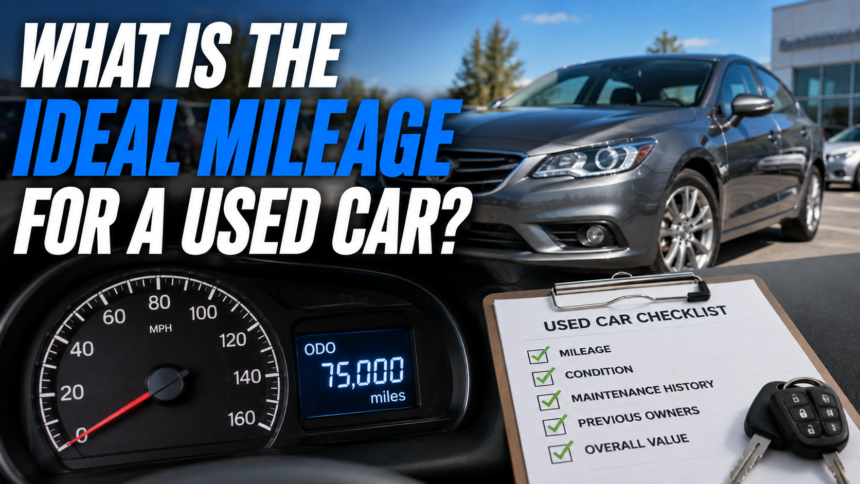
If you are buying a used car, one of the first questions in your mind is probably what is the ideal mileage for a used car before it becomes a risky purchase. In simple words, a car that has covered around 12,000 to 15,000 miles per year of its age is generally considered to be in a healthy, average range.
- Understanding the 12,000–15,000 Miles Per Year Rule
- What Counts as Low, Average, and High Mileage?
- Why Mileage Alone Doesn’t Tell the Whole Story?
- Pros and Cons of Low-Mileage Used Cars
- Pros and Cons of High-Mileage Used Cars
- How to Verify Mileage Accuracy?
- Mileage Expectations by Vehicle Type
- Other Factors That Matter More Than Mileage
- Mileage and Resale Value
- Final Verdict: What Is the Ideal Mileage for a Used Car?
- FAQs
- Conclusion
- Related Articles
This means a 5-year-old car with 60,000 to 75,000 miles is normal, not alarming. However, mileage alone never tells the full story of a car’s health. Maintenance history, driving conditions, and mechanical condition often matter more than the number on the odometer. This guide breaks down everything in detail so you can make a confident decision.
Understanding the 12,000–15,000 Miles Per Year Rule
Most used car buyers rely on a simple yearly mileage rule to judge whether a car has been driven a normal amount or an unusual amount. This rule works as a quick starting point, but it becomes more useful once you understand how to apply it practically.
How the Rule Works
The idea behind this rule is straightforward: an average driver covers roughly 12,000 to 15,000 miles every year. So if you multiply the car’s age by this number, you get a rough benchmark of expected mileage. A car that falls close to this number is considered normal, while one that falls far above or below deserves closer attention before purchase.
Calculating Expected Mileage by Car Age
To make this easier, you can simply multiply the car’s age in years by the average yearly mileage figure. The table below shows how this looks in practice, giving you a quick reference instead of doing manual math every time.
| Car Age | Expected Mileage Range |
| 1 year | 12,000 – 15,000 miles |
| 3 years | 36,000 – 45,000 miles |
| 5 years | 60,000 – 75,000 miles |
| 8 years | 96,000 – 120,000 miles |
| 10 years | 120,000 – 150,000 miles |
What Counts as Low, Average, and High Mileage?
Once you know the expected range, the next step is understanding where a specific car actually stands. Cars are usually grouped into three broad mileage categories, and each one carries its own set of expectations.
Low Mileage Cars
A car is generally called low mileage when its total distance driven falls noticeably below the expected range for its age. These cars are often appealing because less usage typically means less wear on major components like the engine and suspension.
Average Mileage Cars
Average mileage cars sit close to the standard yearly benchmark of 12,000 to 15,000 miles per year. These vehicles usually reflect normal daily use, such as commuting or regular errands, without extreme highway or city driving patterns.
High Mileage Cars
High mileage cars have covered significantly more distance than expected for their age. While this can sound concerning at first, many high mileage cars remain reliable if they were driven mostly on highways and maintained consistently over the years.
Why Mileage Alone Doesn’t Tell the Whole Story?
Mileage is a helpful indicator, but it is not the only factor that decides whether a used car is a smart buy. Several other elements influence how a car has actually aged compared to what the odometer suggests.
Highway Miles vs City Miles
Highway miles are generally considered gentler on a car because they involve steady speeds and less mechanical stress. City driving, on the other hand, involves frequent stopping, starting, and idling, which puts more strain on the engine, brakes, and transmission over time.
Driving Habits and Maintenance History
Two cars with identical mileage can be in completely different condition depending on how carefully they were driven and maintained. Regular oil changes, timely part replacements, and gentle driving habits often matter far more than the total number of miles covered.
Age vs Mileage Trade-off
Sometimes buyers face a choice between an older car with lower mileage and a newer car with higher mileage. In such cases, it helps to remember that rubber, plastic, and seal components degrade with age regardless of usage, so a very old low-mileage car is not automatically the safer choice.
Pros and Cons of Low-Mileage Used Cars
Low mileage cars are often marketed as premium options, but they come with their own strengths and weaknesses worth understanding before paying extra for them.
- Advantage: Less wear on the engine, transmission, and suspension components.
- Advantage: Often comes with a longer remaining lifespan for major mechanical parts.
- Drawback: Long periods of inactivity can cause rubber seals and gaskets to dry out or crack.
- Drawback: Fluids and belts can degrade over time even without heavy usage, sometimes needing replacement despite low mileage.
Pros and Cons of High-Mileage Used Cars
High mileage does not automatically mean poor condition, especially when the car has a documented and consistent maintenance history behind it.
- Advantage: Usually available at a noticeably lower price point.
- Advantage: If maintained well, many components can still perform reliably for years.
- Drawback: Higher likelihood of needing part replacements soon, such as brakes, belts, or suspension bushings.
- Drawback: Resale value tends to drop faster once mileage crosses common psychological thresholds like 100,000 miles.
How to Verify Mileage Accuracy?
Before trusting the number shown on the odometer, it is important to confirm that the mileage figure is genuine and has not been altered in any way.
Odometer Rollback Warning Signs
Worn pedals, a steering wheel, or seat that looks unusually used compared to a low mileage reading can be a warning sign. Mismatched service records or inconsistent wear patterns are also common indicators that the odometer reading may not be accurate.
Vehicle History Reports
A vehicle history report pulls together past ownership records, reported mileage at service visits, and accident history in one place. Cross-checking this report against the seller’s claimed mileage is one of the most reliable ways to confirm accuracy before finalizing a purchase.
Mileage Expectations by Vehicle Type
Not every vehicle type ages the same way at the same mileage, so it helps to adjust your expectations slightly based on what kind of car you are considering.
| Vehicle Type | Typical Mileage Tolerance |
| Sedans and hatchbacks | Standard 12,000–15,000 miles/year rule applies well |
| SUVs and trucks | Can often handle slightly higher mileage due to sturdier build |
| Hybrid and electric vehicles | Battery health matters more than raw mileage figures |
| Luxury vehicles | Lower mileage is preferred due to costlier part replacements |
Other Factors That Matter More Than Mileage
Beyond the odometer reading, several other checks can reveal far more about a used car’s real condition and remaining lifespan.
- Complete and consistent maintenance records from previous owners.
- Clean accident and damage history with no major structural repairs.
- Smooth engine performance and transmission shifting during a test drive.
- Even tire wear and responsive, unsqueaky brakes.
- No visible rust, corrosion, or signs of water damage on the body or undercarriage.
Mileage and Resale Value
Mileage plays a direct role in how quickly a car loses value over time, since buyers generally associate higher mileage with more remaining wear on major components.
Cars that fall within the average expected mileage range for their age tend to hold resale value better than those with unusually high readings.
This is also why the sweet spot for many buyers, when reselling later, is a car that sits close to or slightly below the standard yearly mileage benchmark.
Final Verdict: What Is the Ideal Mileage for a Used Car?
Bringing everything together, the ideal mileage for a used car is one that falls close to the 12,000 to 15,000 miles per year benchmark, backed by consistent maintenance records and no major mechanical concerns.
A car slightly above or below this range is not necessarily a bad choice, as long as its overall condition, service history, and inspection results support the purchase decision.
FAQs
Is 100,000 miles too high for a used car? Not necessarily; many cars run well beyond 100,000 miles if they have been regularly serviced and driven mostly on highways.
Is low mileage always better when buying used? Not always, since very low mileage on an older car can sometimes hide age-related issues like dried-out seals or degraded fluids.
What mileage is considered too low for suspicion? Extremely low mileage compared to the car’s age, especially without clear ownership or storage explanation, is worth verifying carefully.
Conclusion
Understanding what is the ideal mileage for a used car gives you a strong starting point, but a smart purchase always combines mileage benchmarks with maintenance history, inspection results, and driving condition checks.
Use the yearly mileage rule as your first filter, then dig deeper into service records and a proper test drive before making your final decision.
Related Articles
What Is Neutral For in a Car? Complete Guide for Every Driver
Are Jeeps Good Cars? Honest Guide to Reliability, Pros & Cons
Does My Car Smell of Petrol? Causes, Risks & Fixes Explained