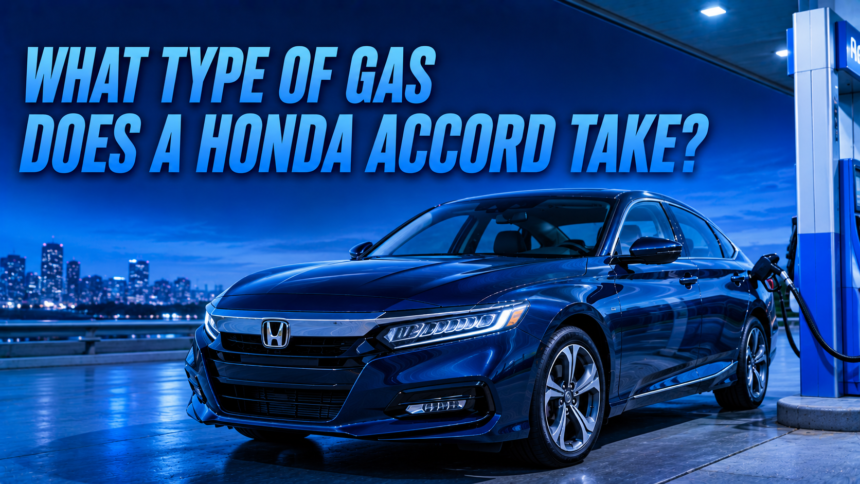
If you just bought a Honda Accord or you’re thinking about picking one up, there’s a good chance you’ve asked yourself a very practical question: what type of gas does a Honda Accord take? It’s a fair thing to wonder about, especially if you’re used to a different car brand or you’ve heard mixed opinions from friends, mechanics, or online forums. Some people swear by premium fuel no matter what car they drive, while others stick to the cheapest option at the pump. With the Accord, though, the answer is actually pretty simple, and knowing it can save you money over the life of the car.
- Quick Answer: Fuel Type Summary
- Understanding Octane Ratings
- Honda Accord Fuel Requirements by Model Year
- Regular vs. Premium Gas: Does It Matter?
- Honda Accord Hybrid Fuel Requirements
- Fuel Tank Capacity and Driving Range
- Tips for Maximizing Fuel Efficiency
- Common Myths About Gas Types
- Frequently Asked Questions
- Conclusion
- Related Articles
The Honda Accord is one of the most popular midsize sedans in the United States, known for its reliability, comfortable ride, and strong resale value. Part of what makes it such a practical choice is that it’s designed to run well on standard fuel, not the expensive stuff. That said, fuel choice isn’t just about what the car “needs” to run. It also touches on performance, long-term engine health, and how far you can stretch a tank of gas. In this guide, we’ll walk through everything you need to know about fueling up your Accord, whether you’re driving a brand-new model or an older one that’s been on the road for years.
Quick Answer: Fuel Type Summary
Let’s get straight to the point before diving into the details. Most Honda Accord models are built to run on regular unleaded gasoline with an octane rating of 87. This applies to the vast majority of trims across nearly every model year, including the standard four-cylinder engines and the hybrid powertrain. You don’t need to hunt down a premium-only gas station or pay extra for higher-octane fuel just to keep your Accord running smoothly.
Here’s a simple breakdown to reference at a glance:
| Accord Type | Fuel Type | Octane Rating | Premium Required? |
|---|---|---|---|
| Standard Gas Engine (1.5L Turbo) | Regular Unleaded | 87 | No, but 89+ can be used |
| 2.0L Turbo (Sport/Sport-L trims) | Regular Unleaded | 87 (Premium recommended for peak power) | No |
| Hybrid Models | Regular Unleaded | 87 | No |
| Older Accords (2000s and earlier) | Regular Unleaded | 87 | No |
As you can see, regular unleaded is the go-to fuel across the board. The one small exception worth noting is that certain higher-output trims, like some Sport models with the larger turbocharged engine, may perform slightly better on premium fuel, even though it isn’t required. We’ll dig into what that actually means for your driving experience a little further down.
Understanding Octane Ratings
Before we go further, it helps to understand what those numbers on the gas pump actually mean. Octane rating is basically a measurement of how well a fuel resists “knocking” or “pinging” inside the engine. Knocking happens when the air-fuel mixture in the engine’s cylinders ignites unevenly or too early, which can create a knocking sound and, over time, potential engine stress. Higher octane fuels are more resistant to this premature ignition, which is why high-performance and turbocharged engines sometimes call for them.
In the United States, you’ll typically see three octane options at the pump: 87 (regular), 89 (mid-grade), and 91 or 93 (premium). It’s a common myth that higher octane automatically means “better” or “cleaner” fuel. That’s not quite true. Octane rating has nothing to do with how clean the fuel is or how many additives it contains. It simply tells you how the fuel handles pressure and heat inside the engine.
There’s also an important distinction between fuel that’s “recommended” versus fuel that’s “required.” When a manufacturer says premium fuel is recommended, it means the engine will run fine on regular gas, but you might notice a small difference in power output or throttle response with premium. When a manufacturer says premium is required, using regular gas could trigger the engine’s knock sensors to pull back timing and reduce power to protect itself, and doing so regularly isn’t ideal for long-term performance. Thankfully, for the Honda Accord, premium fuel is never required. It’s simply an optional upgrade for drivers who want to squeeze out a bit more performance from their turbocharged engine.
Honda Accord Fuel Requirements by Model Year
Fuel requirements for the Accord have stayed fairly consistent over the years, but there are a few nuances depending on when your car was built.
Recent Models (2018–2026)
Modern Accords, including the redesigned generations from 2018 onward, are equipped with turbocharged four-cylinder engines (1.5L and 2.0L) as well as a hybrid powertrain option. All of these engines are engineered to run on regular 87-octane gasoline. Honda designed these engines with direct injection and advanced knock sensors, which allow them to perform reliably on standard fuel while still delivering strong power and efficiency. If you’re driving a 2018 or newer Accord, you can fill up with regular gas at any station without a second thought.
Older Models (2000s–2017)
If you own an older Accord, whether it’s a 2000s model with the naturally aspirated four-cylinder or V6 engine, or a slightly newer version from the early-to-mid 2010s, the same rule applies. These engines were also designed around regular unleaded gasoline. Honda has maintained a consistent philosophy across generations: build engines that are efficient and reliable without forcing owners to pay premium prices at the pump.
Turbocharged and Sport Trims
The one area where things get slightly more nuanced is with the Accord’s turbocharged Sport and Sport-L trims, particularly those equipped with the 2.0L engine. While these models still run perfectly fine on regular gas, Honda notes that using premium fuel can optimize horsepower and torque output. This isn’t a requirement, but rather a “if you want to unlock the last bit of performance” type of recommendation. Most everyday drivers won’t notice a dramatic difference, but if you’re someone who enjoys spirited driving or wants maximum output from a turbocharged engine, premium is worth considering occasionally.
Regular vs. Premium Gas: Does It Matter?
This is where a lot of Accord owners get curious. If premium isn’t required, is it still worth buying? Let’s break down what actually happens in each scenario.
Using premium in a car designed for regular gas: In most cases, you won’t notice any meaningful difference in daily driving. The engine’s computer is calibrated to run optimally on 87 octane, so pouring in premium doesn’t “unlock” hidden power unless the engine is specifically tuned to take advantage of it, like the turbocharged Sport trims mentioned earlier. Essentially, you might be paying more for a fuel your engine doesn’t fully need.
Using regular gas in a car that recommends premium: Since the Accord never requires premium, this scenario isn’t really a concern. The engine is built to handle regular fuel as its baseline, so there’s no risk of damage or reduced longevity.
Cost differences over time: Premium gas typically costs 40 to 70 cents more per gallon than regular, depending on your region and current market prices. If you fill up a 14.8-gallon tank every week, that difference can add up to hundreds of dollars a year. For most Accord drivers, sticking with regular unleaded is the financially smart choice, since the performance benefits of premium are minimal unless you’re specifically driving a turbocharged Sport trim and pushing the engine hard.
Honda Accord Hybrid Fuel Requirements
The Honda Accord Hybrid deserves its own mention because hybrid vehicles sometimes get lumped into a different fuel category in people’s minds. In reality, the Accord Hybrid runs on the exact same regular 87-octane unleaded gasoline as the standard gas-only models. There’s no special hybrid-only fuel or premium requirement here.
What makes the hybrid stand out is its fuel efficiency, not its fuel type. Thanks to the electric motor assistance and regenerative braking system, the Accord Hybrid typically achieves significantly better MPG than the standard gas engine, especially in city driving where hybrids tend to shine. If your priority is spending less money at the pump overall, rather than worrying about which grade of gas to buy, the hybrid trim is worth a serious look.
Fuel Tank Capacity and Driving Range
Knowing your fuel type is only part of the equation. Understanding how far you can go on a full tank helps with trip planning and budgeting for gas expenses.
Most modern Honda Accords have a fuel tank capacity of around 14.8 gallons for gas-only models. The hybrid version has a slightly smaller tank, generally around 12.7 gallons, since it relies partly on electric power and doesn’t need to carry as much gasoline reserve.
Here’s a general look at estimated range based on typical fuel economy figures:
| Accord Model | Tank Size | City MPG | Highway MPG | Estimated Range (Combined) |
|---|---|---|---|---|
| 1.5L Turbo Sedan | ~14.8 gallons | 30 | 38 | Approximately 480–500 miles |
| 2.0L Turbo Sport | ~14.8 gallons | 22 | 32 | Approximately 380–400 miles |
| Hybrid | ~12.7 gallons | 51 | 44 | Approximately 550–580 miles |
Keep in mind these numbers can vary based on driving conditions, terrain, weather, and how the car is maintained. Highway driving at a steady speed generally yields better mileage than stop-and-go city traffic.
Tips for Maximizing Fuel Efficiency
Getting the most out of every gallon isn’t just about choosing the right fuel type. Your driving habits and how well you maintain the car play a huge role too.
Driving smoothly, without aggressive acceleration or hard braking, can noticeably improve your fuel economy. Sudden bursts of speed followed by hard stops waste gas and put extra strain on the engine and brakes. Keeping your speed steady on the highway, using cruise control when appropriate, also helps maintain consistent fuel consumption.
Maintenance matters just as much. Keeping your tires properly inflated reduces rolling resistance, which means the engine doesn’t have to work as hard to keep the car moving. A clogged air filter can also reduce efficiency by restricting airflow to the engine, so replacing it on schedule is a simple but effective habit. Regular oil changes with the manufacturer-recommended oil viscosity keep the engine running smoothly, which indirectly supports better fuel economy.
It’s also worth considering top-tier detergent gasoline when you fill up. Top-tier gas contains a higher concentration of detergent additives that help keep fuel injectors and intake valves clean, which can support consistent engine performance over time. Many major gas station brands meet this standard, so it’s not necessarily about spending more, just being aware of which stations carry top-tier certified fuel.
Common Myths About Gas Types
There are a few misconceptions floating around when it comes to fuel choice, and it’s worth clearing them up.
One common myth is that premium fuel always means better performance, no matter what car you drive. As we covered earlier, this only holds true for engines specifically designed or tuned to take advantage of higher octane levels. For a standard Accord engine calibrated around regular gas, premium won’t magically boost horsepower or fuel economy.
Another myth is that using regular gas will damage an engine over time if you don’t use premium. This simply isn’t accurate for the Accord, since Honda engineers the vehicle from the ground up to run on regular unleaded without any long-term risk to engine health. The confusion often comes from luxury or performance vehicles where premium truly is required, and people mistakenly apply that same rule to every car on the road.
Frequently Asked Questions
Can I use E85 or flex fuel in my Honda Accord? No, the Honda Accord is not a flex-fuel vehicle. It’s designed specifically for standard gasoline, and using E85 (which contains a much higher ethanol content) is not recommended and could cause performance or compatibility issues.
Does using premium gas void my warranty if it’s not required? No. Using premium fuel in an Accord that only requires regular gas will not void your warranty. You’re simply using a higher grade fuel than necessary, which isn’t harmful to the engine.
What octane is best for older Accords? Older Accords, including models from the 1990s through the 2010s, are all designed for regular 87-octane fuel. There’s no need to switch to a higher grade unless your specific owner’s manual states otherwise.
Will using regular gas hurt my Accord’s performance? No. Since Honda engineers the Accord’s engines around regular unleaded fuel, using it as your everyday fuel source won’t hurt performance or reliability in any meaningful way.
Is diesel fuel ever an option for the Accord? No, the Honda Accord uses a gasoline engine, not a diesel one. Putting diesel fuel in an Accord would cause serious engine damage, so it’s important to always use standard gasoline pumps.
Conclusion
So, what type of gas does a Honda Accord take? The short and reliable answer is regular unleaded gasoline with an 87 octane rating, and that holds true across nearly every model year and trim, including the hybrid. While certain turbocharged Sport trims can technically benefit from premium fuel in terms of maximizing horsepower, it’s never a requirement, and most everyday drivers won’t notice a dramatic difference in daily use.
If you’re looking to save money at the pump without sacrificing performance or engine health, sticking with regular gas is the smart and practical choice for your Accord. Pair that with good driving habits and routine maintenance, and you’ll get reliable performance and solid fuel economy for years to come.
Related Articles
How Many Miles Can a Honda Accord Last? Real Lifespan Guide
How to Clean Cloth Seats in the Car: A Complete Step-by-Step Guide
What Is the Ideal Mileage for a Used Car? A Complete Buyer’s Guide