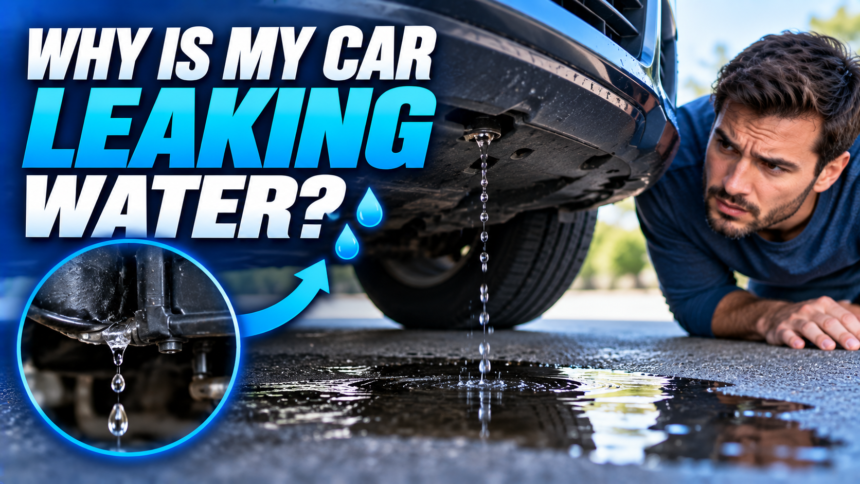
In most cases, water leaking from under your car is completely normal, and it is just condensation dripping from the air conditioning. When the AC runs, it pulls moisture out of the cabin air, and that water drains out under the car through a small tube. It only becomes a concern if the fluid is not actually water, such as coolant, which is usually colored and smells sweet.
- The most common cause: AC condensation
- Exhaust condensation, also normal
- The quick test: is it really water?
- How to read the color and location
- When the ‘water’ is actually coolant
- Other fluids people mistake for water
- Water inside the car: a different issue
- When to see a mechanic
- Conclusion
- Frequently asked questions
- Related Articles
So before you worry, the real question is whether that puddle is harmless water or a fluid your car needs. This guide explains the normal sources, a 30-second test to check, and the signs that mean you should get it looked at.
The most common cause: AC condensation
If you see a clear puddle after driving with the air conditioning on, especially on a hot or humid day, this is almost certainly the cause and nothing to fix. It is the AC doing exactly what it is designed to do.
Inside the AC system, cabin air passes over a very cold part called the evaporator. Moisture in the air condenses on that cold surface, just like water beading on a cold drink, then collects and drains out through a tube under the car. As O’Reilly Auto Parts explains, this condensation draining from the evaporator’s drain tube is a normal part of how the AC works. You will usually see it near the front passenger side, roughly under the middle of the car.
The giveaway for AC condensation: a clear, odorless puddle toward the front passenger side that appears after you have been running the AC. It is water, and it needs no action.
Exhaust condensation, also normal
The other common harmless source is the exhaust. If you notice a few drops of clear water dripping from the tailpipe, especially on a cold morning when you first start the car, that is exhaust condensation.
Burning fuel produces water vapor, and as the exhaust system heats up and cools, some of that moisture condenses and drips out of the tailpipe. It is usually light and clears up within a few minutes as the exhaust warms to operating temperature. A small amount of water from the tailpipe on a cold start is nothing to worry about. The one exception is large clouds of white smoke from the exhaust, which is different and can signal a more serious problem, covered below.
The quick test: is it really water?
Since coolant and other fluids can look like water once spread across the ground, a quick check tells you what you are actually dealing with. It takes about 30 seconds.
Put a sheet of white paper or a paper towel under the drip, or dab the puddle with a clean cloth, then look at it closely. Water will be clear and have no smell. If the fluid shows a color, or has a sweet or unusual odor, or feels slightly slippery, it is not plain water and deserves a closer look. This simple test is the single most useful thing you can do, because it separates a harmless puddle from a real leak in seconds.
How to read the color and location
Color and where the drip appears are the two biggest clues. Here is how to match what you see to what it is:
| Color / smell | Likely fluid | Normal or a problem? |
| Clear and odorless | Water (AC or exhaust condensation) | Normal, no action needed |
| Green, orange, or pink, sweet smell | Coolant | A leak, get it checked |
| Light blue or green | Windshield washer fluid | Minor, from a cracked reservoir |
| Reddish | Transmission or power steering fluid | A leak, get it checked |
| Amber to brown | Engine oil | A leak, get it checked |
Clear and odorless from the front passenger side or the tailpipe is the harmless kind. Any color, especially with a sweet smell, means a fluid your car needs is escaping, and that is worth acting on.
When the ‘water’ is actually coolant
The one leak you do not want to mistake for water is coolant, because losing it can lead to overheating and serious engine damage. Diluted coolant can look nearly clear, which is exactly why the paper test matters.
Coolant is usually green, orange, or pink, has a distinctly sweet smell, and feels slightly slick. A coolant leak often shows up near the front center of the car, under the radiator, and it can come from the radiator, hoses, or connections. The clearest confirmation is other symptoms: if your temperature gauge is climbing, the coolant reservoir is low, or you smell something sweet, treat the puddle as a cooling system leak.
Stop driving and get help if the temperature gauge rises, the coolant level is low, or you see large clouds of white smoke from the exhaust. Heavy white exhaust smoke can mean coolant is burning inside the engine, a sign of a blown head gasket.
Other fluids people mistake for water
Coolant is not the only fluid that can be taken for water. A couple of others are worth knowing:
- Windshield washer fluid. Often light blue or green, this can leak from a cracked reservoir, usually near the front tires. It commonly happens if plain water was added to the washer fluid and then froze and expanded, cracking the tank. It is a minor fix.
- Other running fluids. Reddish fluid points to transmission or power steering fluid, and amber to brown points to engine oil. These are leaks worth checking rather than harmless water, and the color tells you which system is involved.
Water inside the car: a different issue
Water on the ground is usually fine, but water inside the cabin is not, and it is a case many guides skip. If the carpet on the passenger side is damp, the water that should be draining outside is ending up inside instead.
The usual cause is a clogged AC drain tube. When that tube is blocked, the condensation cannot escape under the car and backs up into the cabin. A more serious possibility is a leaking heater core, which involves coolant leaking inside the car, sometimes with a sweet smell or a foggy film on the windows. Either way, damp carpet is worth having checked, since it is not the normal outside-the-car drainage.
When to see a mechanic
Most water leaks need no action at all, but a few signs mean it is time to get help. Take the car in if the paper test shows a colored or sweet-smelling fluid rather than clear water, if the temperature gauge is rising or the coolant level is dropping, if there is heavy white smoke from the exhaust, or if the cabin carpet is wet.
If you have run the paper test and the fluid is clear and odorless, coming from the front passenger side or the tailpipe, you can relax and keep driving while simply keeping an eye on things. The trouble only starts when the clear liquid is not really water, so let the color, smell, and any warning signs be your guide.
Conclusion
Water leaking from under your car is usually harmless AC condensation, or a little exhaust condensation on a cold start, and needs no action. The key is the 30-second paper test: clear and odorless from the front passenger side or tailpipe is normal, while a colored or sweet-smelling fluid points to coolant or another leak that should be checked. Watch for a rising temperature gauge, low coolant, heavy white exhaust smoke, or damp cabin carpet, and if you see those, get it looked at. Otherwise, it is just water.
Frequently asked questions
Is it normal for my car to leak water? Yes, usually. Clear, odorless water dripping from the front passenger side is AC condensation, and a few drops from the tailpipe on a cold start is exhaust condensation. Both are normal and need no action.
How do I know if it’s water or coolant? Put white paper under the drip. Water is clear and odorless. Coolant is green, orange, or pink, smells sweet, and feels slightly slippery. Color or a sweet smell means it is a leak, not water.
Where does the water from my AC come from? The AC cools cabin air over a cold evaporator, and moisture condenses on it and drains out under the car through a tube. That is why you see a clear puddle after running the AC, usually on the front passenger side.
Why is water leaking inside my car? Often a clogged AC drain tube, which backs condensation up into the cabin instead of outside. Damp carpet with a sweet smell can mean a leaking heater core. Either should be checked by a mechanic.
When should I worry about water under my car? When the fluid is colored or smells sweet, when the temperature gauge rises or coolant is low, when there is heavy white exhaust smoke, or when the cabin carpet is wet. These point to a real leak, not condensation.
Related Articles
What Is Neutral For in a Car? Complete Guide for Every Driver
What Is the Fastest BMW? Complete Speed & Acceleration Guide
Can a Car Battery Shock You? The Real Answer
How Old to Rent a Car in Texas? Complete Age Requirements Guide