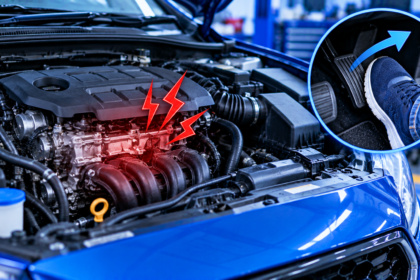




Few things are more unsettling than feeling your vehicle tremble beneath you while you’re cruising down the road. If you’ve ever asked yourself, “why does my car shake when I drive?” you’re far from alone. This is one of the most common complaints mechanics hear, and the honest answer is that it could be caused by dozens of different issues — some as simple and cheap as a tire that needs balancing, and others as serious as a failing transmission or a dangerously worn suspension part.
- Quick Summary Table
- Shaking at Idle
- Shaking While Accelerating
- Shaking at High Speeds
- Shaking While Braking
- Shaking Felt in Steering Wheel vs. Whole Car
- Tire-Related Causes (Deep Dive)
- Suspension & Steering Component Issues
- Engine-Related Causes
- Transmission-Related Causes
- How to Diagnose the Shaking Yourself? (Step-by-Step)
- When to See a Mechanic Immediately? (Safety Warning Signs)
- Estimated Repair Costs
- Preventive Maintenance Tips
- Frequently Asked Questions (FAQ)
- Conclusion
- Related Articles
The shaking itself is really just a symptom. Your car is trying to tell you that something, somewhere, isn’t spinning, gripping, or firing the way it should. The trick to fixing it quickly and affordably is learning to read the clues: when the shaking happens, where you feel it, and what else is going on with the car at the same time. This guide walks through every major cause in plain language, so you can walk into a repair shop informed instead of confused — or even fix a few of these issues yourself.
Ignoring a shaking car is rarely a good idea. What starts as a mild vibration at highway speed can, over time, turn into a blown tire, a seized brake caliper, or a stranded vehicle on the side of the road. So let’s break this down piece by piece.
Quick Summary Table
Before diving into the details, here’s a fast reference table that pairs common symptoms with their most likely causes and how urgently you should act.
| Symptom | Likely Cause | Urgency Level |
|---|---|---|
| Shaking at idle only | Worn motor mounts, dirty spark plugs, vacuum leak | Moderate |
| Shaking while accelerating | Damaged CV joint, bad spark plugs, loose lug nuts | High |
| Shaking at highway speed | Unbalanced tires, bent rim, alignment issue | Moderate to High |
| Shaking when braking | Warped rotors, worn pads | High |
| Shaking in steering wheel only | Front tire or front suspension issue | Moderate |
| Shaking through whole car/seat | Drivetrain, transmission, or frame-related issue | High |
| Shaking with a burning smell | Brake or clutch problem | Urgent |
| Shaking with clicking noise | CV joint failure | Urgent |
Shaking at Idle
If your car shakes mainly while sitting still with the engine running — say, at a red light or in your driveway — the problem usually lives inside the engine bay rather than the wheels.
Worn or loose motor mounts. Motor mounts are rubber-and-metal cushions that hold your engine in place and absorb its natural vibrations. Over years of heat and stress, the rubber cracks and breaks down. Once that happens, the engine’s own movement transfers directly into the cabin, and you feel it as a shudder that’s worst when the car is idling in gear.
Dirty or failing spark plugs. Spark plugs ignite the fuel-air mixture in each cylinder. When they’re fouled with carbon or simply worn out, one or more cylinders may fire weakly or not at all. This uneven firing creates a rough, shaky idle that often smooths out somewhat once you start moving.
Clogged fuel injectors. Injectors deliver a precise, fine mist of fuel into the engine. When they get clogged with deposits, that spray becomes uneven, starving certain cylinders and causing the whole engine to run roughly.
Vacuum leaks. Your engine relies on a sealed vacuum system to manage the air-fuel ratio. A cracked hose or a loose fitting lets unmetered air sneak in, confusing the engine’s computer and causing an unstable, shaky idle.
Worn engine belts. A serpentine belt that’s cracked, glazed, or slightly misaligned can create a subtle but constant vibration, especially noticeable when the engine is idling and under less load from driving.
Shaking While Accelerating
Shaking that appears or intensifies specifically when you press the gas pedal points toward a different set of suspects.
Damaged CV joints or axles. Constant-velocity (CV) joints allow your front axles to transmit power smoothly even as the wheels turn and move up and down. A torn CV boot lets grease escape and dirt in, wearing out the joint. As it fails, you’ll often feel shaking under acceleration along with a clicking or popping sound, especially when turning.
Worn spark plugs or ignition coils. Just as with idle shaking, ignition problems tend to get worse under the load of acceleration, when the engine needs every cylinder firing correctly to deliver smooth power.
Bent driveshaft. On rear-wheel and four-wheel drive vehicles, a driveshaft that’s been bent — often from an impact or pothole — will wobble as it spins faster during acceleration, sending vibration through the floor and seats.
Loose wheel lug nuts. This one is simple but genuinely dangerous. If lug nuts have loosened, the wheel itself can wobble slightly on the hub, and that wobble becomes more pronounced as speed and torque increase. Check this first — it takes two minutes and could prevent a wheel from coming off.
Shaking at High Speeds
Vibration that only shows up once you hit, say, 55 mph or more is a classic sign of a wheel-and-tire issue.
Unbalanced tires. Every tire and wheel assembly is balanced with small weights so that it spins evenly. When a weight falls off or a tire wears unevenly, the assembly becomes lopsided, and at higher speeds that imbalance creates a rhythmic shake, usually felt in the steering wheel.
Bent or damaged wheel rim. Hitting a deep pothole or curb hard enough can bend the metal rim of a wheel. Even a slightly bent rim will cause a wobble that gets worse the faster you go.
Wheel alignment issues. When your wheels aren’t pointed in exactly the right direction relative to each other and the road, it can cause pulling, uneven tire wear, and vibration, particularly at speed.
Worn wheel bearings. Bearings let your wheels spin freely with minimal friction. As they wear out, they develop play and roughness, which shows up as vibration and often a humming or growling noise that changes pitch with your speed.
Shaking While Braking
If the car is smooth otherwise but shudders the moment you touch the brake pedal, the brake system itself is almost always to blame.
Warped brake rotors. This is the most common cause of brake-related shaking by far. Rotors can warp from repeated heating and cooling, especially if you frequently brake hard or ride the brakes down long hills. A warped rotor causes the brake pad to grip unevenly as it spins, creating a pulsing vibration you’ll feel in the pedal and steering wheel.
Worn brake pads. Pads worn down unevenly, or worn past their wear indicators, can chatter against the rotor and create shaking along with a squealing or grinding noise.
Stuck brake caliper. A caliper that doesn’t release fully will drag on the rotor constantly, generating uneven heat, accelerated wear, and vibration — often paired with a burning smell.
Shaking Felt in Steering Wheel vs. Whole Car
Where you feel the shake is one of the most useful diagnostic clues available to you, and it’s worth paying close attention to.
Steering wheel shaking almost always points to something happening at the front of the car — front tires, front wheel bearings, front brake rotors, or the steering and suspension components connected to the front wheels.
Whole-car shaking, felt equally through the seat, floor, and steering wheel, tends to suggest something more central, such as the engine, transmission, driveshaft, or a problem affecting all four tires at once, like underinflation.
Seat or floor shaking, without much steering wheel involvement, often points toward the rear tires, rear suspension, exhaust system mounts, or the driveshaft.
Tire-Related Causes (Deep Dive)
Because tires are the single most common source of the “why does my car shake when I drive” complaint, they deserve extra attention.
Uneven tire wear. Tires that wear unevenly — cupped, feathered, or worn more on one edge — lose their perfectly round shape and create vibration as they roll, especially at speed.
Underinflated or overinflated tires. Incorrect tire pressure changes how the tire contacts the road and can produce a subtle but persistent shake, along with reduced fuel economy and faster wear.
Tire bulges or flat spots. A bulge indicates internal damage to the tire’s structure, while a flat spot can develop if a car sits parked for a long time or after hard braking. Both throw off the tire’s roundness and cause noticeable vibration.
Age and tread depth issues. Even tires that look fine can degrade internally with age. Old, hardened rubber doesn’t flex evenly, which can contribute to vibration that seems to have no obvious external cause.
Suspension & Steering Component Issues
Your suspension system is what keeps your tires planted firmly and evenly on the road, so wear here often shows up as shaking.
Worn ball joints. These pivot points allow your wheels to turn and move with the suspension. When they wear out, they develop play that translates into looseness and vibration, particularly over bumps.
Bad control arm bushings. Bushings cushion the connection between suspension arms and the car’s frame. Cracked or collapsed bushings allow excess movement, which can feel like shaking or clunking.
Faulty struts or shocks. These components control how your suspension absorbs bumps. Worn-out struts let the wheel bounce excessively, which can translate into a shaky, unsettled ride.
Loose tie rod ends. Tie rods connect your steering system to the wheels. Excess play here creates looseness that’s often felt as shaking or wandering in the steering wheel.
Engine-Related Causes
Misfiring cylinders. A misfire — when a cylinder fails to combust properly — creates an immediate imbalance in engine power delivery, which you’ll feel as a shake or jerk, often paired with a check engine light.
Dirty air filter. A heavily clogged air filter restricts airflow into the engine, upsetting the air-fuel ratio and potentially causing rough running and mild shaking under load.
Failing engine mounts. As covered earlier, worn mounts let engine vibration transfer straight into the chassis, worse at idle but sometimes noticeable during acceleration too.
Timing belt or chain issues. A timing component that’s stretched, worn, or slightly out of sync can throw off engine timing just enough to cause rough running and vibration, and left unaddressed, it can lead to serious engine damage.
Transmission-Related Causes
Low or old transmission fluid. Transmission fluid lubricates and cools internal components. When it’s low or degraded, gear changes can become rough and shaky rather than smooth.
Worn clutch (manual cars). A worn or warped clutch disc can cause shuddering specifically when engaging the clutch from a stop or during gear changes.
Torque converter issues (automatic cars). The torque converter transfers power from the engine to the transmission. Internal wear or a failing lock-up clutch inside it can cause shaking, particularly at certain speeds or during acceleration.
How to Diagnose the Shaking Yourself? (Step-by-Step)
You don’t need to be a mechanic to narrow down the cause. Here’s a simple process you can follow:
- Note when the shaking occurs. Is it at idle, while accelerating, while braking, or only at certain speeds? Write it down — this single detail eliminates most possibilities.
- Check tires and wheels. Look for uneven wear, low pressure, visible bulges, or damage. Give each wheel a firm push and wiggle to check for looseness.
- Inspect brakes. If you can safely see the rotors through the wheel spokes, check for obvious grooves, discoloration, or uneven wear patterns.
- Listen for unusual sounds. Clicking often means a CV joint, humming or growling often means a wheel bearing, and grinding often means brakes.
- Use an OBD-II scanner. A cheap code reader plugged into your car’s diagnostic port can reveal misfire codes or other engine faults that point directly to the problem.
When to See a Mechanic Immediately? (Safety Warning Signs)
Some shaking is a minor annoyance; other shaking is a warning that your car is unsafe to drive. Head straight to a mechanic if you notice any of the following alongside the vibration:
- A burning smell, which can indicate an overheating brake or clutch
- Grinding or clicking noises that get louder over time
- Shaking that’s rapidly getting worse from one drive to the next
- Difficulty steering or braking normally
- A wheel that feels loose when you check it by hand
- Warning lights on the dashboard, especially the check engine or ABS light
Driving on a bent rim, a failing wheel bearing, or a badly worn CV joint for too long can lead to sudden, dangerous failure. When in doubt, it’s always safer to have it checked out promptly.
Estimated Repair Costs
Costs vary by region, vehicle, and shop, but here’s a general idea of what you might expect to pay in the US as of 2026.
| Repair | Estimated Cost (USD) |
|---|---|
| Tire balancing (all four) | $40 – $80 |
| Wheel alignment | $75 – $200 |
| New tire (per tire) | $100 – $300 |
| Brake rotor replacement (per axle) | $150 – $400 |
| Brake pad replacement (per axle) | $100 – $300 |
| CV axle replacement (per axle) | $150 – $500 |
| Wheel bearing replacement (per wheel) | $200 – $450 |
| Motor mount replacement | $150 – $500 |
| Spark plug replacement (full set) | $100 – $300 |
| Transmission fluid change | $100 – $250 |
| Driveshaft repair or replacement | $300 – $800 |
Preventive Maintenance Tips
A little routine care goes a long way toward preventing shaking before it starts. Rotate and balance your tires roughly every 5,000 to 7,000 miles, and check tire pressure monthly. Have your wheel alignment inspected at least once a year, or sooner if you hit a significant pothole or curb. Stick to your manufacturer’s recommended schedule for spark plugs, transmission fluid, and timing components.
Visually inspect CV boots and motor mounts during routine oil changes, since catching small tears or cracks early is far cheaper than dealing with full component failure later. Finally, don’t ignore small vibrations when they first appear — they’re almost always easier and cheaper to fix in their early stages.
Frequently Asked Questions (FAQ)
Is it safe to drive if my car is shaking? It depends on the cause and severity. Mild shaking from something like a slightly unbalanced tire is usually safe for a short trip to the shop. Strong or worsening shaking, especially paired with noise, smell, or difficulty controlling the car, should be treated as unsafe to drive.
Why does my car shake only at certain speeds? This pattern usually points to tire or wheel imbalance, since imbalance-related vibration tends to peak within a specific speed range and can even lessen again at higher speeds.
Can bad alignment cause shaking? Yes. Poor alignment causes uneven tire contact with the road, which can produce vibration along with pulling to one side and faster, uneven tire wear.
How much does it cost to fix a shaking car? Costs range widely, from under $50 for a simple tire rebalance to several hundred dollars for suspension, brake, or drivetrain repairs. Getting a proper diagnosis first prevents paying for the wrong fix.
Conclusion
So, why does my car shake when I drive? As you’ve seen, the honest answer is “it depends” — but the good news is that the pattern of your shaking gives you real clues. Pay attention to when it happens, where you feel it, and what other symptoms show up alongside it, and you’ll be able to have a far more productive conversation with your mechanic, or even fix simpler issues yourself.
Whether it turns out to be something as minor as an unbalanced tire or as significant as a worn CV joint, addressing the shaking early will save you money, protect your safety, and keep your car running the way it should for years to come.
Related Articles
Brake Pedal Locked and Car Won’t Start? Here’s Why
Is Nissan an American Car? The Real Answer Explained
How to Tell If Your Car AC Compressor Is Bad?
Why Does My Car Turn Off While Driving? Causes & Fixes Explained