Getting stranded on the side of the road is stressful enough without worrying about how much your tow truck bill is going to be. Whether your car broke down on the highway, got into a fender bender, or simply refused to start in your driveway, one question almost always comes to mind: how much does it cost to tow a car? The truth is, there’s no single answer, because towing prices depend on several moving parts, including how far your car needs to travel, what kind of vehicle you drive, and even what time of day you need help.
- Average Towing Costs Overview
- Factors That Affect Towing Costs
- Distance Towed
- Vehicle Type and Weight
- Time of Day
- Location
- Type of Tow Truck Needed
- Accessibility of the Vehicle
- Company or Provider
- Cost Breakdown by Tow Type
- Local or Short-Distance Tow
- Long-Distance Tow
- Flatbed Towing
- Motorcycle Towing
- Heavy-Duty or Truck Towing
- Emergency or Roadside Towing
- Hidden or Additional Fees to Watch For
- Does Insurance or Roadside Assistance Cover Towing?
- How to Save Money on Towing
- How to Choose a Reliable Towing Company
- Frequently Asked Questions (FAQ)
- Conclusion
- Related Articles
This guide breaks down everything you need to know about towing costs in plain, easy-to-understand language. By the end, you’ll have a clear picture of what to expect, how to avoid overpaying, and how to find a trustworthy towing company when you need one most.
Average Towing Costs Overview
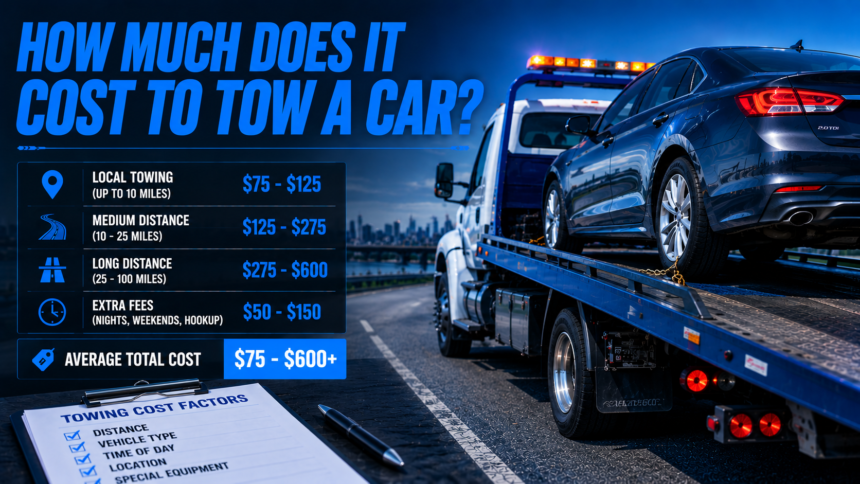
On average, most drivers pay somewhere between $75 and $150 for a standard local tow. This typically covers a distance of five to ten miles and includes the base hook-up fee plus a small mileage charge. However, this number can shift dramatically depending on your specific situation.
For longer trips, towing companies usually charge a per-mile rate rather than a flat fee, which means costs can climb quickly the farther your vehicle needs to travel. The table below gives you a quick snapshot of what to expect across different scenarios.
| Tow Type | Typical Cost Range |
|---|---|
| Short local tow (up to 10 miles) | $75 – $150 |
| Long-distance tow (per mile) | $2 – $4 per mile |
| Flatbed tow | $125 – $250+ |
| Motorcycle tow | $75 – $125 |
| Heavy-duty/truck tow | $200 – $500+ |
| Emergency/after-hours tow | $150 – $300+ |
Keep in mind these are general averages. Your actual bill will depend on the factors we’ll explore next.
Factors That Affect Towing Costs
Understanding what drives towing prices up or down can help you budget more accurately and avoid unpleasant surprises. Several variables come into play every time a tow truck is dispatched.
Distance Towed
Distance is often the single biggest factor influencing your final bill. A short trip to the nearest repair shop will always cost less than hauling your car across town or to another city. Most companies charge a flat base fee for the first few miles, then add a per-mile rate after that, so the farther you go, the more the meter runs.
Vehicle Type and Weight
Not all vehicles are created equal when it comes to towing. A compact sedan is far easier and cheaper to tow than a full-size SUV, pickup truck, or van. Heavier vehicles require more powerful trucks and specialized equipment, which naturally increases the price. Motorcycles, on the other hand, often cost less since they’re lighter and quicker to load.
Time of Day
Calling for a tow at 2 p.m. on a Tuesday is usually cheaper than calling at 2 a.m. on a Sunday. Many towing companies charge premium rates for nights, weekends, and holidays because these jobs require after-hours staffing and often involve more urgent, unpredictable conditions.
Location
Where you live and where your car breaks down both matter. Towing in a major city tends to cost more than in a rural area, partly due to higher operating costs, traffic congestion, and demand. Some states and cities also regulate towing rates differently, which can lead to noticeable price differences from one region to the next.
Type of Tow Truck Needed
There are a few different types of tow trucks, and the one required for your situation affects the price:
- Flatbed tow trucks carry the entire vehicle on a flat platform, offering the safest option for low-clearance or luxury cars, but usually at a higher cost.
- Hook-and-chain tow trucks are older and less common now, generally used for junk or salvage vehicles.
- Wheel-lift tow trucks lift the front or rear wheels off the ground while towing, offering a middle-ground price between flatbed and hook-and-chain methods.
Accessibility of the Vehicle
If your car is easy to reach, such as parked on a flat, open street, the tow will typically be quicker and cheaper. But if your vehicle is stuck in a ditch, buried in snow, wedged in a tight parking garage, or otherwise hard to access, expect to pay extra for the additional time, effort, and specialized recovery equipment involved.
Company or Provider
Independent local operators, national franchise chains, and dealership-affiliated services can all charge different rates for essentially the same job. It’s often worth comparing a couple of options when time allows, since pricing can vary more than people expect.
Cost Breakdown by Tow Type
To answer the question of how much does it cost to tow a car more precisely, it helps to look at specific towing scenarios individually.
Local or Short-Distance Tow
For a tow within your city or town, most drivers can expect to pay between $75 and $150. This usually includes a base hook-up fee of around $35 to $75, plus a per-mile charge of roughly $2 to $4 once you exceed the included distance.
Long-Distance Tow
Long-distance towing, meaning trips that span dozens or even hundreds of miles, is priced almost entirely on a per-mile basis. At $2 to $4 per mile, towing a car 100 miles could easily cost $200 to $400 or more, not including any additional service fees.
Flatbed Towing
Flatbed towing is considered the gold standard for safety since your car never touches the road during transport. This makes it ideal for all-wheel-drive vehicles, luxury cars, and vehicles with mechanical damage. Expect to pay somewhere between $125 and $250, depending on distance and vehicle size.
Motorcycle Towing
Motorcycles are lighter and generally quicker to load, which keeps costs a bit lower, typically in the $75 to $125 range for a local tow.
Heavy-Duty or Truck Towing
Large trucks, vans, and heavy-duty vehicles require specialized towing equipment capable of handling extra weight. These jobs often start around $200 and can exceed $500 depending on size, distance, and complexity.
Emergency or Roadside Towing
If you’re stranded and need immediate assistance, especially outside normal business hours, expect to pay a premium. Emergency tows often range from $150 to $300 or more once after-hours surcharges are factored in.
Hidden or Additional Fees to Watch For
Beyond the base towing charge, several additional fees can quietly increase your final bill. Being aware of these ahead of time can help you avoid sticker shock.
| Fee Type | What It Covers | Typical Range |
|---|---|---|
| Hook-up/base fee | Cost to dispatch and connect your vehicle | $35 – $75 |
| Mileage fee | Charge per mile beyond the base distance | $2 – $4 per mile |
| After-hours surcharge | Night, weekend, or holiday service | $25 – $75 extra |
| Storage fee | Daily charge if car is impounded or stored | $20 – $50 per day |
| Winching fee | Recovery from ditches, mud, or snow | $50 – $150 |
Always ask for a full breakdown of charges before agreeing to a tow, especially in emergency situations where it’s tempting to accept the first offer without asking questions.
Does Insurance or Roadside Assistance Cover Towing?
Many drivers are surprised to learn they may already have towing coverage without realizing it. It’s worth checking a few common sources before paying out of pocket.
Auto insurance policies often include an optional roadside assistance add-on, which typically covers towing up to a certain mileage or dollar amount per incident. Membership programs like AAA are another popular option, offering flat-rate annual fees in exchange for free or discounted towing whenever you need it.
Some credit cards also include towing or roadside assistance benefits as a cardholder perk, though these are often overlooked. Additionally, many new vehicles come with manufacturer roadside assistance for a limited number of years after purchase, which can cover towing to the nearest dealership at no extra cost.
Before calling a tow truck, it’s a good idea to check whether any of these options apply to you, since it could save you the entire cost of the service.
How to Save Money on Towing
While you can’t always predict when you’ll need a tow, there are practical ways to keep costs down when the situation arises. Comparing quotes from a couple of different companies, even during a stressful moment, can reveal meaningful price differences. Joining a roadside assistance membership program before you need it is another smart move, since the annual fee is often far less than the cost of even a single long-distance tow.
Reviewing your existing insurance policy to understand what’s already covered can prevent you from paying for a service you technically already have. Finally, if your situation isn’t a true emergency, waiting until regular business hours rather than calling for an after-hours tow can help you avoid premium pricing.
How to Choose a Reliable Towing Company
Not all towing companies operate with the same level of professionalism, so a bit of due diligence goes a long way. Look for a company that is properly licensed and insured, as this protects both you and your vehicle in case something goes wrong during transport. Reading recent customer reviews can also give you a realistic sense of what to expect in terms of pricing, punctuality, and overall service quality.
Whenever possible, ask for an upfront quote before the truck arrives, so you’re not caught off guard by the final bill. Be cautious of red flags such as vague pricing, pressure to pay immediately in cash, or a company that can’t clearly explain its fee structure, as these can be signs of a less trustworthy operation.
Frequently Asked Questions (FAQ)
Is towing free with insurance? Not automatically. Towing is typically only free or discounted if you’ve specifically added roadside assistance coverage to your auto insurance policy.
How much is towing per mile? Most companies charge between $2 and $4 per mile for distances beyond the included base mileage.
What’s the cheapest way to get a car towed? Using a roadside assistance membership, credit card benefit, or insurance add-on is usually the cheapest option, since it can reduce or eliminate out-of-pocket costs entirely.
Do tow truck drivers accept card payment? Most professional towing companies accept debit and credit cards, though it’s wise to confirm payment methods when you call.
How much does it cost to tow a car 100 miles? At an average rate of $2 to $4 per mile, towing a car 100 miles typically costs between $200 and $400, not including any additional service fees.
Conclusion
So, how much does it cost to tow a car? As you’ve seen, the answer depends on a mix of factors, including distance, vehicle type, time of day, location, and the specific towing company you choose. For a short local tow, most drivers can expect to pay somewhere between $75 and $150, while longer trips and heavier vehicles can push costs well beyond that.
By understanding what influences these prices, checking your existing insurance or membership benefits, and comparing options when time allows, you can avoid overpaying and make a stressful roadside situation just a little bit easier to handle.
Related Articles
Is Chevrolet a Good Car? The Complete 2026 Buyer’s Guide
Why Does My Car Shake When I Drive? A Complete Guide to Causes, Fixes, and Costs
Is 150k Miles on a Used Car Bad? What You Really Need to Know