Most drivers pay between $500 and $1,500 to replace a car bumper at a body shop, with a common middle around $800 to $1,200. A plain plastic bumper cover on an older economy car can come in under $500. A newer car with parking sensors, a camera, or radar packed behind the bumper can push the bill to $2,000 to $2,500 or more.
- What you are actually paying for
- Repair or replace: which is cheaper?
- What a bumper replacement costs by type of car
- Front bumper vs rear bumper cost
- What makes a bumper expensive
- Can you replace a bumper yourself?
- How to lower the cost
- Extra costs people forget
- Should you file an insurance claim?
- Conclusion
- Frequently asked questions
- Related Articles
The range is wide for two reasons. The word “bumper” covers a few different parts, and the car it sits on changes the price as much as the damage does. Here is what you actually pay for, when a quick repair beats a full swap, what different cars cost, and how to keep the number down.
What you are actually paying for
A bumper replacement bill has three main pieces: the part, the labor to fit it, and the paint. On a modern car there is often a fourth piece, the sensors and cameras behind the plastic.
The part most people picture is the bumper cover, the smooth plastic skin you see on the car. A cover runs anywhere from about $100 for a basic aftermarket panel to $1,000 for a factory part on a higher-end model. Behind that cover sits a reinforcement bar and a foam or plastic energy absorber. These do the real safety work, and you only pay for them when a harder hit bends or cracks them.
Factory parts, also called OEM parts, come from the carmaker and cost the most. Aftermarket covers from other makers cost less and fit most needs, though the shape and finish can vary a little. When a shop quotes you for a “bumper,” ask whether that price is the cover alone or the full assembly, because the two can differ by several hundred dollars.
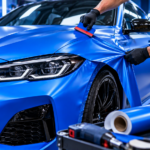
Labor to remove the old cover and fit the new one usually lands between $200 and $600. Shop rates swing a lot by area and by brand, from roughly $48 an hour at an independent garage to well over $200 an hour at a dealership. Paint is its own line. Color matching and spraying a cover so it blends with the rest of the car adds about $200 to $600, and more for tricky finishes.
Paint is often the sneaky part of the bill. To hide the repair, a shop may blend the new color into the panels next to the bumper, like the fender edges, so the fresh paint fades in rather than stopping at a hard line. That blending uses more material and more labor, which is why two cars with the same dent can get very different paint quotes.
| Cost piece | Typical range |
| Bumper cover (the part) | $100 – $1,000 |
| Labor to remove and fit | $200 – $600 |
| Paint and color match | $200 – $600 |
| Sensors, cameras, radar and calibration | $500 – $1,900 |
Rule of thumb: on a basic car with no sensors, budget around $500 to $900. On a newer car with safety tech in the bumper, plan for $1,500 and up.
Repair or replace: which is cheaper?
A light scuff or a small dent is almost always cheaper to fix than to replace. Plastic bumpers flex, so many knocks leave the panel whole and just need paint work or a small pull.
A professional can buff out surface scratches for as little as $50. A do-it-yourself scratch kit costs $15 to $30. Small dents that have not torn the plastic run about $150 or more at a shop, and a home dent kit is $50 to $80. Once the plastic cracks right through, a puncture appears, or a mounting tab snaps off, repair climbs to around $300 to $500, and at that point a new cover often makes more sense.
Two repair methods keep costs low when the panel is still sound. Paintless work can pull a shallow dent without touching the finish. Plastic welding can rejoin a clean crack or rebuild a broken tab, after which the spot is sanded and repainted. Both work best on fresh, simple damage. Heavy cracking, a torn mount, or paint that has flaked over a wide area usually ends the case for repair.
Replacing the cover and repainting it typically costs $900 to $1,800. Reshaping, sanding, and filling a badly damaged bumper takes a lot of skilled hours, and those hours can cost more than simply buying a fresh cover and spraying it. If the bar or absorber behind the cover is bent, replacement is the only safe route, because those parts are built to crush in a crash and cannot be trusted once they are deformed.
What a bumper replacement costs by type of car
The badge on the hood moves the price more than almost anything else. Here is a rough guide for a full cover replacement with paint at a shop.
| Vehicle type | Typical replacement cost |
| Older economy car, no sensors | $500 – $900 |
| Family sedan or crossover | $800 – $1,400 |
| Pickup truck | $700 – $1,500 |
| Luxury or electric car | $1,500 – $3,000+ |
An older economy car with a plain plastic bumper is the cheapest to put right, since the part is simple and there is no tech to reset. A family sedan or crossover often carries parking sensors and a camera, which lifts the total. A pickup with a heavy steel bumper can cost more for the part itself, but bare chrome or black steel skips the paint step, so the totals even out. Luxury and electric cars sit at the top, because they pack radar, cameras, and pricey finishes, and their shop rates run high.
Front bumper vs rear bumper cost
Front and rear bumpers sit in a similar price band, but the rear often costs a little more on newer cars. The reason is the tech crammed into each end.
A front bumper may hide the radar for adaptive cruise control and a forward camera for automatic braking. A rear bumper commonly holds the reversing camera, parking sensors, and on many models a radar unit for blind spot and cross-traffic alerts. Any car with those features costs more at either end, because the part is pricier and the labor includes moving the electronics over and setting them up again. Strip the sensors out of the picture and a front and rear job on the same car land within a hundred dollars or so of each other.
What makes a bumper expensive
Sensors and the computers behind them are the single biggest reason a bumper bill jumps. A bumper with parking radar can still come in around $500. Add a camera and the integrated safety systems that read it, and the same job can reach $1,900.
These sensors are part of a car’s advanced driver assistance systems, the tech that warns you or brakes for you. After the bumper goes back on, they have to be aimed and recalibrated so the car reads the road correctly, which adds several hundred dollars on its own.
A few other things push the price up. Luxury and performance badges carry pricier parts and higher shop rates. Factory parts cost more than aftermarket ones, though they fit better and match the finish. Special paint also adds up, since a pearl or multi-stage metallic finish needs extra coats and more skill to blend. Bumpers do real work in a low-speed hit, which is why a federal bumper standard sets how well they must protect the car at low speeds. That built-in structure is part of why even a simple-looking panel is not cheap to get right.
Can you replace a bumper yourself?
On many older cars, yes, and this is where you save the most money. A bumper cover is usually held on by a handful of bolts, screws, and plastic clips, and a careful owner with basic hand tools can swap one in an afternoon.
The catch is paint and electronics. An unpainted aftermarket cover costs little, but matching the car’s exact color at home is hard, so most people order a pre-painted cover or pay a shop just for the spray work. If your bumper carries sensors or a camera, you also need to move them to the new cover and have them recalibrated, which sends you back to a shop anyway. For a plain bumper on an older car, a do-it-yourself swap can cost well under $200 in parts. For anything with safety tech, the savings shrink fast.
- Buy the correct cover for your exact year, make, model, and trim, pre-painted if you can.
- Take photos as you go, and keep the screws and clips in a labeled tray.
- Remove the old cover by taking out the bolts in the wheel wells, under the lip, and along the top edge.
- Transfer any sensors, fog lights, or brackets to the new cover.
- Clip and bolt the new cover into place, then check the gaps line up evenly.
- Book a sensor recalibration if a warning light stays on after the swap.
How to lower the cost
You have more control over the price than it first seems. A few simple choices can cut a bumper bill by a third or more.
- Get two or three written quotes, including one independent body shop, not just the dealer.
- Ask for aftermarket or recycled parts if your car is older and out of warranty.
- Order a pre-painted cover in your exact color code to skip separate paint labor.
- Repair instead of replace when the plastic is only scuffed or lightly dented.
- Pay cash for small jobs near your deductible to protect your premium.
Extra costs people forget
The quote for the cover and paint is not always the whole story. A hard knock can also break the clips, brackets, and the grille or fog light housings that mount to the bumper, and each of those is a small added charge. Some shops add a scan fee to check the sensors, usually $50 to $150. If the car is not safe to drive, a tow and a few days in a rental can add up fast. Ask for an itemized estimate so none of these land as a surprise at pickup.
Should you file an insurance claim?
Pay out of your own pocket when the repair is close to or below your deductible. A typical collision deductible is around $500, so a $700 job saves you very little after you pay the first $500, and a claim can nudge your premium up at renewal.
A claim makes more sense when the damage is bigger than it looks. A hit hard enough to crack the cover has often bent the bar behind it or knocked a sensor out of line, and those repairs can run past $2,000. If another driver caused the damage, their insurer should cover it and your deductible should not come into play at all. For a small cosmetic scuff on an older car, most people quietly pay cash and skip the claim. This is general information, not insurance advice, so check your own policy and deductible before you decide.
Conclusion
Replacing a car bumper usually costs $500 to $1,500, with most everyday jobs landing near $800 to $1,200 and sensor-heavy cars running higher. Fix light scuffs and small dents rather than replacing, swap the whole cover once the plastic is cracked or the bar is bent, and weigh any insurance claim against your deductible. Match the part and paint to your car, sort out any sensor calibration, and you get a clean, safe result without overpaying.
Frequently asked questions
Is it cheaper to repair or replace a bumper?
Repair is cheaper for scuffs and small dents, often $50 to $500. Once the plastic is cracked through or the bar behind it is bent, replacing the cover for $900 to $1,800 is the safer and usually smarter spend.
How long does a bumper replacement take?
Most shops finish in one to three days. The swap itself takes a few hours, but paint needs time to cure and color match, and any sensor recalibration adds a step before you get the car back.
Does a new bumper need to be painted?
Almost always. Replacement covers come in raw plastic or primer, so they must be painted to match your car. You can buy a pre-painted cover for your exact color code, which saves the separate paint labor.
Will replacing a bumper raise my insurance?
Filing a claim can raise your premium at renewal, especially if you were at fault. For a small bill near your deductible, paying cash often works out cheaper over time than making a claim.
Can I drive with a damaged bumper?
A cracked or scuffed bumper is usually fine for short drives, but a loose or hanging one is not. It can fall into the road or hide damage to lights and sensors, so secure it and get it checked soon.
Related Articles
Does a Diesel Engine Have a Spark Plug?
Fuel Injector Cleaning Kit: What It Does and How to Use One