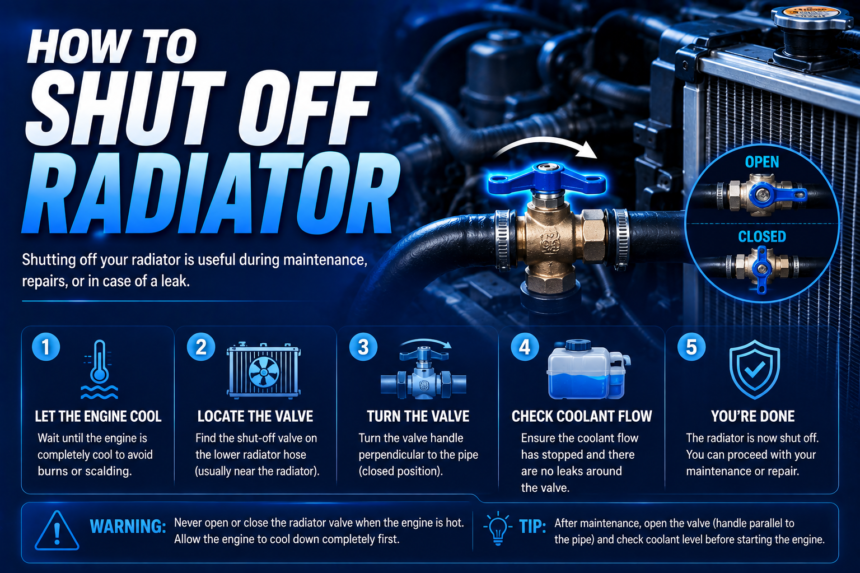
Knowing how to shut off a radiator is one of those skills you don’t think about until you need it urgently — a valve starts leaking, a room is too hot, or you’re finally getting around to painting behind that old cast-iron unit. The good news is that shutting off a radiator is usually a five-minute job, as long as you know which type of valve you’re dealing with and which direction to turn it.
- Why You Might Need to Shut Off a Radiator
- Safety First: Before You Touch a Valve
- Tools You’ll Need
- How to Identify Your Radiator’s Valve Type
- How to Shut Off a Hot-Water Radiator (Step-by-Step)
- How to Shut Off a Steam Radiator
- How to Shut Off a Radiator With a Broken, Missing, or Stuck Knob
- Short-Term vs. Long-Term Shutoff: Which Do You Need?
- How to Turn the Radiator Back On
- When to Call a Professional
- Frequently Asked Questions
- Conclusion
- Related Articles
This guide covers every common setup found in American homes — hot-water radiators, steam radiators, thermostatic valves, and the frustrating case of a stripped or missing knob — along with the safety steps competitors’ guides often skip.
Why You Might Need to Shut Off a Radiator
There are a handful of common reasons homeowners look this up:
- A leak or drip coming from a valve, fitting, or the radiator body itself
- An overheated room that needs less warmth without adjusting the whole house
- Home improvement work, like painting a wall or replacing flooring behind the unit
- Removing or replacing the radiator entirely
- Reducing energy use in a room that’s rarely occupied, such as a guest bedroom or unused den
Whatever your reason, the process below will safely isolate the radiator from the rest of your heating system.
Safety First: Before You Touch a Valve
Radiators run hot — hot-water systems typically operate between 130°F and 180°F, and steam radiators can exceed 200°F at the pipe and valve. Before doing anything else:
- Let the system cool down. If your radiator is currently running, give it at least 30–45 minutes after the heat cycles off before handling any valve or pipe.
- Never force a valve that won’t turn. Forcing a stuck valve can snap the stem or crack old cast iron, turning a simple shutoff into an expensive repair.
- Keep a towel or small bucket handy. A little water or condensation often escapes from valve threads even when everything is working correctly.
- Wear a glove if you’re working on an older system with tight, corroded valve caps.
Tools You’ll Need
Most radiators can be shut off with items you already have on hand:
- Work gloves
- An adjustable wrench or slip-joint pliers (for capped or spindle-style valves)
- A flathead screwdriver (for slotted valve stems)
- A rag or small towel
- A shallow container, in case of drips
How to Identify Your Radiator’s Valve Type
Before you turn anything, figure out what you’re working with. This determines both the technique and the direction you’ll turn the valve.
Manual (Gate or Ball) Valves
These are the simplest type, common in both hot-water and steam systems. They typically have a round wheel handle or a lever at the base of the radiator, near the floor. There’s no numbered dial — just open or closed.
Thermostatic Radiator Valves (TRVs)
Increasingly common in newer hot-water systems and after-market upgrades, a TRV has a numbered dial (often 0–5, or a snowflake/star symbol at the lowest setting) instead of a plain wheel. It automatically adjusts water flow based on room temperature rather than acting as a simple on/off switch.
Steam Radiator Valves
If your home has cast-iron radiators fed by a single pipe (rather than two pipes running to each unit), you almost certainly have a steam system. Steam radiators use a single supply valve, usually a wheel-style valve at the bottom, and rely on an air vent on the side to release trapped air as the radiator heats. Steam systems don’t have a second “return” valve to close — shutting the single supply valve is enough to isolate the unit.
How to Shut Off a Hot-Water Radiator (Step-by-Step)
Hot-water (also called “hydronic”) systems circulate heated water continuously through a loop, so most radiators have valves on both ends — a supply valve and a return valve. To fully isolate the radiator, both need to be closed.
- Locate the supply valve. This is usually the wheel-handle or TRV-style valve at one end of the radiator.
- Turn it clockwise until it stops. For a manual wheel valve, this closes the flow of hot water. For a TRV, turn the dial down to 0 or the frost/snowflake symbol.
- Locate the second valve on the opposite end. This is often a lockshield-style valve hidden under a plastic or metal cap and used to balance the system rather than for everyday adjustment.
- Remove the cap and use a wrench or pliers to grip the exposed stem, then turn it clockwise until fully closed. Count the number of turns as you go — you’ll want to reopen it by the same amount later so the system stays balanced.
- Check both ends are firmly closed, then allow the radiator to cool over the next 20–30 minutes to confirm the water flow has actually stopped.
How to Shut Off a Steam Radiator
Steam systems are simpler mechanically but require a bit more caution because the pipes and valves run hotter.
- Wait for the heating cycle to finish and the radiator to cool — steam valves can be scalding to the touch even after the boiler shuts off.
- Find the single wheel valve at the base of the radiator, on the pipe side (not the air-vent side).
- Turn it clockwise until snug. Steam valves are designed to be either fully open or fully closed — don’t leave them partway shut, as this can cause banging or knocking pipes (water hammer) as steam struggles through a partially blocked valve.
- Leave the air vent alone. It doesn’t need adjusting to shut off the radiator; it will simply stop hissing once the supply valve is closed and the unit stops filling with steam.
How to Shut Off a Radiator With a Broken, Missing, or Stuck Knob
This is one of the most common follow-up problems, and one most guides gloss over.
- If the knob is missing but the metal stem or pin is still there: Grip the exposed stem firmly with pliers or an adjustable wrench and turn clockwise, exactly as you would with the knob attached.
- If the stem spins freely without resistance: The valve mechanism itself has likely failed internally. Don’t keep forcing it — instead, close the valve on the opposite end of the radiator (the lockshield or secondary valve), which will still isolate the unit even with a broken primary valve.
- If the valve cap is fused shut with old paint or corrosion: Score around the edge of the cap with a utility knife to break the paint seal, then try turning again. Avoid hammering or excessive force, especially on older cast-iron valve bodies, which can crack.
- If both valves are seized or the fittings are stripped: Stop and call a licensed plumber or HVAC technician. At this point, forcing anything risks a burst pipe or a water leak that’s far more costly than the service call.
Short-Term vs. Long-Term Shutoff: Which Do You Need?
Short-term shutoff — for a leak, quick repair, or temporary overheating — simply means closing both valves (or the single steam valve) as described above. This is fully reversible in minutes.
Long-term shutoff — for a room you rarely use, or a vacant property — has one important caveat: fully closing a radiator for weeks or months in freezing weather can leave standing water in the pipe run vulnerable to freezing and bursting. If you’re shutting a radiator off for an extended period during winter, it’s often safer to set a smart thermostat or TRV to its lowest “frost protection” setting (roughly 41–50°F) rather than closing the valve completely. This keeps a trickle of warmth in the line without heating the room.
How to Turn the Radiator Back On
Reversing the process restores full heat flow and keeps your system balanced:
- Turn the primary valve (manual wheel or TRV dial) counterclockwise to your preferred setting.
- Open the secondary/lockshield valve counterclockwise by the exact number of turns you closed it — this is why counting turns during shutoff matters.
- Give the system 15–20 minutes to fill and heat up, then check that the radiator is warm evenly from top to bottom.
- If it’s hot at the bottom but cold at the top, that’s a sign of trapped air — you’ll need to bleed the radiator, which is a separate process from turning it on or off.
When to Call a Professional
Most radiator shutoffs are a safe DIY task, but call a licensed plumber or HVAC technician if:
- Both valves are seized, corroded, or won’t grip
- You see water actively spraying or pooling near a pipe fitting
- The radiator won’t stop heating even with both valves fully closed
- You’re not confident identifying whether you have a steam or hot-water system
If a leak is severe, shut off your boiler and the main water supply at your home’s shutoff valve first, then call for repairs.
Frequently Asked Questions
Which way do you turn a radiator valve to shut it off? Clockwise closes almost every radiator valve, whether it’s a manual wheel, a TRV, or a steam valve. Counterclockwise reopens it. If you ever forget, a helpful reminder is “righty-tighty, lefty-loosey” — the same rule as a standard screw.
Can I shut off just one radiator without affecting the rest of the house? Yes. Closing both valves on a single hot-water radiator (or the single valve on a steam radiator) isolates just that unit. The rest of your heating system will continue operating normally.
Is it bad to leave a radiator valve fully closed for a long time? It won’t damage the radiator itself, but in freezing weather, standing water left in a fully closed loop can be more prone to freezing. For long-term shutoffs during winter, a low frost-protection setting is often a safer choice than a full valve closure.
Why is my radiator still warm after I closed the valve? This usually means the valve isn’t fully seated, the internal mechanism has failed, or residual heat is still radiating from water trapped between the two valves. Give it 20–30 minutes to cool, then recheck both valves are turned as far as they’ll go.
Do I need to bleed a radiator after turning it back on? Not always, but if it heats unevenly (cold at the top, warm at the bottom) after you reopen the valves, bleeding it will release trapped air and restore even heat distribution.
What’s the difference between a TRV and a manual valve? A manual valve is a simple on/off control, while a thermostatic radiator valve (TRV) automatically adjusts water flow based on the room’s temperature. Both can be fully closed the same way — by turning clockwise until they stop.
Conclusion
Shutting off a radiator comes down to two things: knowing which type of valve you have, and turning it the right way — clockwise to close, counterclockwise to reopen. Whether you’re dealing with a straightforward manual valve, a numbered TRV, an older steam radiator, or a stubborn valve with a missing knob, the steps above will help you isolate the unit safely without calling in help for a job you can usually handle yourself.
The one exception is a seized valve or an active leak that won’t stop — in those cases, don’t force it. Turn off your main water supply if needed, and bring in a licensed plumber or HVAC technician to finish the job safely. Bookmark this guide so you’ve got clear, step-by-step instructions ready the next time a radiator needs to come off-line.
Related Articles
Can You Lease a Car With Bad Credit? What It Costs
Why Does My Car Turn Off While Driving? Causes & Fixes Explained
How Many Miles Does a Honda Civic Last? Real Lifespan Guide
Is Honda American Made? The Complete Truth Behind Honda’s Manufacturing