


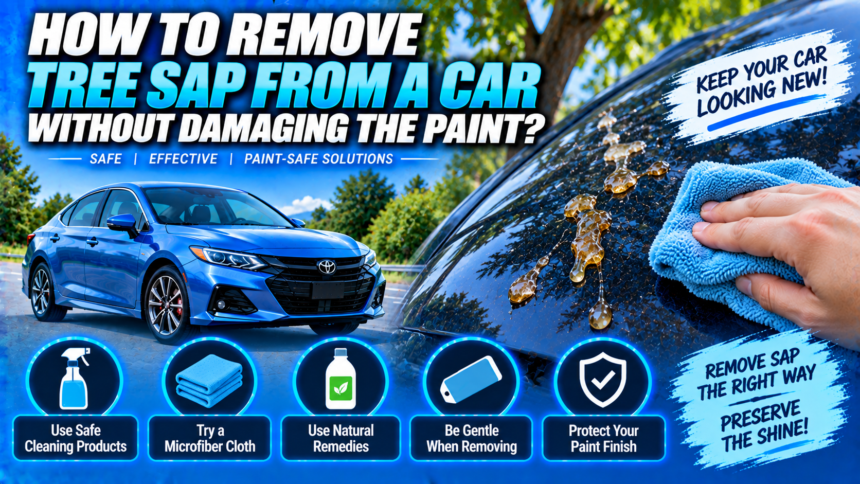
Wash the panel first, soften the sap with a warm damp cloth, then dab it with isopropyl alcohol on a microfiber towel and let the solvent sit on it rather than scrubbing. Wash the area again afterward and re-wax it, because alcohol strips whatever protection was there. Fresh sap takes a couple of minutes per spot. Hardened sap needs a dedicated tar and sap remover and more patience. Almost all the damage people cause comes from three things: scrubbing hard, scraping with something metal, and reaching for household solvents.
Why sap needs to come off quickly?
Sap is not simply sitting on your paint. It is a resin that hardens as it dries, and it bonds progressively to the clear coat underneath. Heat accelerates all of it, so a spot that would have wiped off on the day it landed becomes a solid lump after a hot weekend.
Left long enough it can etch, meaning it eats a shallow depression into the clear coat that stays behind once the sap itself is gone. At that point you no longer have a cleaning problem, you have a paint correction problem, and a bill.
Not all sap behaves the same. Pine and eucalyptus tend to stay tacky for longer and come off comparatively easily. Sweet gum and some oaks produce a harder resin that grips paint much more aggressively. What drips from jacarandas and limes is often not sap at all but honeydew, the sticky residue aphids leave behind, which spreads into a film and collects dust on top of itself.
What you need?
- Car shampoo and two buckets, or at minimum a hose and a clean wash mitt
- Three or four clean microfiber towels
- Isopropyl alcohol at 70 percent, or a dedicated bug, tar and sap remover
- Wax or spray sealant for afterward
- Optionally a plastic razor blade and a detailing clay bar
Work in shade on a cool panel. Sun makes every solvent evaporate before it can do anything, and warm paint is more easily marred.
The method for fresh sap
- Wash the area properly first. Working on a dirty panel grinds grit into the clear coat and creates scratches that outlast the sap.
- Soften the spot. Hold a warm, damp microfiber over the sap for 30 to 60 seconds. This alone releases fresh sap surprisingly often, and it loosens the bond on everything else.
- Apply alcohol to the towel, never to the paint. Dampen one corner of a microfiber with isopropyl alcohol. Applying it directly to the panel puts solvent everywhere you did not intend, including on trim.
- Let it dwell. Lay the damp part of the towel over the sap and leave it for 20 to 60 seconds without rubbing. Dwell time is when the solvent is actually working.
- Wipe gently, in one direction. Use a clean part of the towel and light pressure. If the sap does not lift, repeat the dwell rather than pressing harder.
- Wash the area again. Solvent residue attracts dust and can stain plastic, so shampoo and rinse the panel once the sap is gone.
- Re-protect it. Alcohol removes wax and sealant along with the sap, so apply spray sealant or wax to the area the same day. This step is not optional.
The single most useful habit here is patience. Four gentle rounds of dwell and wipe will beat one hard scrub, and will not leave marring behind.
Hardened and baked-on sap
Alcohol handles a lot, but it runs out of strength against resin that has cured in sun for weeks. At that point a product formulated for the job works better and faster.
Dedicated bug, tar and sap removers are the obvious choice. Some general automotive solvent cleaners cover the same ground: 3M’s technical data sheet for its general purpose adhesive cleaner lists tree sap alongside road tar, wax and grease among the things it is blended to remove, and notes it will not harm most thoroughly cured automotive paint when used properly. That last qualifier matters, since a recently repainted panel is a different case.
Use the same discipline as before. Product onto the towel, dwell, gentle wipe, repeat. Give each round the full time the label asks for.
If a raised lump remains after several rounds, a plastic razor blade held almost flat to the panel can shave the bulk of it off, working in one direction. Keep the surface lubricated with remover while you do it, stop the moment you feel resistance, and never use a metal blade, a credit card edge or a fingernail. Finish with a clay bar, which lifts the last invisible film that towels leave behind and is the step that makes the panel feel properly smooth again.
How to tell if the paint is already etched?
This is the check nobody tells you to make, and it saves a lot of pointless scrubbing.
Once the sap is gone, dry the area and look at it from a low angle in daylight. If you see a dull ring, a faint outline or a slight depression where the sap sat, the clear coat has been etched. Nothing you wipe on will fix that, because the material itself has been eaten into.
Light etching usually polishes out. A machine polish, or paint correction if there are several spots, levels the clear coat back down and removes the outline. Deep etching that has gone through the clear coat needs a body shop. Either way, the important thing is to stop cleaning. Continued scrubbing at an etched spot only adds marring around it.
What never to use on sap?
- Acetone or nail polish remover. These dissolve clear coat as readily as they dissolve sap. They appear in a lot of sap advice and they should not.
- Lacquer thinner, gasoline or paint thinner. Same problem, more aggressively.
- Metal blades and credit cards. Both will score the clear coat. Plastic only, and only as a last resort.
- Scouring pads and magic erasers. Abrasive, and they dull the finish permanently wherever they touch.
- Hard scrubbing with a dry towel. The most common cause of swirl marks around a removed sap spot.
Sap on glass, trim and coated cars
Glass is much harder than paint and much more forgiving. A metal razor at a shallow angle, kept wet, will take sap off a windshield safely. Avoid blades on the inside of a rear window, where the defroster lines sit on the surface, and on any tinted glass, where the film is on the inside.
Textured black plastic trim is the opposite. Solvents soak into the grain and leave a light patch that does not come out. Tape off trim next to the area you are working on, and treat sap on trim with soapy water and patience first.
Coated cars need a slightly different approach. A ceramic coating resists sap better than bare paint, but it is not immune, and coating aftercare guidance is consistent on the point: sap, bird droppings and tar should be removed as soon as possible, before heat bonds them to the coating. Use a detail spray and a plush microfiber for spot cleaning rather than an aggressive solvent, which can degrade the coating.
Stopping it happening again
- Keep a wax or sealant layer on the car. Sap lands on the sacrificial layer instead of your clear coat, which buys you time and makes removal far easier.
- Watch where you park in summer. The same tree that gives you shade at lunchtime may be the one dripping on the roof.
- Keep a small kit in the car. A travel bottle of isopropyl alcohol and one microfiber let you deal with a spot the day it lands, which is the difference between a two-minute job and a paint correction.
- Check the car after windy weather. Sap often arrives with leaf debris rather than as neat drops.
Conclusion
Wash the panel, warm the sap, apply alcohol or a dedicated sap remover to a towel, let it dwell, and wipe gently as many times as it takes. Wash and re-wax afterward. Escalate to a plastic blade and clay only when a lump refuses to shift, and check for etching before you keep working at a mark. Keep acetone, thinners and anything abrasive away from paint entirely. A good result is a panel that feels smooth under your palm with no dull ring left where the sap was.
Frequently asked questions
Does tree sap actually damage car paint?
Yes, if it is left. Sap hardens and bonds to the clear coat, and given weeks in the sun it can etch a shallow mark that stays after the sap is removed. Removed promptly it usually causes no lasting harm.
Will WD-40 remove tree sap?
It often softens hardened sap and is unlikely to harm cured paint in brief contact. It leaves an oily film that must be washed off, and it strips wax, so wash and re-protect the area afterward.
Can I use hand sanitizer instead of rubbing alcohol?
It works in an emergency because it is largely alcohol, but the gels contain thickeners and moisturizers that smear and need washing off. Plain isopropyl alcohol is cheaper and cleaner.
How do I remove sap that has been there for months?
Use a dedicated tar and sap remover with repeated dwell cycles, then clay the area. Expect to find some etching underneath, which needs polishing rather than more cleaning.
Is it safe to take a sappy car through an automatic wash?
It rarely removes sap and the brushes drag hardened lumps across the paint, which causes scratching. Spot-treat the sap by hand first, then wash.
Related Articles
What Colour Should Car Oil Be?
What Could Cause Overheating in a Car?