Yes, a turbo can improve fuel economy, but the result depends on how the engine is designed and how you drive. Automakers often pair a turbocharger with a smaller engine so it can use less fuel during everyday driving while still producing strong power when needed. A turbo does not automatically make every car more efficient, though. If you regularly use the extra power, drive at high speeds, or compare engines with different designs, the fuel savings may shrink or disappear.
- How Does a Turbocharger Affect Fuel Economy?
- When Can a Turbo Improve Gas Mileage?
- When Can a Turbo Use More Fuel?
- Turbocharged vs. Naturally Aspirated Engines
- Does Driving Style Change Turbo Fuel Economy?
- Does Adding an Aftermarket Turbo Improve MPG?
- How to Tell Whether a Turbo Car Is Efficient
- Are Turbocharged Cars More Expensive to Maintain?
- What matters more than the turbo badge?
- Conclusion
- Frequently asked questions
- Does a turbo improve gas mileage on the highway?
- Does a turbo use more fuel when it kicks in?
- Is a turbocharged engine better than a naturally aspirated engine?
- Can I add a turbo to save fuel?
- Do turbo cars need premium gas?
- Related Articles
How Does a Turbocharger Affect Fuel Economy?
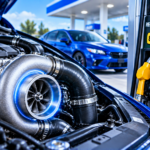
A turbocharger uses energy from the engine’s exhaust gases to spin a turbine. That turbine drives a compressor, which pushes more air into the engine. With more oxygen available, the engine can burn fuel and produce more power from a smaller displacement.
The main fuel-economy benefit usually comes from engine downsizing. For example, a manufacturer may replace a larger naturally aspirated engine with a smaller turbocharged one. During light driving, the smaller engine may need less fuel, yet the turbo can supply extra power for merging, climbing hills, or carrying a load.
The turbo itself does not create fuel savings in every situation. When the driver asks for high power, the engine may inject more fuel to match the extra air. The turbo’s benefit therefore depends on the full engine package, including its size, fuel system, compression ratio, transmission, vehicle weight, and control software.
When Can a Turbo Improve Gas Mileage?
A turbo is most likely to help when it lets a smaller engine do the work that would otherwise require a larger one. If you drive smoothly, accelerate gradually, and spend much of your time at a steady speed, the engine may operate without needing high boost for long periods.
The U.S. Environmental Protection Agency explains that turbocharging can allow a smaller, more fuel-efficient engine to replace a larger engine without giving up as much performance. Canada’s Natural Resources Canada also says that using a smaller turbocharged engine can lower fuel consumption by around 2% to 6% in some applications. That is a general estimate, not a promise for every car or driving condition.
A turbo can be especially useful in a vehicle that needs decent pulling power but does not need maximum output all the time. The key is that the vehicle’s overall design takes advantage of the smaller engine, rather than simply adding a turbo to increase performance.
When Can a Turbo Use More Fuel?
A turbocharged engine can burn more fuel when you use its power often. Pressing the accelerator hard, overtaking repeatedly, towing, or climbing steep grades can make the turbo produce more boost. The engine then needs more fuel to make the requested power.
Highway speed also matters. Air resistance rises sharply as speed increases, so maintaining a fast pace can use far more fuel regardless of whether the engine has a turbo. A turbo may help the car accelerate with ease, but it cannot cancel out the energy needed to push a vehicle through the air.
Short trips can reduce efficiency too. When an engine is cold, it needs extra fuel and may not reach its most efficient operating temperature before you arrive. Heavy traffic, frequent stops, low tire pressure, extra cargo, and poor maintenance can all affect fuel economy. These factors may be more important than the presence of a turbo alone.
Turbocharged vs. Naturally Aspirated Engines
A naturally aspirated engine draws air into its cylinders without a turbocharger or supercharger. A turbocharged engine compresses incoming air, allowing it to make more power from a given engine size. Neither type is always more economical; the comparison depends on the specific vehicles and how they are driven.
| Factor | Turbocharged engine | Naturally aspirated engine |
| Everyday fuel use | Can be lower when paired with a smaller engine and driven gently | Can be competitive, especially when the engine is modest in size |
| Acceleration | Often produces strong torque at low or mid engine speeds | May need higher engine speed or more displacement for similar power |
| Hard acceleration | Fuel use can rise quickly when boost and power demand increase | Fuel use also rises under heavy throttle, but the engine’s response differs |
| Maintenance | Adds turbo-related parts, plumbing, and heat management | Usually has a simpler intake system |
| Best comparison | Check real-world results for the exact vehicle and model year | Check real-world results for the exact vehicle and model year |
For a fair comparison, look at vehicles of similar size, weight, transmission type, and performance. Comparing a small turbocharged sedan with a heavy SUV using a large naturally aspirated engine will not tell you much about the turbo alone. Check the official fuel-economy rating and, when possible, owner reports that reflect your usual driving conditions.
Does Driving Style Change Turbo Fuel Economy?
Yes. Driving style can determine whether a turbocharged engine delivers its potential fuel savings. Smooth inputs help the engine avoid frequent high-power demands, while repeated hard acceleration can increase fuel consumption.
To get better mileage from a turbo car:
- Accelerate steadily instead of flooring the accelerator at every light.
- Keep a consistent speed when traffic and road conditions allow.
- Anticipate stops and ease off early rather than braking hard at the last moment.
- Avoid unnecessary idling and remove heavy items you do not need.
- Keep tires inflated to the pressure listed on the vehicle’s door placard.
- Follow the maintenance schedule and use the engine oil grade specified by the manufacturer.
You do not need to drive so slowly that you become unsafe or disrupt traffic. The goal is to avoid needless bursts of power. If your commute includes steep hills, frequent overtaking, or heavy loads, your fuel economy may be lower than the advertised rating, even when the turbo system is working correctly.
Does Adding an Aftermarket Turbo Improve MPG?
Usually, adding an aftermarket turbo to an engine that was not designed for one is not a reliable way to save fuel. A turbo modification is commonly installed to increase power. That can require changes to fuel delivery, engine tuning, cooling, exhaust components, and sometimes internal engine parts.
If the engine management system adds more fuel to support boost, fuel consumption can rise. Poor tuning can also cause knocking, excessive heat, drivability problems, or engine damage. The extra hardware and installation costs may outweigh any possible fuel savings.
Factory turbocharged engines are developed as a complete system, with the turbo, engine controls, transmission, and emissions equipment designed to work together. If your priority is lower running costs, choose a vehicle engineered for efficiency rather than adding a turbo solely in the hope of improving mileage. Before modifying a vehicle, check local emissions rules, warranty terms, and advice from a qualified specialist.
How to Tell Whether a Turbo Car Is Efficient
Start with the official fuel-economy figures for the exact model year, engine, trim, and transmission. In the United States, the EPA’s fuel-economy resources let shoppers compare estimates and understand the information on a vehicle’s window label. You can begin with the EPA fuel economy website and compare specific vehicles through FuelEconomy.gov.
Next, consider how you use the vehicle. A published combined rating is useful for comparing cars, but your own results will vary with traffic, temperature, trip length, cargo, road grade, and driving style. If you already own the car, calculate mileage over several fill-ups rather than relying on one trip-computer reading. Fill the tank consistently, record the distance driven and fuel added, and compare results over similar routes.
Also check the fuel grade specified in the owner’s manual. Some turbo engines require premium gasoline, while others are designed for regular fuel. Using the required grade protects the engine and helps it operate as intended. If premium fuel is recommended but not required, any possible benefit should be weighed against its higher price and the manufacturer’s guidance.
Are Turbocharged Cars More Expensive to Maintain?
They can be, but ownership costs vary widely by vehicle. A turbo system adds components such as a turbine, compressor, oil and coolant lines, and charge-air plumbing. These parts work under high heat and pressure, so correct oil, regular servicing, and prompt attention to warning signs matter.
That does not mean every turbocharged car will be unreliable or expensive. Many modern factory turbo engines are designed for everyday use and can last a long time when maintained properly. The best approach is to research the reliability record of the specific engine, review the service schedule, and check whether the manufacturer calls for a particular oil specification or shorter service interval under severe driving conditions.
When comparing total cost, include fuel, routine maintenance, insurance, repairs, and purchase price. A small improvement in miles per gallon may not offset a higher purchase price or more expensive fuel. The right choice is the car that fits your driving needs and costs less overall to own, not simply the one with a turbo.
What matters more than the turbo badge?
The turbo badge alone is not enough to predict fuel use. Engine size, vehicle weight, transmission gearing, tire choice, and the way the engine is tuned all affect the result. A small turbo engine in a light car may return very different mileage from a turbo engine in a large pickup, even if both use similar technology. Hybrid systems, cylinder deactivation, and stop-start features can also influence the final figure.
Think about your normal driving before choosing a vehicle. If most trips are short and slow, compare city fuel-economy ratings and consider how often the engine will be cold. If you drive long distances, pay close attention to highway ratings and the speed you usually maintain. If you tow or regularly carry heavy loads, look at fuel use under those conditions rather than relying on a best-case estimate. The vehicle that suits your routine will usually be a better choice than one selected only because it has a turbo.
It is also useful to separate fuel economy from fuel cost. A car that travels farther on each gallon may still cost more to run if it requires a more expensive fuel grade or has higher service and repair costs. Work out an estimated yearly fuel bill using your expected miles and local fuel prices, then add routine service costs. This simple comparison gives you a more realistic view of ownership than miles per gallon alone.
Conclusion
A turbo can improve fuel economy when it allows a smaller engine to deliver the power you need while using less fuel during normal driving. The savings are not automatic. Frequent hard acceleration, high speeds, heavy loads, and poor maintenance can reduce or erase the benefit. Compare fuel-economy ratings for the exact vehicles, follow the manufacturer’s fuel and service recommendations, and drive smoothly. If you are considering an aftermarket turbo, do not treat it as a fuel-saving upgrade without evidence for your specific engine and setup.
Frequently asked questions
Does a turbo improve gas mileage on the highway?
It can, especially if the turbo allows a smaller engine to run efficiently at a steady speed. Actual highway mileage still depends on speed, vehicle shape and weight, gearing, wind, and how often you accelerate.
Does a turbo use more fuel when it kicks in?
Fuel use can rise when the turbo builds boost and the driver asks for more power. The engine usually needs additional fuel to match the extra air, so frequent hard acceleration can reduce mileage.
Is a turbocharged engine better than a naturally aspirated engine?
Neither is always better. A smaller turbo engine may use less fuel in normal driving while offering strong power, but a naturally aspirated engine can be efficient too. Compare the exact models and their real-world fuel economy.
Can I add a turbo to save fuel?
An aftermarket turbo is generally not a dependable fuel-saving modification. It often increases power demands and may require extensive tuning. A factory-engineered efficient vehicle is usually a better option if lower fuel costs are your goal.
Do turbo cars need premium gas?
Some do and some do not. Check the owner’s manual or fuel-door label for the required octane. Always use the grade specified by the manufacturer, and consider the extra cost when estimating running expenses.
Related Articles
Symptoms of a Bad Power Steering Pump: 8 Signs to Know
How Long Can a Car Sit Before the Battery Dies?