


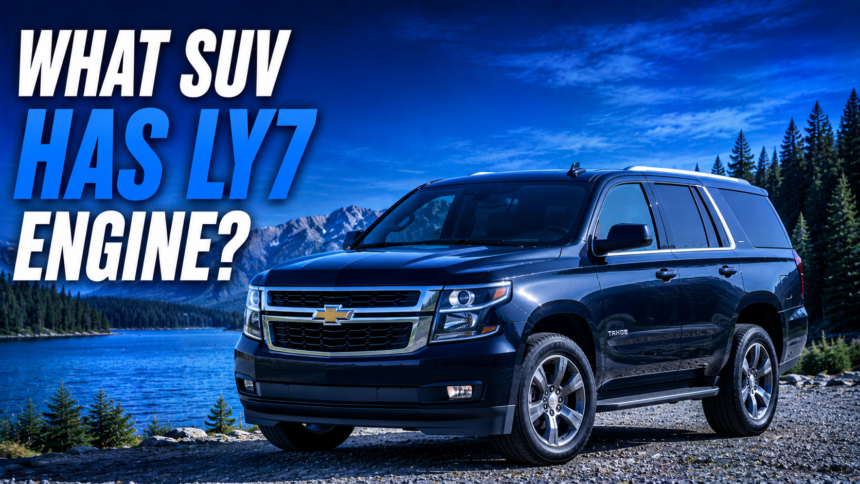
If you’ve ever popped the hood of a mid-2000s GM SUV and spotted the code “LY7” stamped somewhere near the engine block, you’re probably wondering exactly what that means and which vehicles it belongs to. The LY7 is one of General Motors’ most well-known V6 engines from the 2000s, and it powered a surprising number of popular family SUVs and crossovers.
- 2. What Is the GM LY7 Engine?
- 3. Key Specifications of the LY7
- 4. List of SUVs That Use the LY7 Engine
- Saturn Outlook (2007–2008)
- GMC Acadia (2007–2009)
- Buick Enclave (2008–2009)
- Saturn Vue XR / Red Line (2008–2009)
- Suzuki XL-7 (2007–2009)
- Cadillac SRX (2004–2009, first generation)
- 5. Performance and Driving Experience
- 6. Pros of the LY7 Engine
- 7. Common Problems & Reliability Concerns
- 8. Maintenance & Care Tips
- 9. LY7 vs Other GM V6 Engines
- 10. Is an SUV with the LY7 Engine a Good Buy?
- 11. Conclusion
- 12. Frequently Asked Questions (FAQs)
- Related Artilces
This guide answers the question what SUV has LY7 engine in full detail. We’ll walk through the technical background of the engine, the exact SUV models that used it, how it performs on the road, the problems owners commonly report, and whether buying a used SUV with this engine today is actually a smart move. Whether you’re a curious owner, a mechanic, or a used-car shopper, this article will give you everything you need in simple, easy-to-understand language.
2. What Is the GM LY7 Engine?
The LY7 is a 3.6-liter V6 engine built by General Motors as part of its “High Feature V6” (HFV6) engine family. It’s a 60-degree, dual overhead camshaft (DOHC) design with four valves per cylinder, aluminum block and cylinder heads, and variable valve timing on both the intake and exhaust sides. This combination allowed the engine to deliver smooth power delivery while remaining relatively lightweight compared to older cast-iron V6 engines.
GM first introduced the LY7 engine in the 2004 Cadillac CTS, and its reputation for solid performance quickly made it a favorite for use across multiple GM brands, including Saturn, Buick, Pontiac, GMC, and even Suzuki through a partnership arrangement. The engine was manufactured at GM’s plant in St. Catharines, Ontario, and remained in production through the late 2000s before being succeeded by the direct-injected LLT version.
3. Key Specifications of the LY7
Before diving into which SUVs used this engine, it helps to understand its core specifications. Here’s a simplified breakdown:
| Specification | Detail |
|---|---|
| Engine Family | GM High Feature V6 (HFV6) |
| Displacement | 3.6 liters (3564cc) |
| Configuration | 60-degree V6, DOHC, 24-valve |
| Fuel System | Sequential multiport fuel injection |
| Horsepower Range | Approximately 235–275 hp, depending on application |
| Torque Range | Approximately 225–252 lb-ft |
| Compression Ratio | Around 10.2:1 |
| Weight | Roughly 370 lbs |
| Production Years | 2004–2009 (SUV applications mainly 2007–2009) |
| Assembly Location | St. Catharines, Ontario, Canada |
Because the LY7 was tuned differently for each vehicle it powered, horsepower and torque figures vary slightly across models. SUVs generally received the higher output tunes, since they needed more low-end torque for towing and hauling passengers.
4. List of SUVs That Use the LY7 Engine
So, what SUV has LY7 engine specifically? The LY7 found its way into several GM crossover SUVs during the mid-to-late 2000s. Below is a complete rundown of the main models.
Saturn Outlook (2007–2008)
The Saturn Outlook was one of the first SUVs to receive the LY7 engine. Depending on the exhaust configuration, it produced around 270 horsepower with a single exhaust setup or 275 horsepower with dual exhaust. This large, three-row crossover was designed as a family-friendly alternative to traditional SUVs, offering a smoother ride and car-like handling thanks to its unibody construction.
GMC Acadia (2007–2009)
The GMC Acadia shared its platform with the Outlook and used the same higher-output version of the LY7, producing roughly 275 horsepower and around 251 lb-ft of torque. The Acadia quickly became one of GMC’s best-selling crossovers, prized for its spacious interior and confident highway performance powered by this V6.
Buick Enclave (2008–2009)
The Buick Enclave, another sibling from the same GM crossover platform (often referred to as GM Lambda platform), also used the LY7 in its earlier production years before GM transitioned to the LLT engine. The Enclave leaned into a quieter, more luxury-oriented driving experience while still benefiting from the LY7’s smooth power delivery.
Saturn Vue XR / Red Line (2008–2009)
Unlike the larger Outlook, the Saturn Vue is a compact crossover SUV. The XR and Red Line trims used a version of the LY7 tuned to produce around 257 horsepower, giving this smaller SUV a notably sportier feel compared to its four-cylinder counterparts.
Suzuki XL-7 (2007–2009)
Through a technology-sharing partnership with GM, Suzuki equipped its XL-7 midsize SUV with the LY7 as well, producing approximately 252 horsepower. This made the XL-7 one of the more powerful options in Suzuki’s SUV lineup at the time.
Cadillac SRX (2004–2009, first generation)
While technically more of a luxury crossover than a traditional SUV, the first-generation Cadillac SRX also used the LY7 in some trims, pairing it with Cadillac’s upscale features and available all-wheel drive.
Here’s a quick-reference table for easy scanning:
| SUV Model | Years | Approx. Horsepower |
|---|---|---|
| Saturn Outlook | 2007–2008 | 270–275 hp |
| GMC Acadia | 2007–2009 | 275 hp |
| Buick Enclave | 2008–2009 | 270+ hp |
| Saturn Vue XR/Red Line | 2008–2009 | 257 hp |
| Suzuki XL-7 | 2007–2009 | 252 hp |
| Cadillac SRX (1st gen) | 2004–2009 | 255–260 hp |
5. Performance and Driving Experience
Owners of these SUVs generally describe the LY7 as a smooth, refined engine for daily driving. Because it uses variable valve timing and a well-tuned intake system, power delivery feels linear rather than abrupt, which makes it pleasant for highway cruising and city commuting alike.
In terms of acceleration, most LY7-powered SUVs can go from 0 to 60 mph in the 7 to 8 second range, which was competitive for three-row family crossovers during that era. Towing capacity typically falls between 2,000 and 4,500 pounds depending on the specific model and configuration, making these SUVs reasonably capable for light trailers, small boats, or camping gear.
Where the LY7 truly shines is in mid-range torque, which means these SUVs don’t feel sluggish when merging onto highways or passing other vehicles, even with a full load of passengers.
6. Pros of the LY7 Engine
There’s a reason so many GM brands chose to use this engine across their SUV lineups. Some of the standout advantages include:
- Smooth, refined power delivery that feels appropriate for family vehicles.
- Reasonably good fuel economy for a V6 engine of its size, especially compared to older pushrod V6 designs.
- Solid mid-range torque, which is ideal for real-world driving rather than just top-end horsepower numbers.
- Widespread parts availability, since the engine was used across so many GM brands and models.
- Reliable core design, when properly maintained, with many examples exceeding 150,000–200,000 miles.
7. Common Problems & Reliability Concerns
No engine is perfect, and the LY7 does have a few well-documented weak points that shoppers and owners should be aware of.
Timing chain wear is probably the most talked-about issue. Because the LY7 uses a timing chain rather than a belt, and because early versions had some design limitations in the chain guides and tensioners, some owners report premature wear that can cause rattling noises on startup, especially in higher-mileage examples.
Oil consumption is another concern some owners have reported, particularly in vehicles that weren’t serviced with frequent oil changes using the correct oil grade. Over time, this can affect internal engine components if left unaddressed.
Water pump and intake manifold gasket failures have also been noted in some cases, generally as the vehicles age past the 100,000-mile mark. These are relatively common failure points in many V6 engines of this era and are usually manageable with proactive maintenance.
None of these issues are considered dealbreakers on their own, but they are worth checking for when buying a used SUV with this engine.
8. Maintenance & Care Tips
Keeping an LY7-powered SUV running well for the long haul comes down to consistent, proactive maintenance. Here are some practical tips:
- Follow a strict oil change schedule. Using a high-quality synthetic oil and changing it every 5,000 miles (or per manufacturer recommendations) helps prevent premature wear on internal components.
- Monitor for timing chain noise. A rattling sound on cold starts can be an early warning sign worth having inspected by a mechanic.
- Keep the cooling system in check. Regularly inspect coolant levels and have the water pump checked during routine service visits, especially past 80,000–100,000 miles.
- Address oil leaks early. Intake manifold and valve cover gaskets can wear out over time; catching leaks early prevents bigger issues down the road.
- Use OEM or high-quality replacement parts when repairs are needed, since these tend to match the engine’s original engineering tolerances more closely than generic aftermarket parts.
9. LY7 vs Other GM V6 Engines
GM’s High Feature V6 family evolved over time, and it’s useful to understand how the LY7 compares to its successors.
| Engine | Introduced | Key Difference from LY7 |
|---|---|---|
| LY7 | 2004 | Original version; port fuel injection |
| LLT | 2008 | Added direct fuel injection for better efficiency and power |
| LFX | 2010s | Further refined direct injection, higher output, improved reliability |
Compared to the LLT and later LFX versions, the LY7 is generally considered the “starting point” of this engine family. While later versions offered better fuel efficiency and slightly more power thanks to direct injection technology, the LY7 remains a dependable, well-proven engine when properly maintained.
10. Is an SUV with the LY7 Engine a Good Buy?
If you’re shopping for a used SUV today, an LY7-powered model can still be a smart, budget-friendly choice, especially since many of these vehicles are now available at reasonable used-car prices. That said, a few buying tips can help you avoid costly surprises:
- Ask for maintenance records, particularly oil change history and any timing chain-related service.
- Listen for cold-start rattling noises, which could indicate timing chain wear.
- Have a pre-purchase inspection done by a trusted mechanic familiar with GM’s High Feature V6 engines.
- Check for oil leaks around the intake manifold and valve cover areas.
- Favor later model years (2008–2009) where possible, as GM made small refinements over the production run.
For buyers who prioritize spacious interiors, smooth highway driving, and reasonably capable towing in a family SUV, models like the GMC Acadia, Saturn Outlook, and Buick Enclave remain solid options on the used market.
11. Conclusion
So, what SUV has LY7 engine power under the hood? The list includes the Saturn Outlook, GMC Acadia, Buick Enclave, Saturn Vue XR/Red Line, Suzuki XL-7, and the first-generation Cadillac SRX. This 3.6-liter V6 became one of GM’s most widely used engines during the mid-to-late 2000s thanks to its smooth performance, decent fuel economy, and dependable core design.
While it does come with a few known issues, like timing chain wear and occasional gasket failures, these are manageable with regular maintenance and careful inspection before purchase. For shoppers looking at a used family SUV from this era, an LY7-powered model can still offer a comfortable, capable driving experience today.
12. Frequently Asked Questions (FAQs)
What years did GM use the LY7 engine? The LY7 was primarily produced between 2004 and 2009, with most SUV applications appearing between 2007 and 2009.
Is the LY7 a reliable engine? Yes, generally speaking. With regular oil changes and attentive maintenance, many LY7 engines have reached well over 150,000 miles without major issues.
Which SUV has the best LY7 setup? The GMC Acadia and Saturn Outlook received the higher-output tune of the LY7, making them among the strongest-performing SUVs with this engine.
How long do LY7 engines typically last? With proper care, it’s common for these engines to last 150,000 to 200,000+ miles, though timing chain and gasket maintenance become more important as mileage increases.
Related Artilces
How Many Quarts of Oil Does a Honda CR-V Take?
How Many Engine Mounts Does a Car Have?
Can Spark Plugs Cause a Car to Not Start?
What to Put Under Tires When Storing a Car?
Can Car Oil Expire? Shelf Life and Storage Explained