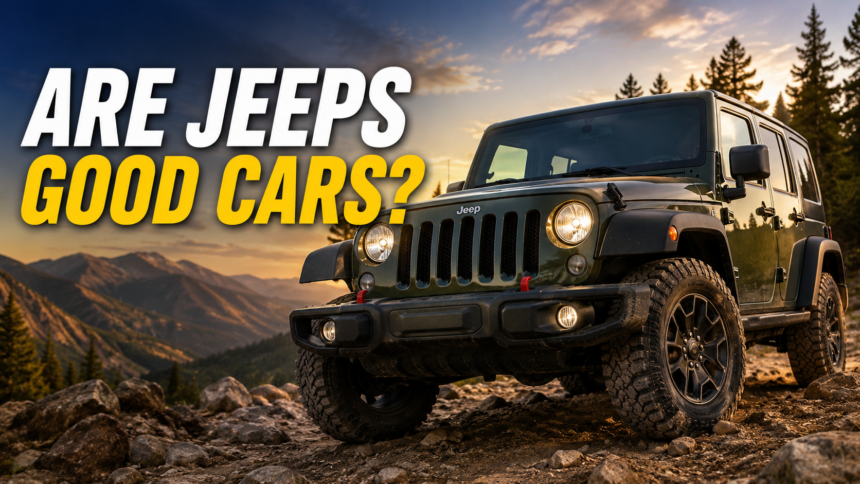
If you are asking “are Jeeps good cars,” the short answer is that it depends on what you value most in a vehicle. Jeeps are excellent for off-road driving, they hold their resale value better than most SUVs, and their design has a loyal following across the world.
- Understanding the Jeep Brand
- Pros of Owning a Jeep
- Off-Road Capability
- Iconic Design and Customization
- Resale Value
- Removable Doors and Roof
- Jeep Community and Brand Loyalty
- Cons of Owning a Jeep
- What Reliability Studies Say
- Most and Least Reliable Jeep Models
- Who Should Buy a Jeep
- Jeep vs Competitors
- Tips for Jeep Owners
- Conclusion
- Frequently Asked Questions
- Are Jeeps expensive to maintain?
- Do Jeeps hold their value?
- Is the Jeep Wrangler good for daily driving?
- Which Jeep model is most reliable?
- Related Articles
However, they are not known for top-tier reliability, and owners often deal with higher repair costs compared to Japanese brands like Toyota or Honda. This guide breaks down everything you need to know, from history to real reliability data, so you can decide if a Jeep fits your lifestyle and budget.
Understanding the Jeep Brand
Before deciding are Jeeps good cars for your needs, it helps to understand where the brand came from and what it currently offers. Jeep has a long history rooted in rugged, purpose-built vehicles that were never originally designed for luxury or daily commuting comfort.
History and Origins of Jeep
Jeep began during World War II as a military vehicle built for the U.S. Army, valued for its toughness and ability to handle rough terrain.
After the war, the brand transitioned into civilian use and slowly became a symbol of adventure and freedom on American roads. Today, Jeep is owned by Stellantis, the same parent company behind brands like Chrysler and Dodge.
Jeep’s Current Model Lineup
The modern Jeep lineup includes the Wrangler, Grand Cherokee, Compass, Renegade, and the Gladiator pickup truck. Each model targets a slightly different buyer, ranging from serious off-road enthusiasts to families wanting a comfortable daily SUV.
This variety is part of why the “are Jeeps good cars” question does not have a single answer, since experience varies widely by model.
Pros of Owning a Jeep
There are genuine reasons why Jeep has built such a strong and loyal fan base over the decades. These advantages mostly center around capability, style, and long-term value rather than everyday convenience.
Off-Road Capability
Jeep vehicles, especially the Wrangler and Gladiator, are built with serious four-wheel-drive systems and rugged suspension setups. Few mainstream brands can match Jeep’s ability to handle mud, rocks, sand, and steep inclines with minimal modification. This is the single biggest reason enthusiasts choose Jeep over almost any competitor.
Iconic Design and Customization
Jeep’s boxy, recognizable shape has barely changed in decades, and that consistency has become part of its appeal. Owners love customizing their Jeeps with lift kits, larger tires, and aftermarket accessories, turning each vehicle into a personal project. This customization culture is rare among other car brands and adds real emotional value for many buyers.
Resale Value
Jeeps, particularly the Wrangler, tend to hold their value better than most SUVs on the market. High demand combined with limited depreciation means owners often get a strong return when selling or trading in their vehicle. This is one of the more practical financial benefits of Jeep ownership.
Removable Doors and Roof
The Wrangler offers a unique open-air driving experience thanks to its removable doors and roof panels. This feature is almost impossible to find in competing SUVs and gives Jeep a distinct lifestyle appeal beyond basic transportation. It is a major selling point for buyers who enjoy outdoor and recreational driving.
Jeep Community and Brand Loyalty
Jeep owners often participate in a strong online and in-person community, including the well-known “Jeep Wave” tradition between drivers. This sense of belonging encourages repeat purchases and strong word-of-mouth recommendations. Few car brands manage to build this level of emotional connection with their customers.
Cons of Owning a Jeep
Despite the strong positives, there are real drawbacks that potential buyers should weigh carefully. These issues are consistently mentioned in owner reviews and independent reliability studies.
Reliability Concerns
Jeep models frequently rank below average in dependability studies compared to competitors like Toyota or Honda.
Electrical glitches, transmission issues, and inconsistent build quality have been reported across multiple model years. This is the main reason many reviewers hesitate before fully recommending Jeep for buyers who prioritize dependability.
Fuel Efficiency
Because Jeeps are built for off-road capability rather than aerodynamics, their fuel economy tends to lag behind car-based crossovers.
Larger engines and heavier four-wheel-drive systems also contribute to higher fuel consumption. Buyers focused on saving money on gas may find better options outside the Jeep lineup.
Ride Comfort
The Wrangler in particular is known for a stiffer, bouncier ride on highways due to its solid axle suspension design. While this setup is excellent off-road, it can feel less comfortable during long daily commutes compared to smoother crossover SUVs. Wind noise and road noise are also commonly mentioned in owner feedback.
Maintenance Costs
Repair and maintenance costs for Jeep vehicles tend to run higher than the industry average, according to several automotive cost studies. Specialized parts and labor for four-wheel-drive systems can add up over time. This is an important factor to consider when calculating the true long-term cost of ownership.
Common Mechanical Issues
Some recurring problems reported by Jeep owners include transmission hesitation, electrical system faults, and a steering issue commonly referred to as “death wobble.” While not every Jeep experiences these problems, they appear frequently enough in owner forums and complaint databases to be worth researching before purchase.
What Reliability Studies Say
Independent reliability data gives a clearer, less biased picture than personal opinions alone. Looking at these numbers helps answer are Jeeps good cars from a factual standpoint rather than just brand loyalty or dislike.
J.D. Power and Consumer Reports Findings
Consumer Reports has historically placed several Jeep models near the bottom of its reliability rankings, citing electrical and powertrain concerns. J.D. Power studies show similar trends, though scores do vary by specific model and year.
It is worth checking the latest ratings for the exact model year you are considering before buying.
Jeep vs Toyota and Honda Reliability
When compared directly, Toyota and Honda consistently outperform Jeep in long-term dependability studies. These Japanese brands are known for lower repair frequency and lower average repair costs over a vehicle’s lifetime.
This comparison is one of the clearest ways to understand where Jeep stands in the broader market.
Most and Least Reliable Jeep Models
Not every Jeep model performs the same way in reliability studies, so it helps to compare them directly before choosing one.
| Jeep Model | General Reliability Rating | Common Concerns |
| Jeep Wrangler | Below Average | Electrical issues, wind noise |
| Jeep Gladiator | Average | Transmission hesitation |
| Jeep Grand Cherokee | Below Average | Infotainment glitches, suspension |
| Jeep Compass | Average | Interior quality, minor electrical faults |
| Jeep Renegade | Below Average | Transmission and electrical problems |
Best Performing Models
Among Jeep’s lineup, the Gladiator and newer Compass models tend to receive slightly more favorable reliability feedback than others. These models benefit from updated engineering and fewer recurring complaints in owner surveys. Still, buyers should check specific model-year reports since reliability can shift from year to year.
Models to Approach with Caution
Older Grand Cherokee and Renegade models have received more frequent complaints related to electrical systems and transmission behavior. Buyers considering used models from these lines should request a full mechanical inspection before purchase. Extended warranties can also help offset potential repair costs on these specific models.
Who Should Buy a Jeep
Deciding are Jeeps good cars for you personally comes down to matching the vehicle’s strengths with your actual driving needs and priorities.
Ideal Jeep Buyers
Jeep suits buyers who genuinely plan to go off-road, enjoy vehicle customization, or want a distinct lifestyle vehicle rather than a purely practical commuter car. People who prioritize resale value and don’t mind paying slightly more for maintenance also tend to be satisfied Jeep owners. Enthusiasts who enjoy being part of an active vehicle community will also find strong value here.
Buyers Who Should Look Elsewhere
If your main priority is low maintenance costs, excellent fuel economy, or a smooth daily commute, a Jeep may not be the best fit. Budget-conscious buyers who cannot absorb unexpected repair costs should also consider more reliable alternatives. In these cases, a car-based crossover SUV is often a more practical choice.
Jeep vs Competitors
Comparing Jeep to similar SUVs from other brands gives helpful context for your final decision.
Jeep vs Toyota 4Runner
The Toyota 4Runner offers comparable off-road capability with a stronger reliability reputation, though it comes with a higher starting price in many markets. Jeep tends to offer more customization options and a lower entry price point. Buyers must weigh reliability against affordability and personalization when choosing between the two.
Jeep vs Ford Bronco
The Ford Bronco is a newer competitor that closely matches Jeep’s off-road focus and open-air design features. Early reliability data for the Bronco has been mixed, similar to Jeep, making this a closer comparison than Toyota. Design preference and dealership support in your area often become the deciding factors here.
Tips for Jeep Owners
Following a few practical habits can significantly reduce the common problems associated with Jeep ownership.
Maintenance Best Practices
Sticking closely to the manufacturer’s recommended service schedule can help catch small issues before they become expensive repairs. Regularly checking electrical connections and suspension components is especially important given Jeep’s known trouble areas. Using a trusted, experienced mechanic familiar with Jeep vehicles also makes a noticeable difference.
Extended Warranty Advice
Given the higher-than-average repair costs, an extended warranty can offer valuable financial protection for Jeep owners. This is particularly worth considering for buyers purchasing a Wrangler, Grand Cherokee, or Renegade model. Comparing third-party warranty providers against the manufacturer’s own extended plans is recommended before committing.
Conclusion
So, are Jeeps good cars? They are a strong choice for buyers who want off-road capability, resale value, and a distinct lifestyle vehicle, but they fall short for those prioritizing low maintenance and top-tier reliability.
Compared to competitors like Toyota and Ford, Jeep offers more character and customization but slightly less peace of mind. The right choice ultimately depends on how you plan to use the vehicle and how much you value dependability versus adventure-ready capability.
Frequently Asked Questions
Are Jeeps expensive to maintain?
Yes, Jeep maintenance costs are generally higher than the industry average due to specialized four-wheel-drive parts and labor.
Do Jeeps hold their value?
Yes, especially the Wrangler, which consistently ranks among the better SUVs for resale value retention.
Is the Jeep Wrangler good for daily driving?
It can be, but its stiffer ride and higher wind noise make it less comfortable than car-based SUVs for daily commuting.
Which Jeep model is most reliable?
The Gladiator and newer Compass models generally receive more favorable reliability feedback compared to other models in the lineup.
Related Articles
How Many Engine Mounts Does a Car Have?
How Much Oil to Put in Your Car: Quarts by Engine?