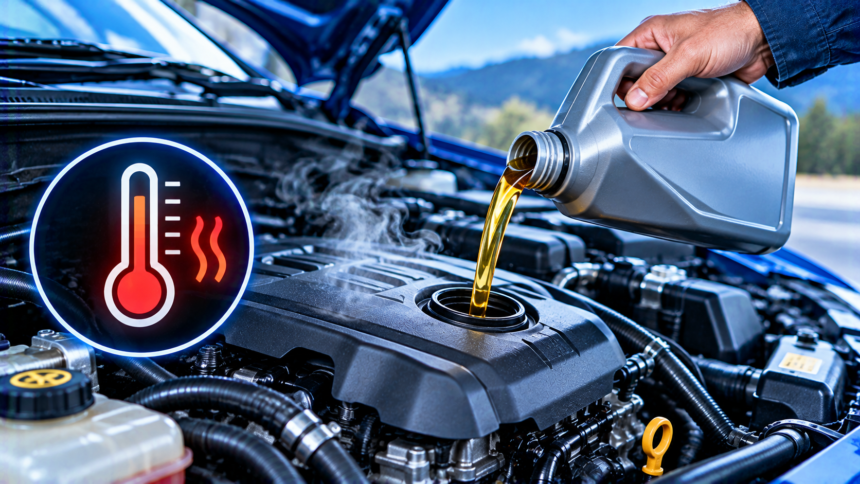
Yes, you can put oil in a hot engine, as long as the engine is switched off. Adding oil to a hot engine won’t damage it. The real risks are burns, spills that land on hot metal, and a wrong dipstick reading that leads you to pour in too much.
- Is it safe to add oil to a hot engine?
- Will cold oil hurt a hot engine?
- Why wait a few minutes before checking the oil level?
- How do you add oil to a hot engine step by step?
- Can you add oil while the engine is running?
- What if you are changing the oil?
- What happens if you add too much oil?
- Does a turbo engine need extra care?
- What mistakes should you avoid?
- When should you see a mechanic?
- Conclusion
- Frequently asked questions
- How long should I wait to add oil after driving?
- Can I add cold oil to a hot engine?
- Is it better to check engine oil hot or cold?
- What happens if I put oil in a running engine?
- Can I drive right after topping up oil?
- Related Articles
So the safe routine is short. Turn the engine off, wait a few minutes, pour slowly through a funnel, and check the dipstick again. If you can wait 15 to 30 minutes, the reading will be even better. But you don’t have to wait that long to top up an engine that is running low.
Below, you’ll see why a hot engine is fine to fill, what can go wrong, and how to do it step by step. You’ll also find advice for oil changes, for running engines, for turbo engines, and for what happens if you add too much. Each section starts with the short answer, so you can stop reading as soon as you have what you need.
Is it safe to add oil to a hot engine?
Yes, it’s safe for the engine. The filler cap on top of the engine is not a pressure cap. A hot radiator cap can spray scalding coolant, but opening an oil filler cap on an engine that is switched off won’t spray anything at you.
You are the one at risk. Oil in a hot engine can pass 200°F (about 93°C), which is hot enough to burn your skin. The metal around the filler cap can burn you too, and so can the exhaust manifold and the turbocharger if your car has one. Hold the cap with a rag, wear gloves and eye protection if you have them, and keep your arms away from the exhaust side of the engine.
Fire is the second risk. A spill on a hot exhaust manifold will smoke and can catch fire. Take Mobil 1 5W-30 as an example. Its safety data sheet lists a flash point above 200°C (392°F). The flash point is the lowest temperature at which an oil gives off enough vapor to ignite. Exhaust parts can run at several hundred degrees Celsius, well past that mark. This is why you should use a funnel and wipe up any spill right away.
It helps to keep a small kit in the boot: a funnel, a clean rag, a pair of gloves, and a bottle of the right oil. With those four things, a roadside top-up takes a few minutes and costs you almost nothing. Without them, people tend to rush, and rushing is how burns and spills happen.
Quick rule: engine off, funnel in, pour slowly, wipe spills, then check the dipstick.
Will cold oil hurt a hot engine?
No. Pouring fresh oil into a hot engine won’t crack the block or the cylinder head. You’re adding a small amount compared with the oil already inside, and it runs down into the oil pan (the sump) and mixes with oil that is already hot.
Engines also handle big temperature swings all the time. Every cold start sends hot gases through cold metal. A top-up of a quarter of a litre is a much smaller change than that.
What matters more is when you check the level, which comes next.
Why wait a few minutes before checking the oil level?
Waiting won’t protect the engine. It protects you from a false reading. Two things get in the way right after you switch off.
First, oil is still draining back. While the engine runs, oil is pumped to the top of the engine and splashed around. When you stop, it takes a few minutes to run back down into the pan. Check too soon and the dipstick looks low, so you may add more than you need.
Second, hot oil expands. It takes up more room than cool oil, which can also throw off the reading.
How long should you wait? Car makers set their own times. The Honda WR-V manual uses three minutes. Some makers want five minutes or more, and a few want 15 for a warm engine. A wait of 20 to 30 minutes gives a clean reading, and an engine that sat overnight is the easiest to read. Your own owner’s manual has the exact number for your car.
Use this table as a quick guide.
| Engine state | Can you add oil? | Best move |
| Running | No | Switch it off first. |
| Just switched off, very hot | Yes, with care | Wait 3 to 5 minutes, then check and top up slowly. |
| 15 to 30 minutes after switching off | Yes | A safer pour and a more accurate reading. |
| Cold, parked overnight | Yes | The cleanest reading, with no burn risk. |
How do you add oil to a hot engine step by step?
Follow these steps. The whole job takes about ten minutes, most of it spent waiting.
- Park and switch off. Park on level ground and turn the engine off. A slope gives a false reading.
- Wait. Give it at least three to five minutes, or longer if your manual says so.
- Check the level. Pull out the dipstick, wipe it clean, push it all the way back in, and pull it out again. The oil should sit between the two marks.
- Get the right oil. If the level is at or near the lower mark, use the same grade that is already in the engine. Your owner’s manual lists it.
- Set up the funnel. Open the filler cap with a rag and place a clean funnel in the hole. This keeps dirt out of the engine and oil off hot parts.
- Pour slowly. Start with about a quarter of a litre. On many cars the gap between the two marks is about one litre, but it can be smaller or larger, so small pours are safer.
- Check again. Wait a couple of minutes and read the dipstick again. Repeat until the level is close to the upper mark, but never above it.
- Finish up. Refit the cap and tighten it. Wipe up any spill, then close the bonnet.
The Honda WR-V owner’s manual gives the same routine for adding oil: add it slowly, wait three minutes, then recheck the dipstick.
Can you add oil while the engine is running?
No. Switch the engine off first. With the engine running, oil is moving, and an open filler hole can let hot oil spray out onto you and the engine bay. The dipstick also reads low while the engine runs, because oil is spread through the engine and not sitting in the pan. That makes it easy to overfill.
If the oil warning light comes on while you drive, pull over somewhere safe, switch off the engine, and check the level. Don’t keep driving on low oil, even for a short trip. Once you have topped up, start the engine and watch the light. If it stays on, don’t drive the car. Get it checked.
What if you are changing the oil?
An oil change is one case where warm is better than cold. Warm oil is thinner, so it drains faster and more fully. A common routine is to drive for 15 to 30 minutes, park on level ground, switch off, wait about five minutes, then drain the oil. The engine is warm, not scorching. Wear gloves and eye protection, because the oil coming out can still burn you.
Once the drain plug and new filter are fitted, pour the fresh oil in through the filler cap. This is safe for the same reasons as a top-up: the engine is off and you are adding a modest amount of oil. Add the amount your manual lists, start the engine for a short time, and switch it off. Wait a few minutes, then check the dipstick and top up in small amounts.
If you have a choice, let the engine cool a little before you start. A cooler exhaust and oil pan make the job easier on your hands.
What happens if you add too much oil?
Too much oil causes more trouble than a hot engine does. Above the upper mark, the crankshaft (the main spinning shaft in the engine) churns the oil and whips it into foam. Foamy oil full of air bubbles doesn’t protect moving parts as well as normal oil.
Extra oil can also raise pressure inside the engine, push on seals, and cause leaks. In some engines it gets pushed into the air intake through the crankcase ventilation system, and over time that can harm emissions parts such as the catalytic converter.
Signs of overfilling include blue smoke from the exhaust, a burning oil smell, rough running, leaks, and oil use that goes up.
A hot engine makes this mistake more likely, because a hot or early reading can mislead you. The fix is to pour small amounts and check each time. If the level ends up above the upper mark, don’t drive far. Have the extra oil drained until the level is back between the marks.
Does a turbo engine need extra care?
The rules stay the same, but the stakes are a little higher. A turbocharger (a small fan-driven part that forces extra air into the engine) runs very hot, and it often sits close to the filler cap. A few drops of oil on it can smoke fast.
Give a turbo engine a few extra minutes to cool before you pour. Use a long-necked funnel so the oil goes straight into the hole. If you do spill, wipe it off with a rag once it is safe to touch, and watch for smoke when you start the car again. Dark smoke from the engine bay after a spill means oil is burning off hot parts, so switch off and let it cool.
What mistakes should you avoid?
Most problems come from rushing. These are the slips that cause the most trouble:
- Pouring straight from the bottle. Without a funnel, oil splashes onto hot parts and runs down the side of the engine.
- Using the wrong grade. Oil grade is printed in your owner’s manual. Don’t guess, and don’t pick a grade because it is the cheapest one on the shelf.
- Trusting the first reading. Right after you switch off, the dipstick can look low. Wait, then read it.
- Filling past the upper mark. More oil is not better. Stop at the upper mark.
- Leaving the cap loose. Tighten it fully, or oil can spray out when the engine starts.
- Ignoring a spill. Oil on a hot engine can smoke or burn. Wipe it up as soon as it is safe to touch.
When should you see a mechanic?
Topping up now and then is normal, since engines use a little oil between changes. But get the car checked if the oil warning light stays on after you add oil, or if you need to add oil again and again in a short time. A steady drop in the level means oil is leaking or burning somewhere. Blue smoke, a burning smell, or oil spots on the ground under the car are also signs to book a visit.
Conclusion
You can add oil to a hot engine, as long as the engine is off. The engine won’t be harmed, but you can be, so use a funnel, protect your hands, and wipe up spills. Wait a few minutes before checking the level so the dipstick tells the truth. Pour in small amounts, recheck, and stop at the upper mark. Never add oil while the engine runs.
Frequently asked questions
How long should I wait to add oil after driving?
Wait at least three to five minutes after switching off, or the time in your manual. Waiting 15 to 30 minutes gives a cooler engine and a more accurate dipstick reading. If you’re low on oil and stuck, a careful top-up after a few minutes is fine.
Can I add cold oil to a hot engine?
Yes. Oil at room temperature won’t hurt a hot engine. Pour slowly through a funnel so it doesn’t splash on hot parts. Then check the dipstick after a few minutes and add more only if you need it.
Is it better to check engine oil hot or cold?
Both work if you wait. A cold engine on level ground usually gives the cleanest reading, and a warm engine is fine after a few minutes. Follow your owner’s manual, because some makers prefer one method over the other.
What happens if I put oil in a running engine?
Hot oil can spray out of the filler hole and burn you or land on hot parts. The dipstick will also read low, so you can overfill. Always switch the engine off first.
Can I drive right after topping up oil?
Yes, once the level sits between the marks, the cap is tight, and spills are wiped away. If the warning light is on, or you see smoke or leaks, don’t drive. Get the car checked.
Related Articles
Does a Turbo Engine Require Premium Gas?
Does a Turbo Improve Fuel Economy?